
Ever felt the soothing essence of lavender and wished you could carry that calm with you everywhere?
Lavender tattoos aren’t just beautiful; they’re also a lasting reminder of peace and healing.
This article is your ultimate guide to discovering various lavender tattoo ideas, each infused with unique designs and meanings.
Prepare to ignite your creativity and find the perfect lavender tattoo to express your personality and values.
✅ The 46 Lavender Tattoo Ideas
1. Delicate Lavender Ankle Sprig

A tiny lavender sprig suits the ankle especially well because its narrow, upright shape follows the leg’s natural line without taking up much space. The soft purple blossoms provide just enough color to distinguish the flowers, while the extremely fine stems keep the tattoo light and understated. It is a useful reference for anyone considering a discreet botanical piece.
2. Lavender Heart on the Shoulder
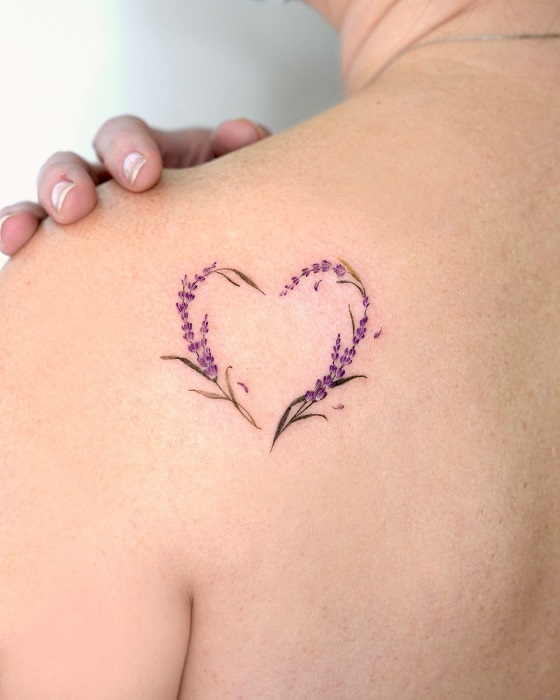
Instead of enclosing the heart with a solid outline, this shoulder tattoo lets lavender branches form much of the shape themselves. That combination gives a familiar heart motif a softer botanical character. The open center prevents the composition from feeling heavy, while the shoulder blade provides enough room for the curved stems and scattered purple buds to remain easy to appreciate.
3. Fine-Line Lavender With Script
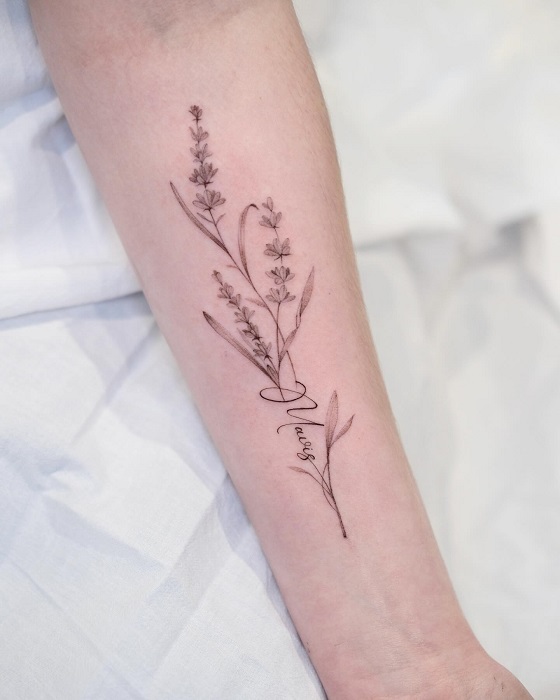
Long stems and narrow leaves make this forearm piece feel graceful rather than crowded, even with several flowering branches included. Fine black-and-grey detailing keeps the lavender subdued, while the flowing script becomes part of the stem rather than a separate element. It is an effective approach for combining floral imagery with personally meaningful lettering in one continuous composition.
4. Colorful Lavender and Bee Bouquet
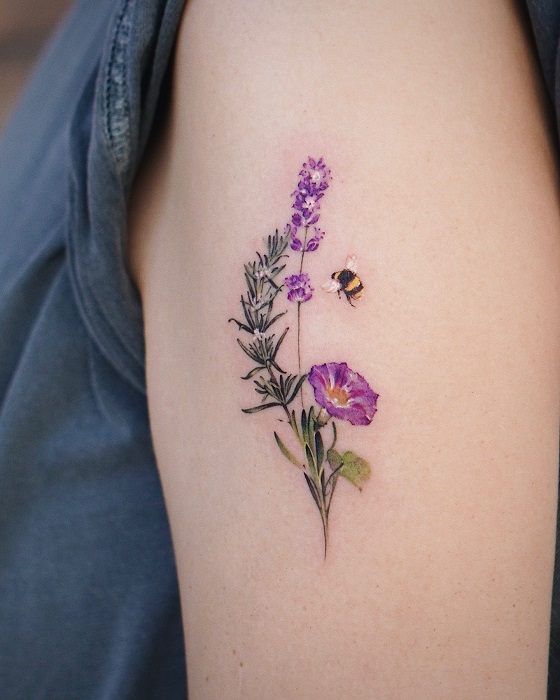
Lavender becomes part of a livelier garden-inspired arrangement here, paired with another purple bloom, textured foliage, and a small bee. The contrast between purple petals, green stems, and the insect’s warm coloring creates a noticeably richer look than a minimalist lavender tattoo. Keeping the bouquet narrow still makes the design practical for an upper-arm placement without sacrificing detail.
5. Tiny Single Lavender Stem
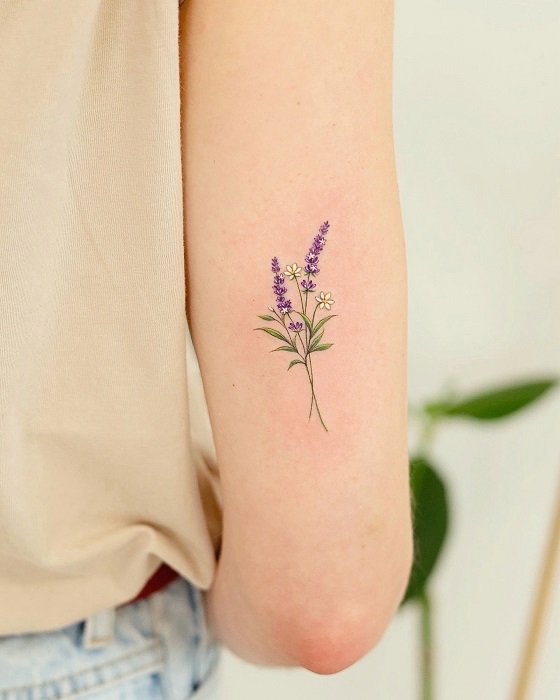
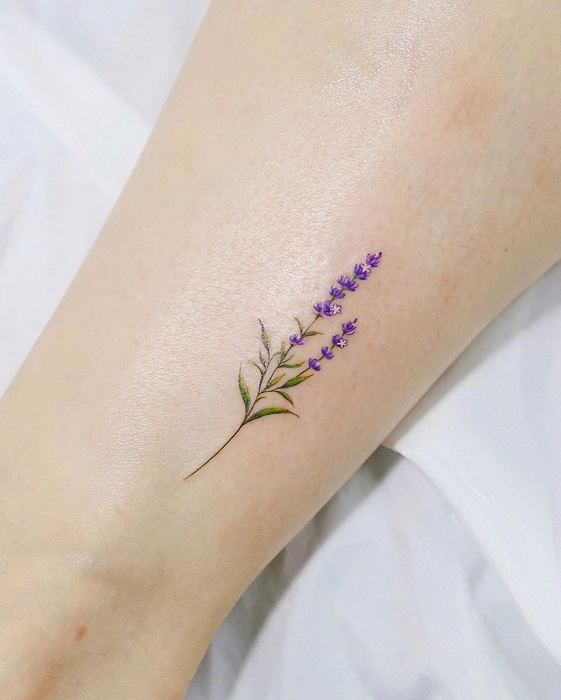
This miniature lavender tattoo shows how little detail is needed for the flower to remain recognizable. Individual purple buds are arranged along a gently tapering stem, with only a couple of green leaves adding contrast. Because the artwork stays compact and uncluttered, it offers useful inspiration for someone who likes color tattoos but wants the overall effect to remain subtle and delicate.
6. Petite Lavender and Wildflower Bouquet
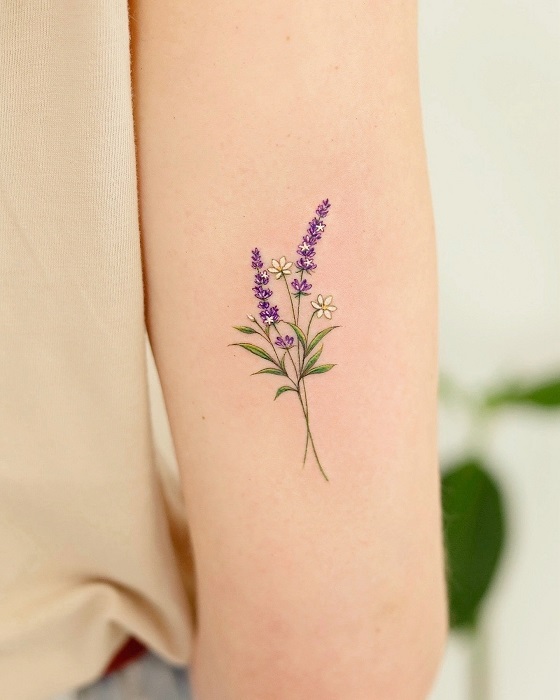
A few lavender stems mixed with tiny pale flowers create the feel of a freshly gathered wildflower bunch without requiring a large tattoo. The blossoms are separated by plenty of open skin, which helps each small detail remain readable. Placed on the back of the upper arm, the narrow bouquet also follows the limb naturally and can be displayed or covered fairly easily.
7. Open Heart Framed With Lavender
Fine lavender branches rise from both sides of this heart and transition into an extremely thin outline across the top. Leaving much of the heart open creates a sense of airiness that works well with the small blossoms. The design also demonstrates how lavender tattoos can incorporate recognizable symbols without overwhelming the floral details or requiring dense shading and heavy outlines.
8. Minimal Pair of Lavender Stems
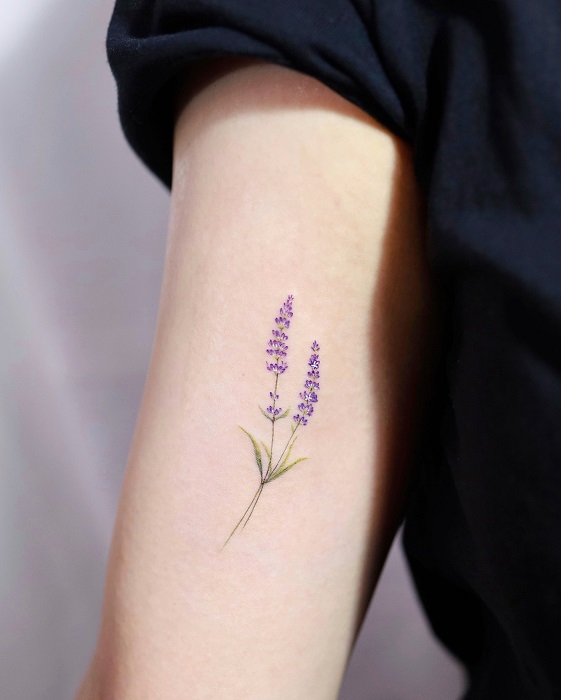
Two lavender stems are enough to create a balanced composition when their heights and angles are slightly different. Here, the sparse green leaves and tiny purple buds keep attention on the plant’s naturally elongated form. The inner arm gives the tattoo a clean backdrop, making this a helpful example of how restrained color and generous negative space can produce a quietly polished result.
9. Lavender Nape Tattoo With Flowing Lettering
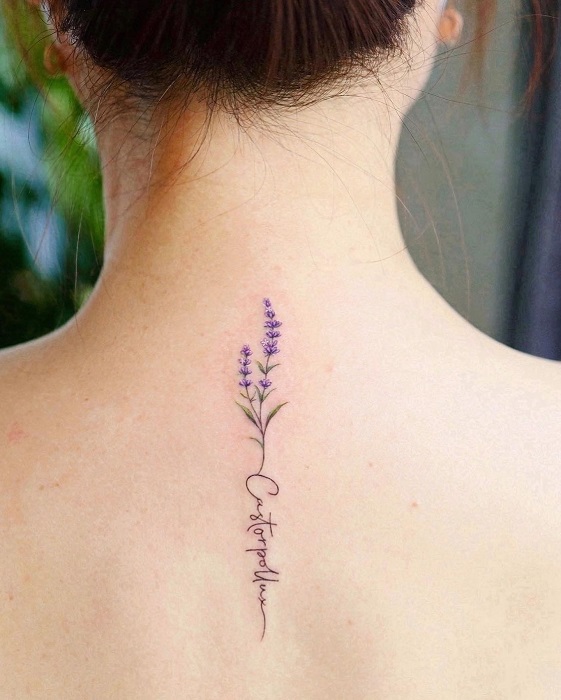
The center of the upper back creates a strong vertical canvas for this narrow lavender tattoo. Two flowering stems lead downward into loose cursive lettering, visually connecting the botanical and written elements. Because the script remains slim rather than blocky, it preserves the delicate character of the flowers. This placement can also create an attractive reveal beneath tied-up hair or lower necklines.
10. Softly Colored Forearm Lavender
Rather than outlining every petal heavily, this forearm sprig relies on small touches of purple to give the lavender its character. Fine green leaves branch from a long, gently curved stem, creating movement without additional decorative elements. The result is simple but not flat, showing how selective color can make a small botanical tattoo feel more dimensional while preserving a fine-line aesthetic.
11. Lavender and Pink Floral Back Bouquet

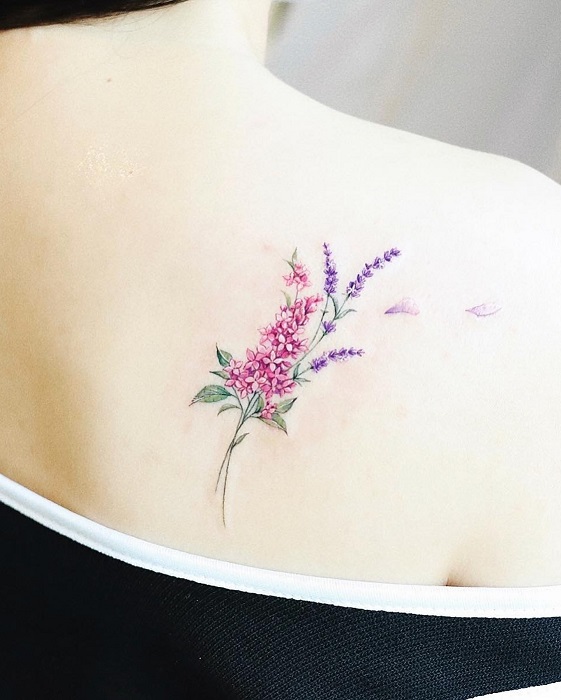
For a more decorative interpretation of lavender tattoos, this upper-back piece combines purple flower spikes with a fuller cluster of pink blossoms and green leaves. A few detached petals extending toward the shoulder add movement and prevent the bouquet from feeling rigidly centered. The broader placement gives the artist room to vary flower sizes while still maintaining a relatively light, feminine botanical composition.
12. Centered Lavender Upper-Back Tattoo

Three lavender stems arranged at different heights make this compact upper-back tattoo feel fuller without turning it into a large bouquet. The flowers remain concentrated near the top while thin stems taper downward, producing a naturally elegant vertical shape. Centering the piece below the neck emphasizes symmetry and makes the lavender a clear focal point when the upper back is exposed.
13. Lavender Sprig With Handwritten Detail
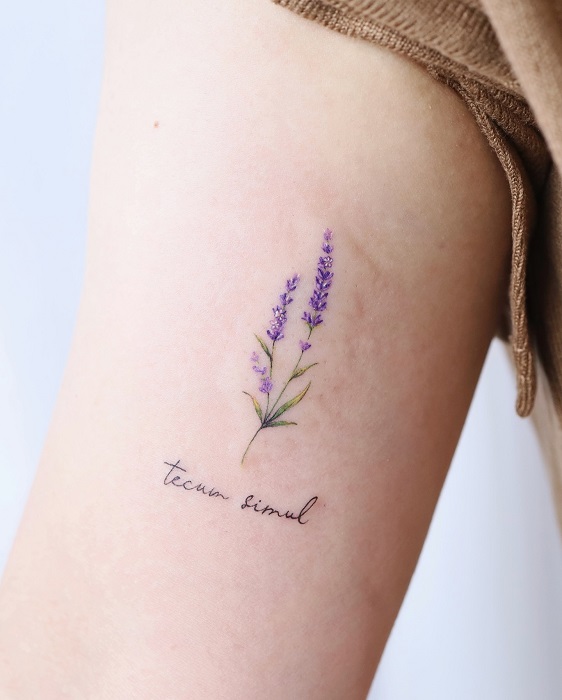
Pairing lavender with fine handwritten text adds another layer of personalization while keeping the artwork visually light. The flower remains the dominant element thanks to its purple buds and upright shape, while the script sits beneath it as a quieter accent. This layout is worth considering when you want meaningful wording included without turning the tattoo into a primarily text-based design.
14. Bright Wildflower Bouquet With Lavender

Lavender provides height and structure in this colorful forearm bouquet, while the orange, white, and blue flowers create stronger focal points lower down. A tiny bee adds another garden-themed detail without competing with the blossoms. Using several saturated colors makes the piece noticeably bolder than the finer lavender examples, yet the stems keep the composition narrow enough to suit the forearm.
15. Fine-Line Botanical Mix
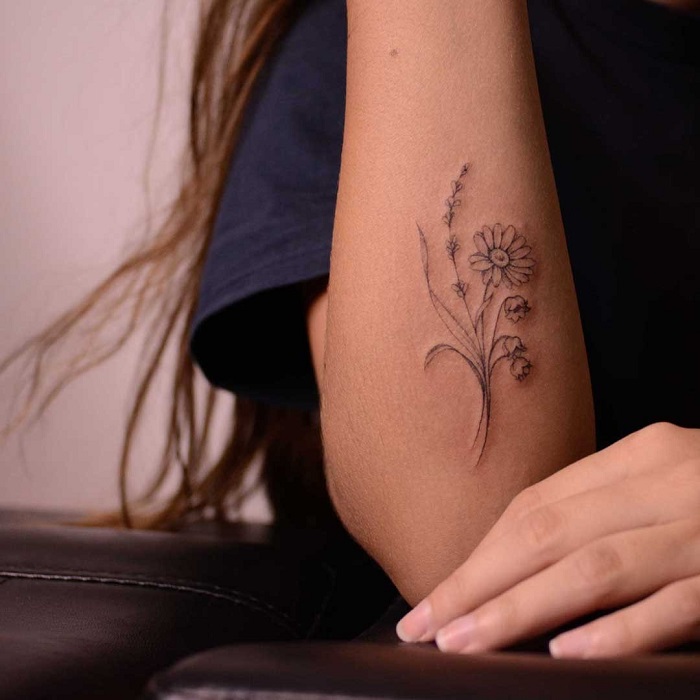
This inner-arm tattoo takes a quieter monochrome approach, combining slender lavender-like sprigs with other delicate flowers and long curved leaves. The lack of bright color puts more emphasis on line weight, spacing, and the graceful movement of the stems. Mixing several flower shapes is a useful way to create botanical variety while maintaining the understated character associated with fine-line floral tattoos.
16. Lavender Ankle Bouquet Tied With a Bow
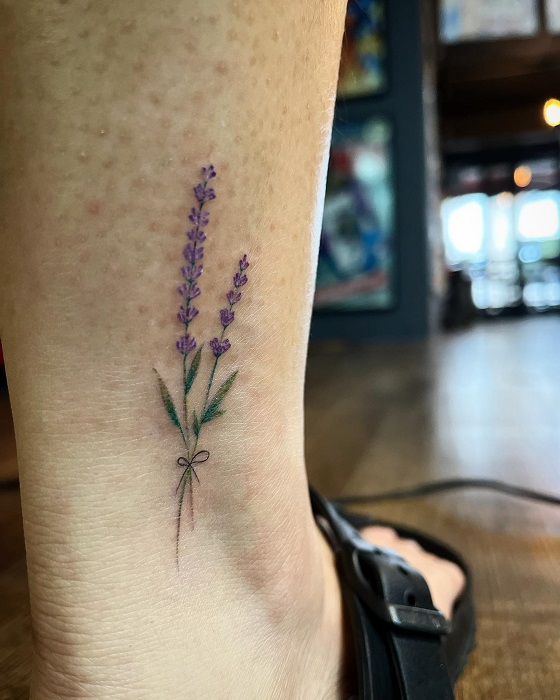
A tiny outlined bow gives this pair of lavender stems the appearance of a miniature hand-tied bouquet. The purple flower spikes stretch vertically above the ankle, while narrow green leaves keep the lower portion from feeling bare. That ribbon detail changes the mood without adding much size, making it an appealing reference for readers who want something slightly more decorative than a single sprig.
17. Lavender Sprigs Along the Collarbone
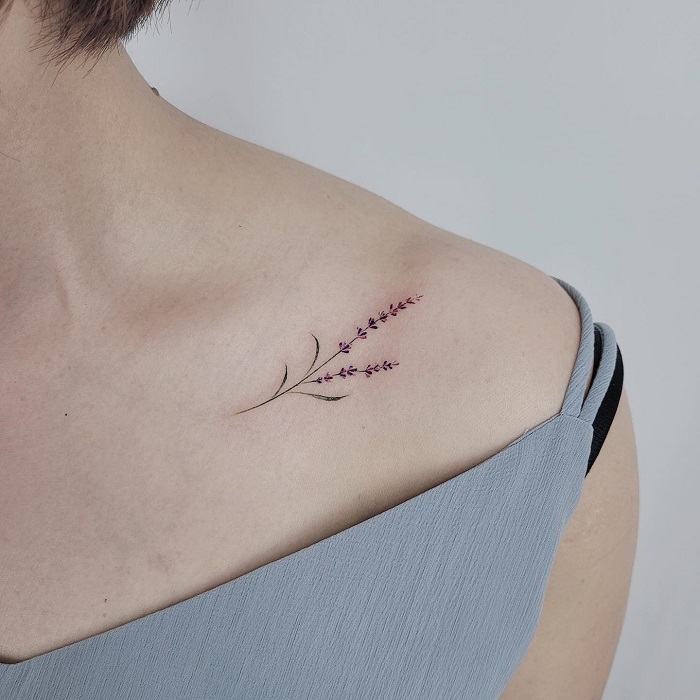
The collarbone offers a very different way to use lavender’s elongated silhouette. Rather than standing vertically, these two fine sprigs angle outward across the shoulder area, echoing the body’s natural slope. Sparse leaves and widely spaced purple buds prevent the placement from looking crowded. A composition like this can feel almost jewelry-like because it follows an existing contour instead of occupying a rectangular area.
18. Subtle Ankle Botanical Linework
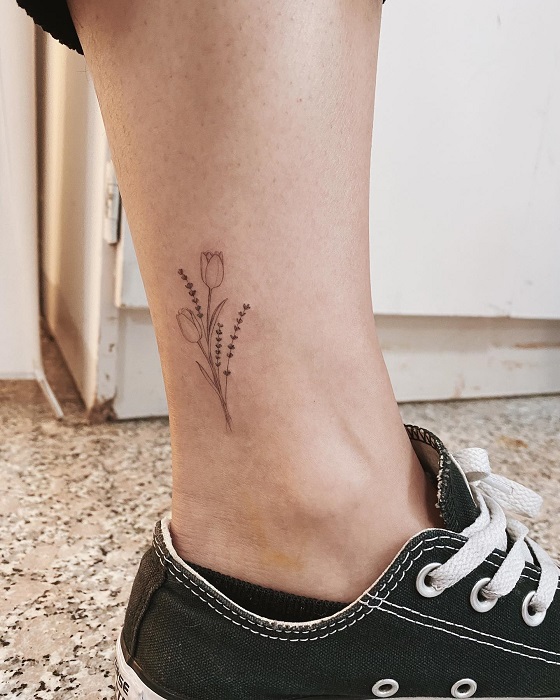
This ankle tattoo keeps its floral arrangement almost entirely in fine brown-black linework, pairing taller tulip-shaped blooms with slim sprigs that resemble lavender. Without strong color fills, the emphasis falls on the differing flower silhouettes and gently intersecting stems. The result demonstrates how lavender-inspired botanical elements can be incorporated into a mixed bouquet while maintaining a restrained, sketch-like appearance.
19. Purple Lavender Forearm Sprigs

Several narrow lavender spikes sweep diagonally across the forearm rather than forming a perfectly upright bunch. That slight change in direction gives the tattoo more movement and allows the flowers to follow the arm’s shape naturally. Bright purple buds supply most of the visual interest, while the sparse dark stems and leaves keep the overall design crisp, lightweight, and easy to read from a distance.
20. Wispy Lavender Wrist Sprig

Three petite flower spikes branch from one exceptionally slender stem in this understated wrist-area tattoo. The blossoms use soft, slightly textured purple rather than heavy outlines, helping them retain a light botanical quality. Its asymmetrical branching also keeps such a small piece visually interesting, offering an alternative to the more common single-stem lavender arrangement.
21. Long-Stem Lavender Inner Arm Tattoo
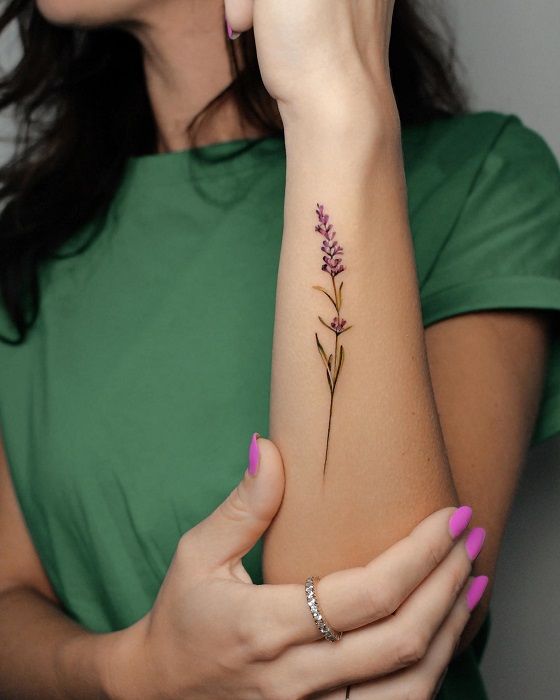
A generous stretch of bare stem gives this lavender tattoo an unusually elongated profile. Instead of filling the entire space with leaves and blossoms, the composition concentrates its purple details toward the upper portion and uses just a few narrow leaves below. That restraint works particularly well on the inner arm, where the vertical proportions can be appreciated without needing a large or elaborate design.
22. Detailed Single Lavender Bloom
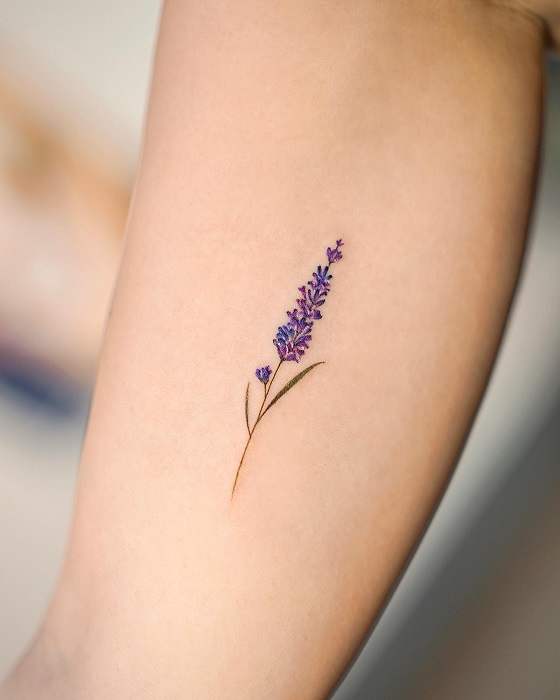
Focusing on one main flower spike allows the individual lavender buds to receive considerably more definition. Purple and blue-violet tones give the clustered blossoms depth, while a small secondary bud and two narrow leaves provide balance. This is a useful middle ground between micro tattoos and larger botanical pieces: compact in scale, yet detailed enough for the flower’s texture to become a focal point.
23. Lavender With a Bee and Hummingbird
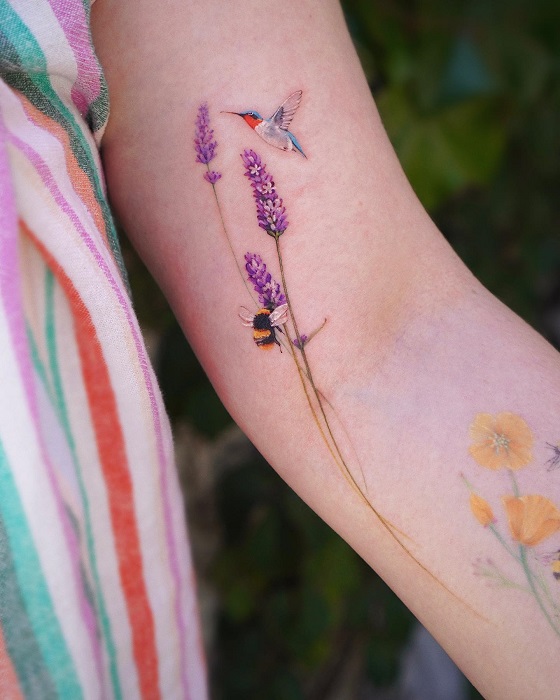
Adding wildlife turns these lavender stems into a miniature nature scene rather than a straightforward floral tattoo. A bee hovers near the lower blossoms while a tiny hummingbird appears above, creating activity at two different heights. The long, curving stems connect the elements without enclosing them, so the composition remains airy despite containing considerably more visual storytelling than a simple sprig.
24. Tall Lavender Stem With Defined Buds
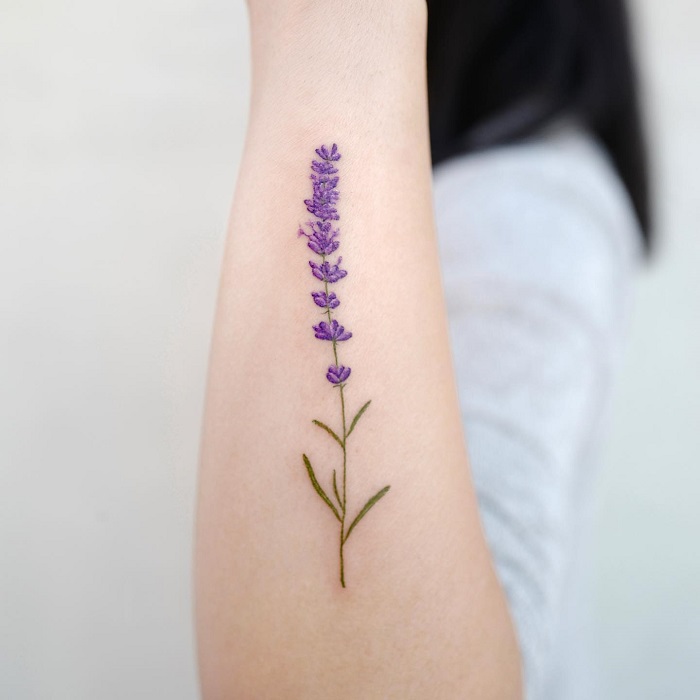
The orderly spacing of the purple blossoms is what stands out most in this single-stem lavender tattoo. Larger buds gradually transition into a denser flower spike at the top, giving the plant a clear sense of growth and structure. Long green leaves anchor the lower half, while the narrow vertical format makes efficient use of the forearm without spreading far across it.
25. Twin Lavender Sprigs on the Upper Arm
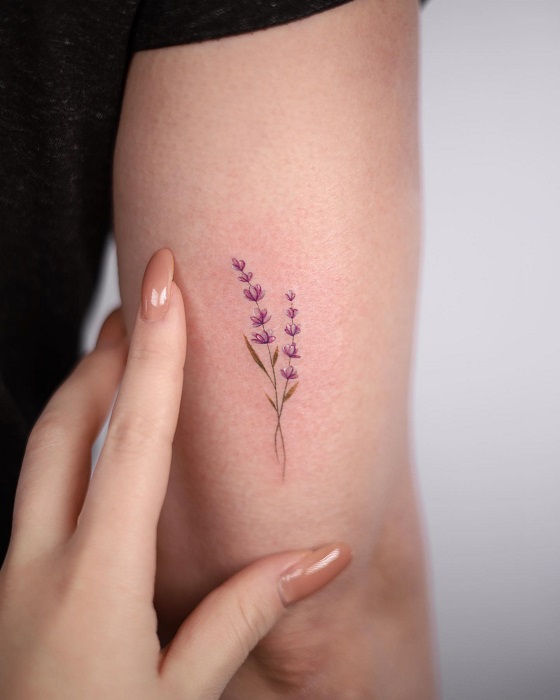
Two stems rise together but differ slightly in height and fullness, creating a naturally balanced pair. Their muted purple blossoms and restrained green leaves give the upper-arm tattoo enough color to register clearly while preserving its delicate scale. Using an uneven pair rather than identical stems is a simple way to make a minimalist lavender motif feel more organic and less formally symmetrical.
26. Artistic Lavender With a Purple Brushstroke
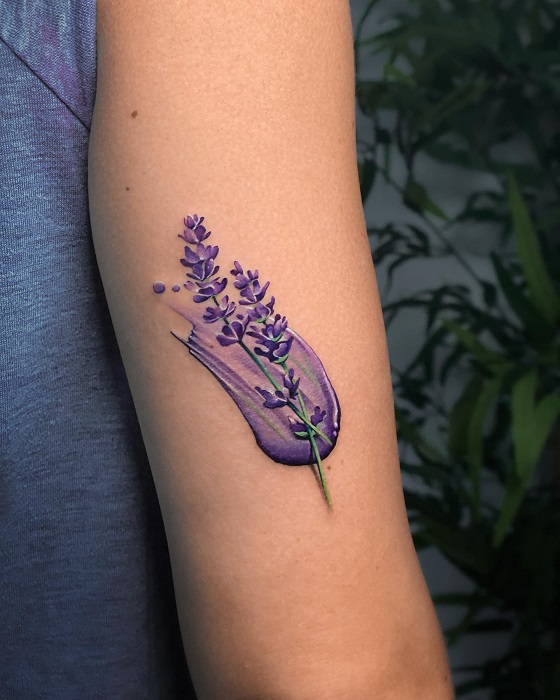
A broad violet brushstroke transforms this lavender tattoo into something closer to a small piece of contemporary artwork. Botanical stems cross over the painted-looking shape, combining recognizable floral detail with a loose, expressive background. The contrast is especially effective: crisp green stems and individual purple buds remain readable against the softer sweep of color, giving the composition depth without relying on a conventional border.
27. Lavender Framing a Full Moon
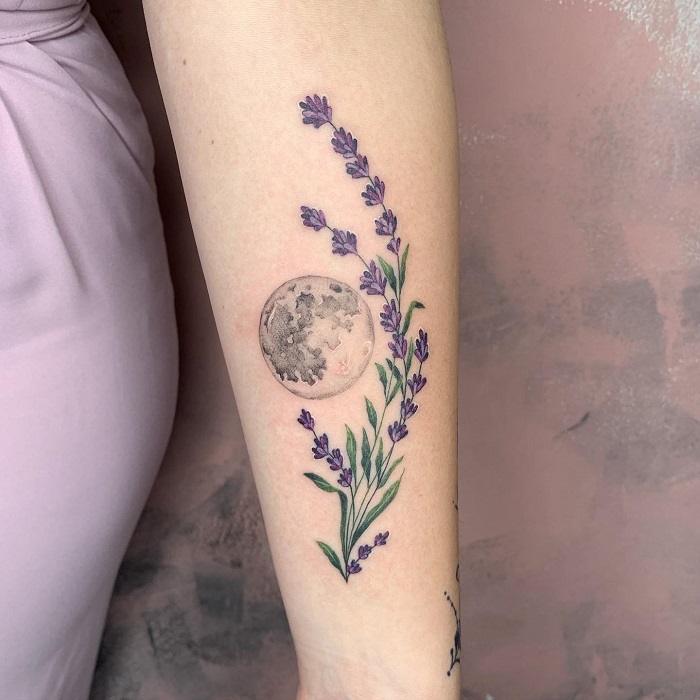
Lavender branches curve around a softly shaded full moon in this larger forearm composition, creating a strong contrast between botanical color and grey-toned celestial imagery. Rather than centering the moon above the flowers, the design nestles it among the stems. That overlap helps the separate motifs feel integrated and gives readers an example of how lavender can anchor a more thematic tattoo.
28. Fresh Lavender Bunch With Falling Petals
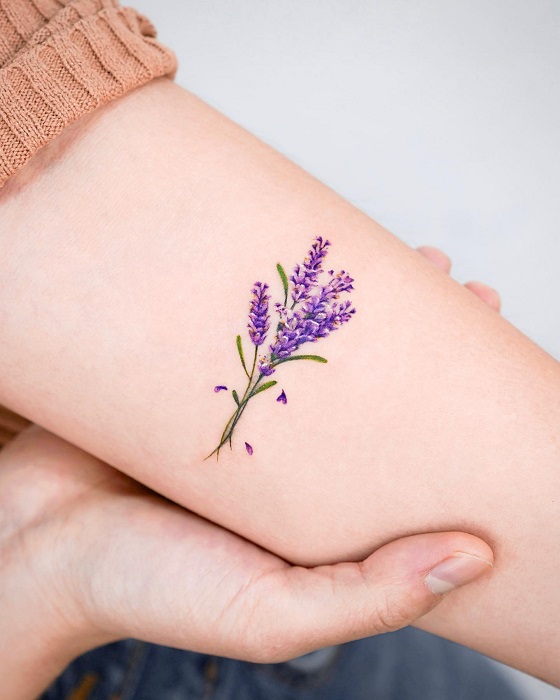
Several densely flowered stems give this small bouquet a fuller silhouette than a typical minimalist sprig. Tiny detached purple petals beneath the blossoms introduce a playful sense of movement, as though pieces have just fallen from the bunch. Keeping the stems fine and the leaves sparse prevents the richer flower heads from becoming too heavy, preserving plenty of breathing room around the tattoo.
29. Lavender Bouquet Tied With a Fine Bow

A loosely drawn purple bow brings a decorative finish to this narrow lavender bouquet without competing with the flowers themselves. The trailing ribbon lines extend below the stems, making the tattoo appear longer while adding very little visual weight. It is an effective detail for turning a few simple sprigs into a deliberately arranged bouquet while maintaining the fine-line character of the piece.
30. Three-Stem Lavender Forearm Tattoo
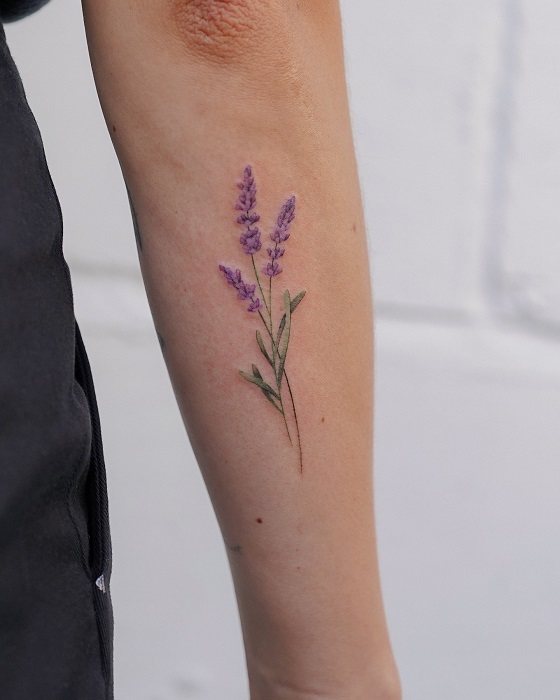
Three flowering spikes create a pleasing progression of heights, with the shortest branch leaning outward while the taller stems carry the eye upward. The leaves are more prominent than in many tiny lavender tattoos, giving the lower half enough visual substance to balance the purple blooms. Its straightforward botanical layout is easy to read and makes good use of a narrow forearm area.
31. Micro Lavender Tattoo Near the Wrist
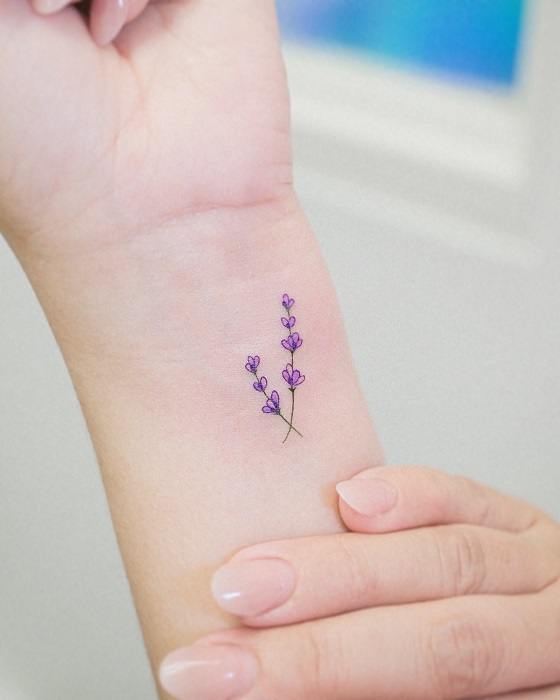
At this scale, simplicity becomes the defining feature. Two tiny stems are built from small purple petal-like shapes and hair-thin green lines, allowing the lavender motif to fit neatly near the wrist without looking compressed. The considerable negative space around it enhances the miniature effect, making this a strong reference for readers drawn to discreet tattoos that resemble tiny botanical illustrations.
32. Black-and-Grey Lavender at the Elbow
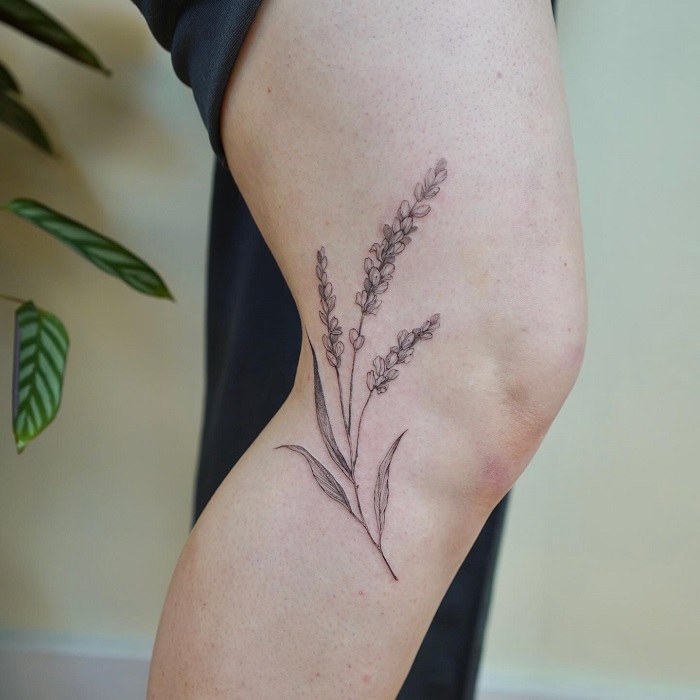
Removing lavender’s familiar purple coloring shifts attention toward form, texture, and linework. Three flower spikes spread across the area beside the elbow, accompanied by elongated leaves with subtle interior shading. The larger scale also gives each cluster room to show individual buds. For someone who prefers botanical imagery without colorful ink, this monochrome approach offers a distinctly different interpretation of the flower.
33. Small Lavender Ankle Pair
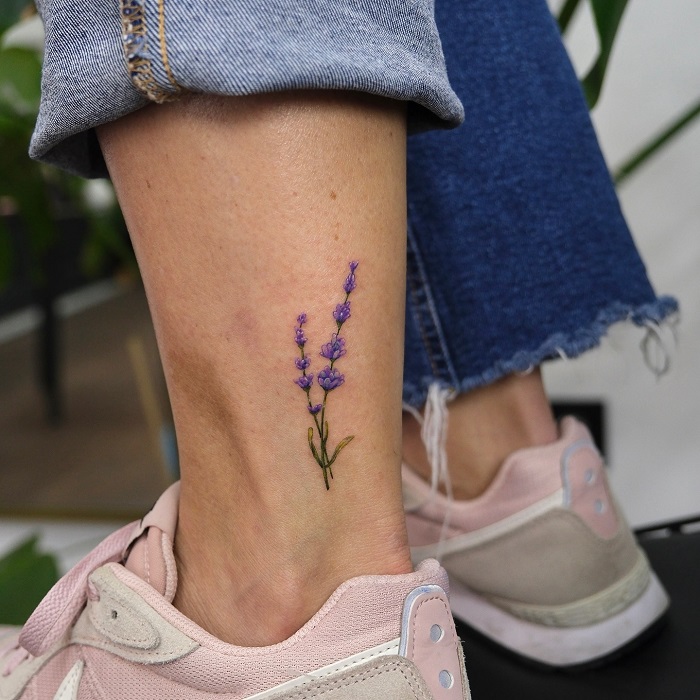
Two compact lavender stems rise just above the shoe line, making the ankle placement feel intentional without demanding much space. Rich purple buds stand out clearly against the skin, while short green leaves keep the composition grounded. Because the tattoo sits low on the leg, footwear can change how prominently it is displayed, adding some flexibility to an otherwise colorful little botanical accent.
34. Traditional-Style Lavender Bouquet
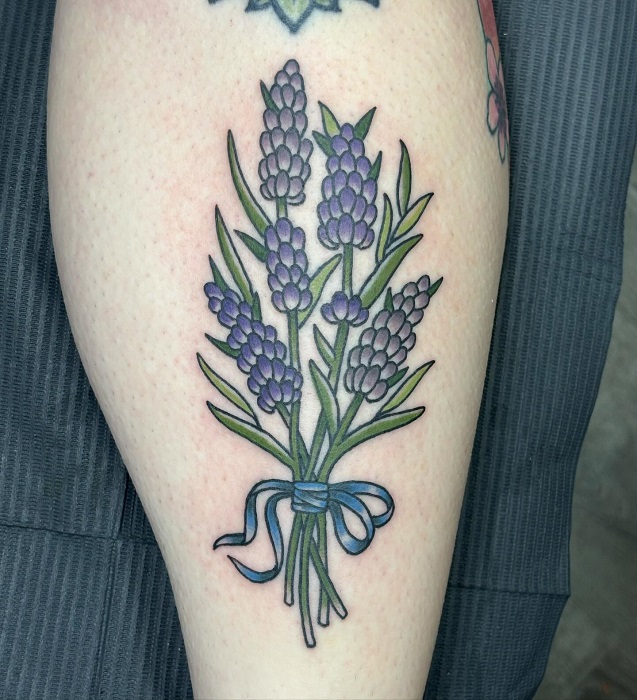
Bold outlines immediately separate this lavender bouquet from the finer botanical work elsewhere in the collection. Multiple flower heads, pointed green leaves, and a prominent tied ribbon create a substantial arrangement with a more graphic presence. Lavender’s muted purple palette is still recognizable, but stronger line weight makes the design readable from farther away and better suited to readers who prefer visibly defined tattoo artwork.
35. Ribbon-Tied Lavender Ankle Tattoo
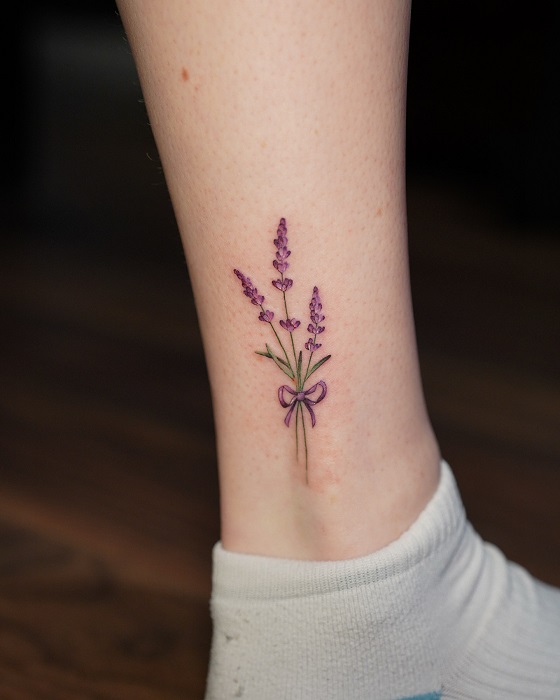
Three purple stems fan gently outward before meeting at a tiny bow, producing a miniature bouquet that fits neatly above the ankle. The ribbon is outlined in the same purple family as the blossoms, creating continuity instead of introducing another competing color. This coordinated treatment makes the decorative element noticeable while keeping the flowers firmly at the center of the composition.
36. Barely-There Lavender Ankle Linework
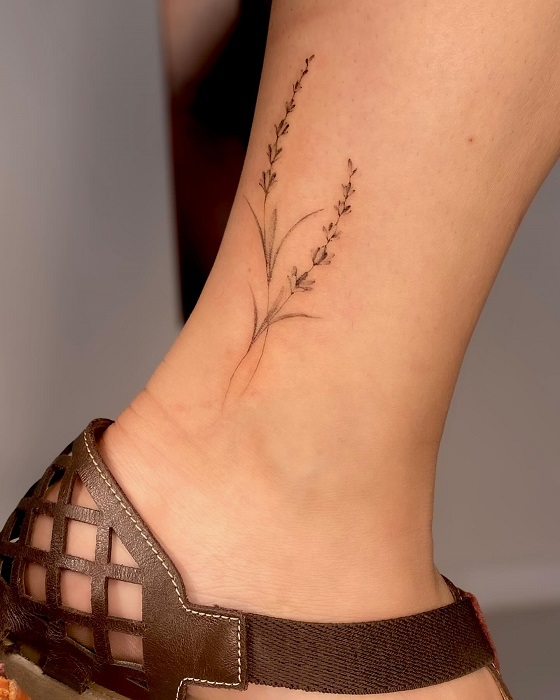
Fine brown-grey lines give these slender botanical stems an almost pencil-drawn appearance. With no vivid purple fill to announce the lavender immediately, the piece feels quieter and more abstract than the colorful examples. Its wispy branches also follow the vertical curve above the ankle nicely, demonstrating how reducing both saturation and line weight can make a floral tattoo exceptionally subtle.
37. Hanging Lavender Sprigs
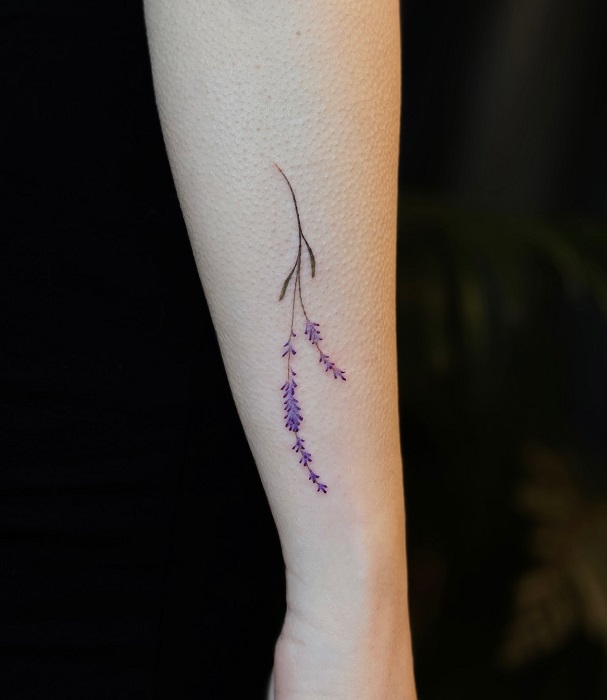
Turning the flowers downward gives this lavender tattoo an unexpected sense of gravity and movement. Several purple clusters hang from thin branching stems, reversing the upright growth pattern seen in most botanical designs. That orientation makes a familiar flower feel fresh without requiring extra motifs, and the elongated shape remains well suited to a narrow section of the arm.
38. Geometric Lavender Botanical Tattoo
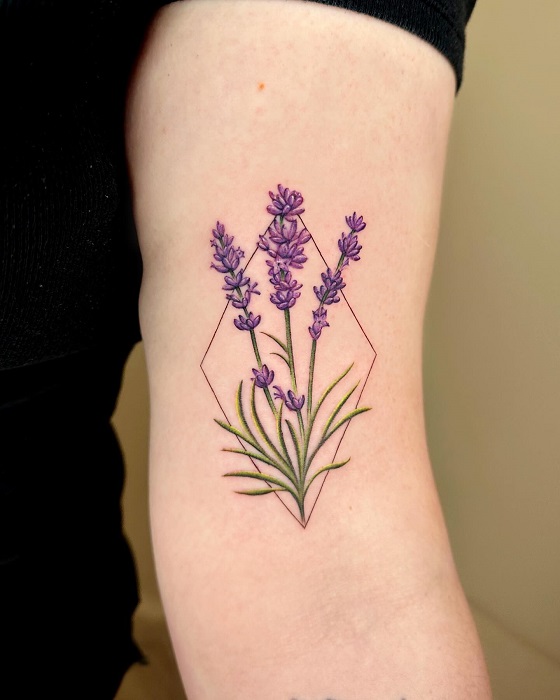
Angular linework provides a crisp geometric counterpoint to the organic lavender stems in this upper-arm piece. The pointed frame remains partially open, allowing leaves and blossoms to extend naturally rather than being confined inside a rigid shape. Purple flower clusters supply color while the green foliage fills the lower section, resulting in a thoughtful blend of botanical softness and modern structure.
39. Watercolor Butterfly and Floral Shoulder Tattoo
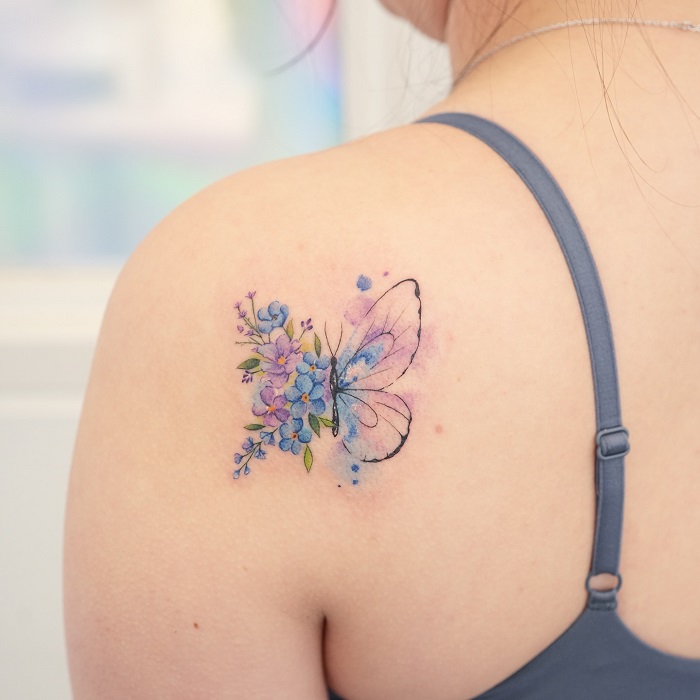
Loose washes of blue and violet extend beyond the butterfly’s fine outlines, producing a watercolor effect that feels intentionally less precise than traditional filled tattooing. A cluster of small blue-purple flowers overlaps one wing, visually merging the botanical and butterfly elements. Positioned high on the shoulder blade, the composition has enough room for those soft color transitions to remain noticeable.
40. Single Lavender Sprig on the Inner Ankle
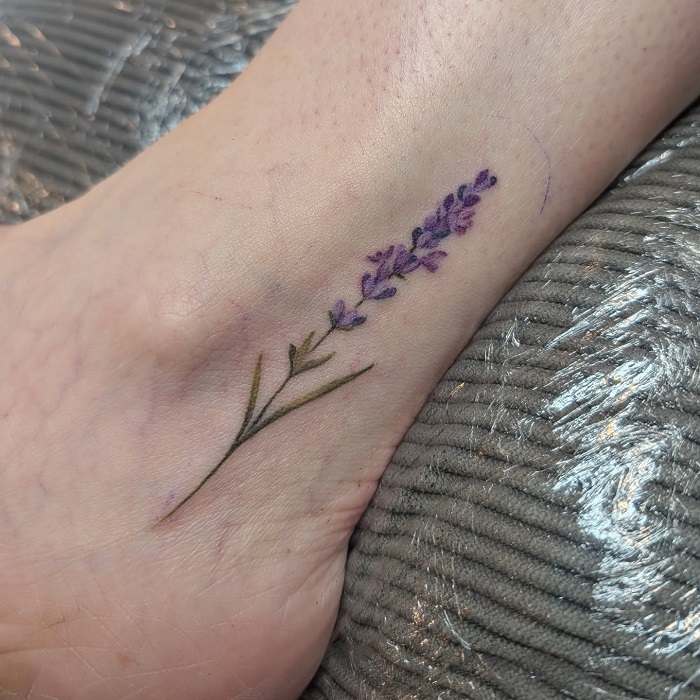
One lavender stem stretches diagonally along the inner ankle, using the available space without needing multiple branches or decorative additions. The flower head carries richer purple texture toward the tip, while three narrow green leaves balance the lower stem. Its orientation is especially effective here, following the angled transition between foot and leg rather than forcing the plant into a strictly vertical position.
41. Lavender Branch With a Butterfly
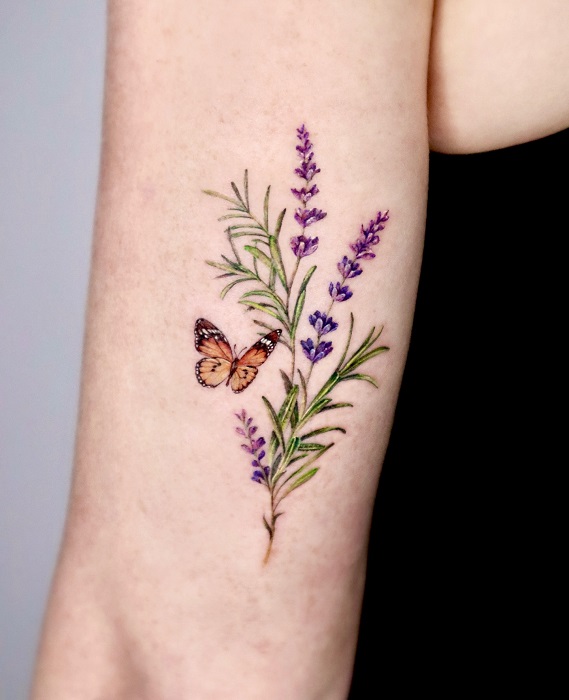
A warm-toned butterfly provides an immediate focal point among several purple lavender spikes and long green leaves. Because the insect sits to one side instead of directly above the flowers, the composition avoids looking overly symmetrical and gains a natural garden-like quality. The elongated arrangement also takes advantage of the arm’s vertical space while allowing the butterfly enough room to remain clearly defined.
42. Lavender Stems in a Glass Bottle

Presenting lavender inside a simple outlined bottle turns an ordinary floral arrangement into a miniature still life. Several purple stems extend beyond the container, while the mostly transparent vessel adds structure without covering the greenery. This concept is easy to personalize through the number or arrangement of flowers, yet even in its simplest form it offers more narrative character than a standalone botanical sprig.
43. Upside-Down Lavender Wrist Tattoo
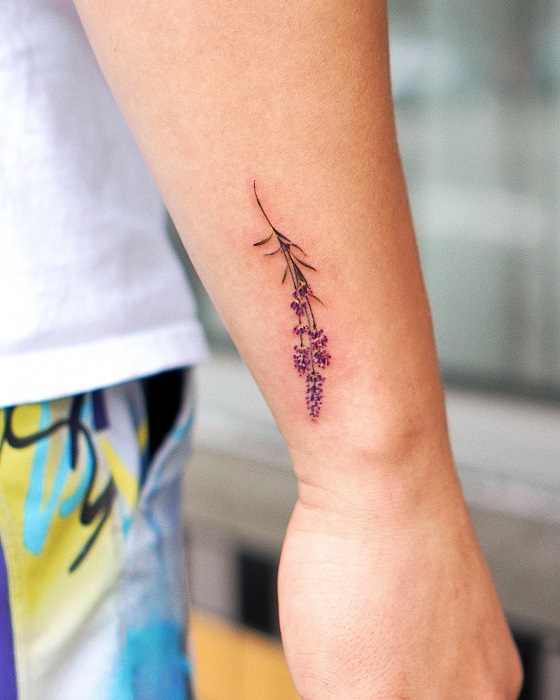
Here, the lavender hangs downward toward the wrist, giving the familiar sprig an entirely different visual rhythm. A curved dark stem leads into clustered purple blossoms, and the sparse leaves near the top emphasize the cascading orientation. Positioning the flower this way can make a narrow tattoo flow naturally toward the hand while distinguishing it from conventional upright lavender designs.
44. Tiny Lavender Sprigs Above the Ankle
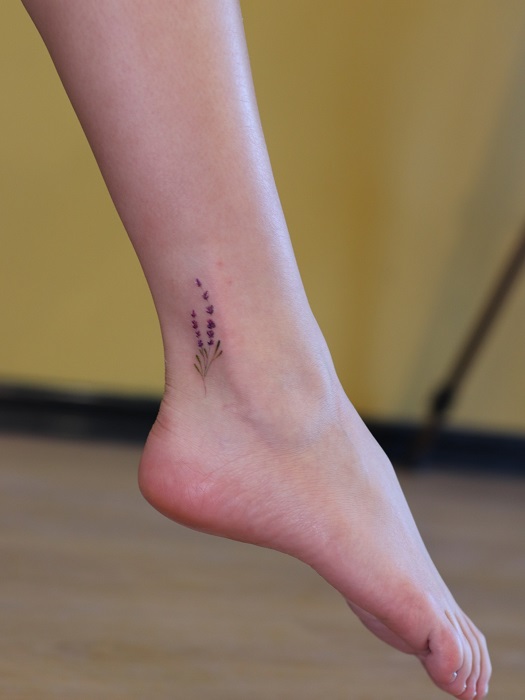
Small scale is pushed even further in this barely-there ankle tattoo. A handful of purple marks suggest several flowering tips, while extremely fine stems and leaves keep the botanical form recognizable without much detail. The considerable open skin surrounding the artwork becomes part of its appeal, making the lavender feel more like a discreet accent than a prominent decorative feature.
45. Airy Two-Stem Lavender Ankle Tattoo

Rather than filling each flower spike densely, this ankle piece spaces its purple blossoms farther apart, creating a loose and airy interpretation of lavender. Two stems rise at different heights, accompanied by only a few slender green leaves. The restrained detailing suits the compact placement particularly well because it prevents the small tattoo from becoming visually muddy or overly concentrated.
46. Lavender and Hydrangea-Style Floral Arrangement
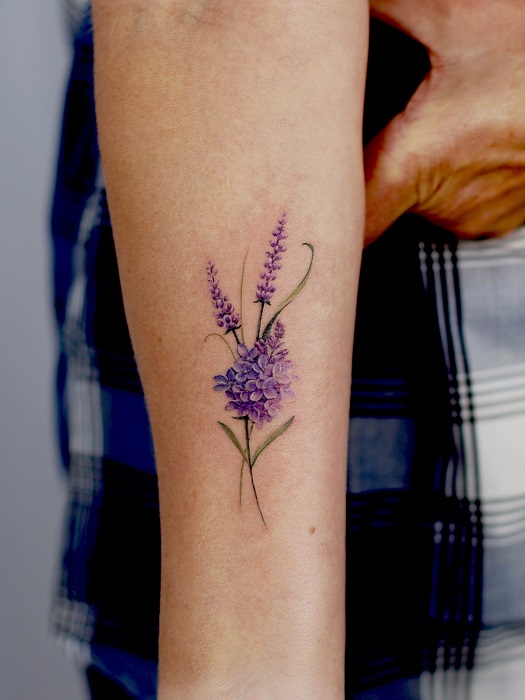
A rounded cluster of purple blossoms anchors this forearm composition, while taller lavender spikes extend upward to create contrast in shape and height. Curving green leaves weave between the flowers and prevent the arrangement from feeling rigid. Combining lavender with a fuller bloom is a smart compositional approach when you want more volume while still retaining the recognizable vertical character of lavender stems.
47. Tiny Lavender Finger Tattoo
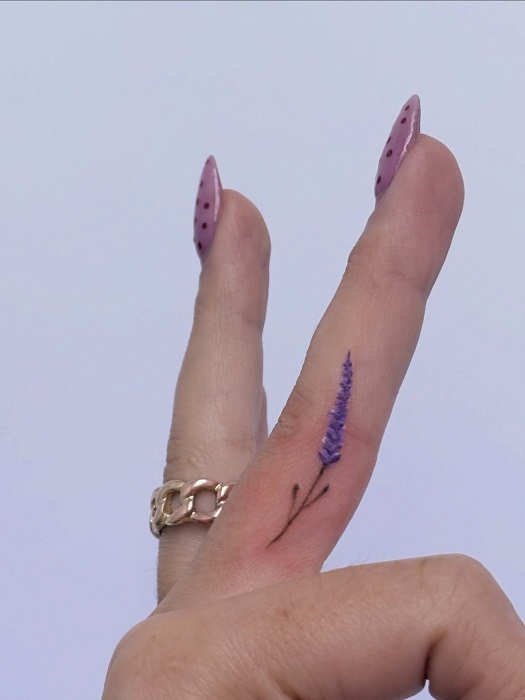
The side of a finger offers very little working space, so this lavender tattoo strips the plant down to its essentials: one narrow purple flower head, a thin stem, and a couple of tiny offshoots. Its vertical orientation mirrors the finger itself, helping the miniature artwork feel intentional. This placement makes it a particularly discreet option compared with forearm, shoulder, or ankle florals.
48. Full Lavender Bouquet With Ribbon

Numerous lavender spikes create a noticeably fuller bouquet here, with their varying heights producing a convincing gathered arrangement. Fine outlines define each purple bud, while long leaves fill gaps between the stems and a pale ribbon neatly gathers everything at the base. The increased scale allows repeated botanical details to remain legible, making this an appealing reference for a more substantial lavender tattoo.
49. Cascading Lavender and Blue Shoulder Flowers
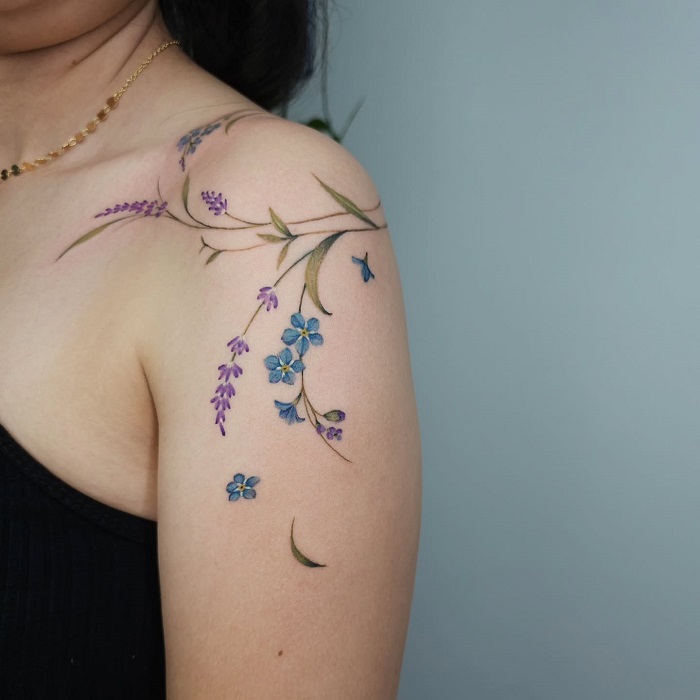
This shoulder piece treats the body almost like a canvas for trailing vines. Lavender-colored sprigs and small blue flowers sweep from the collarbone across the shoulder, with separate petals and leaves extending farther down the arm. The scattered composition feels intentionally less contained than a bouquet, allowing the botanical elements to follow the body’s curves and create movement across a wider area.
50. Stylized Blue and Purple Lavender Sprigs

Cool blue leaves give these lavender stems a more stylized palette than the natural greens used throughout many botanical tattoos. Purple buds remain recognizable, but the elongated blue foliage introduces a graphic, almost illustrative quality. The two stems overlap at the base and separate toward their tips, creating a clean V-shaped composition that fits neatly along the inner forearm.
51. Three Lavender Stems With Soft Purple Detail

Three flower spikes branch from crossing stems, creating a balanced arrangement without the formality of a tied bouquet. Each spike differs slightly in height and direction, while pale green leaves soften the lower portion. The purple blossoms appear lightly textured rather than heavily outlined, which gives this inner-arm lavender tattoo a gentler finish and keeps the slender composition from looking too graphic.
52. Compact Lavender Pair on the Upper Arm
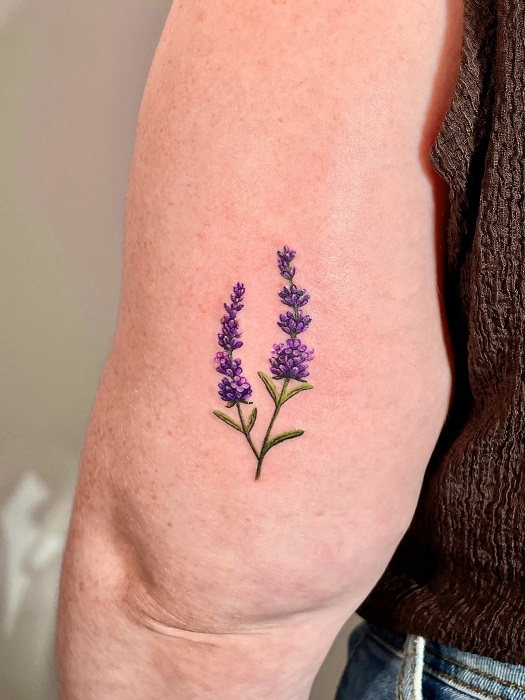
Dense clusters of purple buds make these two lavender spikes appear fuller and more substantial despite the tattoo’s modest dimensions. The short stems and simplified green leaves create a compact silhouette rather than the elongated shape seen in many lavender tattoos. That proportion works well on the upper arm, where a small design can occupy its own defined area without needing excessive length.
53. Side-Ankle Lavender Sprigs
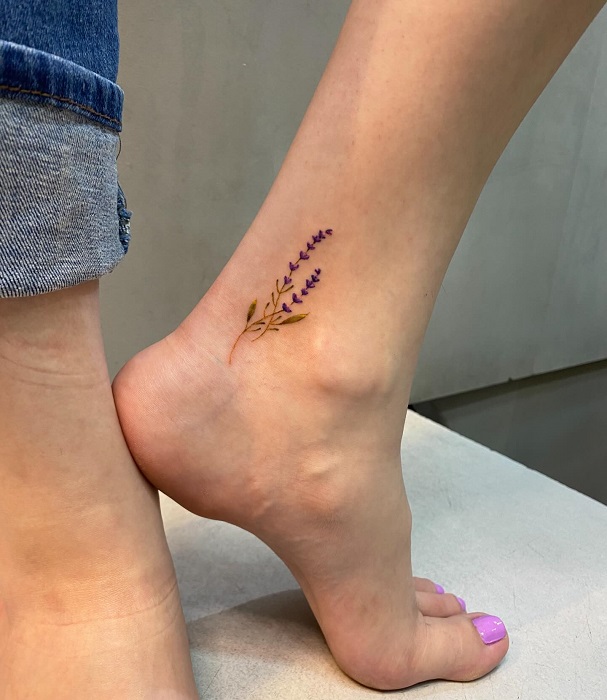
Placed just above the heel, two slender lavender branches angle gently toward the front of the ankle instead of climbing straight upward. This direction echoes the natural line of the foot and makes the tattoo feel integrated with its placement. Sparse purple buds and warm-toned stems maintain a low-key appearance, offering another way to approach ankle florals without using a centered vertical bouquet.
44. Lavender Tattoo Behind the Ear

The area behind the ear gives these lavender stems a distinctive vertical frame, with the blossoms rising toward the hairline and the crossed stems tapering toward the neck. Saturated purple buds keep the flowers visible despite the compact placement, while small green leaves add definition. It is an interesting alternative for readers who want lavender somewhere less conventional than an arm or ankle.
45. Lavender Rib Tattoo With a Tiny Bee

The side of the torso gives this lavender sprig room to spread diagonally rather than following a strict vertical line. Soft purple flower spikes and wispy green foliage keep the botanical portion light, while a tiny bee hovering beside the blooms introduces a subtle nature-inspired detail. The result feels intimate and organic, with the placement allowing the composition to remain relatively private.
46. Hanging Lavender Forearm Sprig
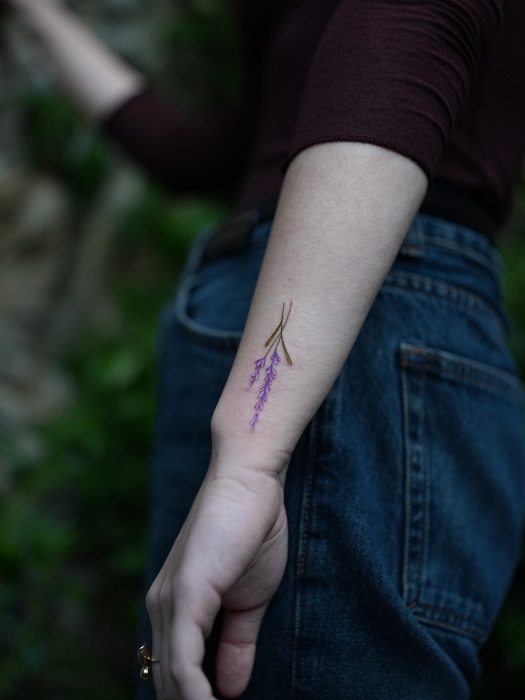
Suspending the lavender downward creates a relaxed, almost freshly picked appearance in this inner-forearm tattoo. Several fine stems meet near the top before the purple blossoms trail toward the wrist, making clever use of the arm’s length. The sparse foliage and uncomplicated composition also keep the final entry understated, proving that changing a flower’s orientation can refresh an otherwise familiar lavender motif.
Other Blog Posts