
Are you searching for a tattoo that combines beauty with profound symbolism?
Iris tattoos stand out not only for their stunning visuals but also for their connections to themes like faith and knowledge.
This article will delve into a variety of iris tattoo ideas, giving you a wealth of concepts to inspire your next ink.
Discover how these floral designs can serve as a reimagined canvas for expressing your identity and values.
✅ The 40 Iris Tattoo Ideas
1. Flowing Fine-Line Iris Shoulder Tattoo
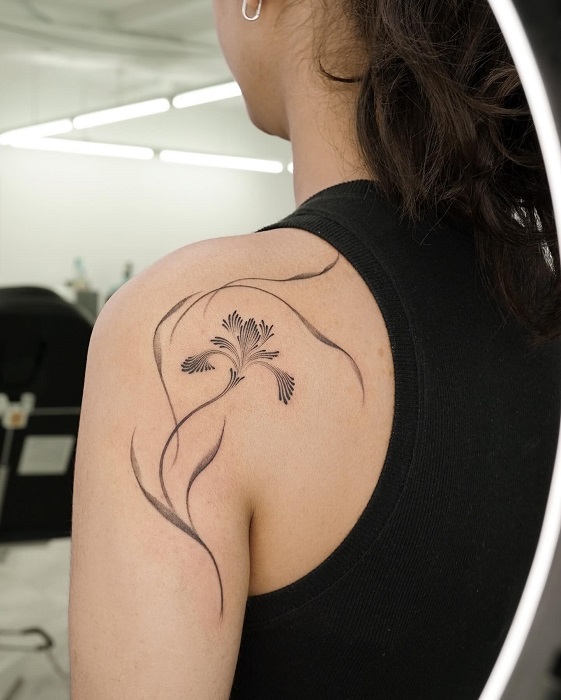
Long, sweeping lines give this shoulder piece a loose, almost sketched quality while a small iris anchors the composition. The curved outline follows the shoulder rather than sitting rigidly inside it, making the placement feel especially intentional. It’s a useful reference for anyone who likes floral tattoos with plenty of negative space and movement.
2. Blackwork Iris Pair on the Upper Arm

Two irises are connected by slender, dramatically curved stems in this upper-arm composition. Dark leaves and concentrated shading around the flowers provide contrast without making the whole piece feel heavy. The generous spacing between blooms is worth noting—it allows each flower to remain distinct while creating one continuous, elongated tattoo.
3. Delicate Purple Iris Forearm Tattoo
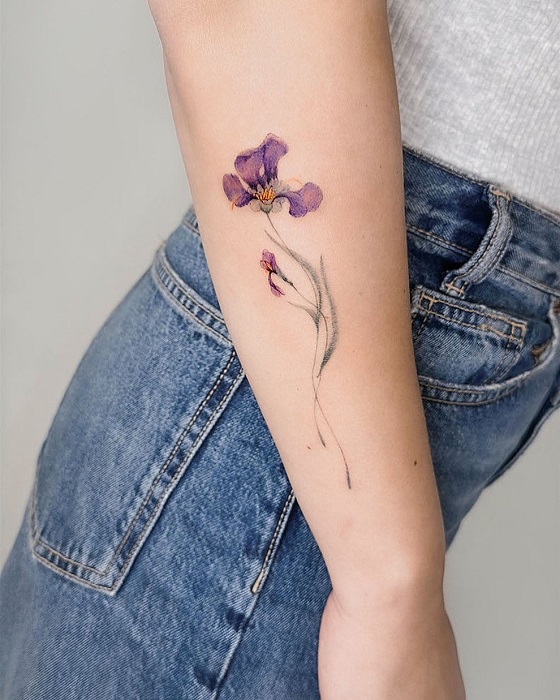
A restrained touch of purple can make a small floral tattoo surprisingly noticeable. Here, the softly colored iris is paired with an unopened bud and wispy green-gray foliage, keeping the overall look light. The narrow shape also suits the forearm well, offering color and recognizable botanical detail without requiring a large area of skin.
4. Tiny Iris Shoulder Accent

Scale is the defining feature of this tiny iris tattoo. Positioned near the shoulder, the purple bloom, bud, and slim green stem occupy very little space, so the effect is closer to a botanical accent than a statement piece. This approach shows how iris tattoos can retain their distinctive shape even when reduced to a particularly petite format.
5. Bold Stylized Iris Upper-Arm Piece

Rather than aiming for botanical realism, this large upper-arm tattoo emphasizes sweeping shapes, strong outlines, and striped interior details. The tall flowers and exaggerated leaves create an Art Nouveau-like sense of rhythm as the composition travels toward the elbow. Increasing the scale gives the iris petals room to become graphic, decorative features in their own right.
6. Colorful Iris Tattoo Along the Lower Leg

The natural height of an iris makes it especially adaptable to the lower leg, as this piece demonstrates. Two purple-toned blooms rise from a shared green stem, creating a vertical composition that fills the calf and shin area without excessive width. Muted botanical colors keep the larger scale approachable while still providing plenty of visual presence.
7. Fine-Line Irises Wrapping the Elbow

Placement around a joint can become part of the artwork rather than an obstacle. These fine-line irises spread across the inner arm and around the elbow, with flexible stems helping connect flowers positioned at different angles. The open composition avoids creating a dense block of ink, allowing the floral forms to move naturally with the contours of the arm.
8. Hummingbird and Iris Tattoo

Adding a hummingbird changes a straightforward botanical tattoo into a small nature scene. The bird hovers beside two iris blooms while curved leaves and ornamental lines create a balanced vertical frame. Because both subjects remain clearly recognizable in black ink, the piece has plenty of detail without relying on color to separate its different elements.
9. Watercolor-Style Purple Iris Wrist Tattoo
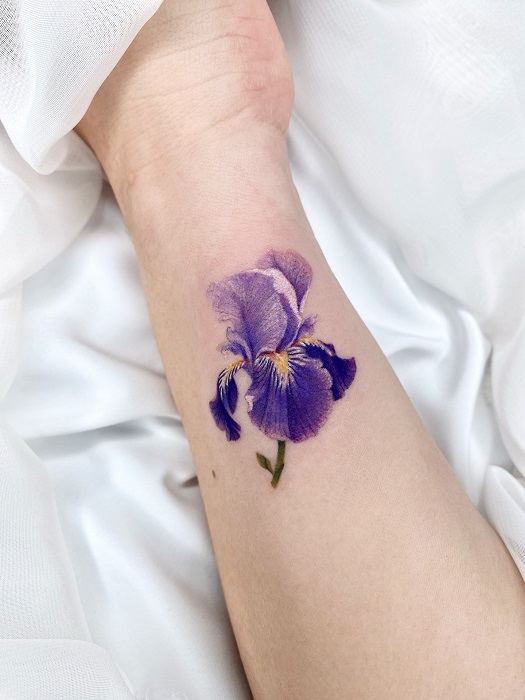
Rich violet and blue tones take center stage in this compact iris tattoo near the wrist. Soft transitions of color give the petals a painted quality, while the tiny green stem prevents extra foliage from competing with the bloom. Concentrating the detail in a single flower is an effective way to make a small color tattoo feel substantial.
10. Botanical Iris Forearm Tattoo in Rich Color
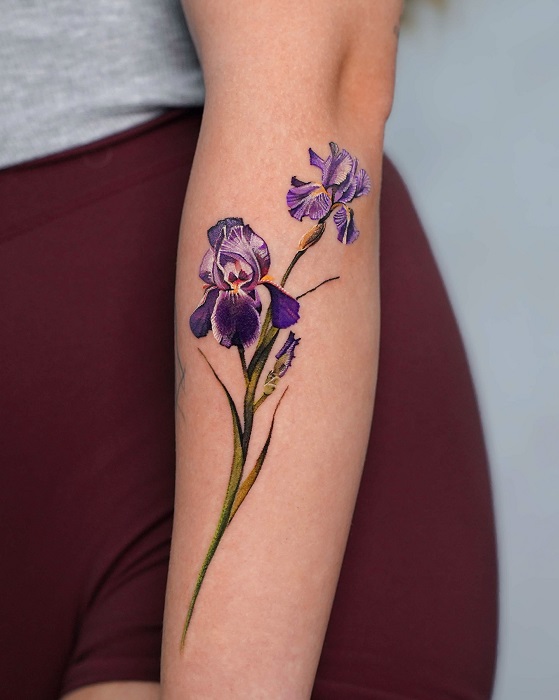
This forearm piece takes a more botanical approach, using multiple blooms and buds at different stages to build a naturally varied arrangement. Deep purple petals, warm accents, and green stems make the flowers easy to distinguish from one another. Its slim vertical silhouette takes advantage of the forearm’s length while keeping the edges of the tattoo relatively airy.
11. Petite Sketch-Style Iris Tattoo
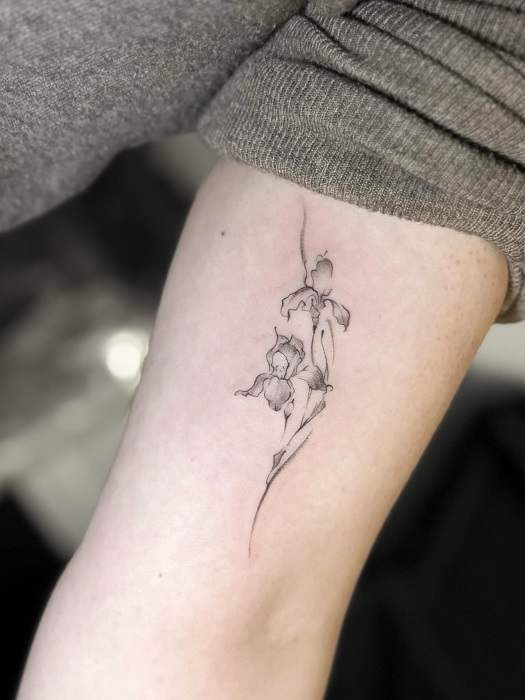
Extremely light linework gives this small iris an understated, hand-drawn character. Instead of heavy outlines or filled shading, the flower is suggested through delicate contours and just enough internal detail to define the petals. It’s a useful example of how reducing both scale and line weight can make a recognizable floral motif feel exceptionally subtle on the arm.
12. Graphic Black Iris Forearm Tattoo

Broad black sections and clean contour lines give this iris a much stronger graphic identity than a conventional fine-line flower. Alternating filled and unfilled areas create depth across the petals while preserving a crisp silhouette. The curved stem and leaves soften those bold shapes, resulting in a design that sits comfortably between botanical imagery and illustrative blackwork.
13. Single Iris With Detailed Fine Shading
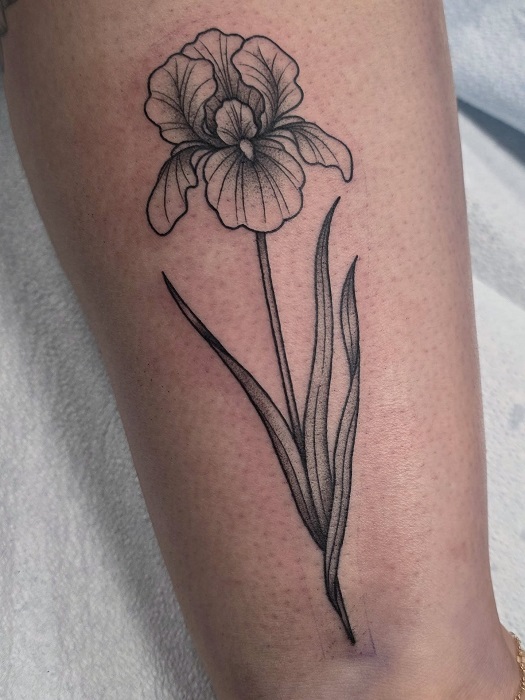
A solitary iris can carry plenty of detail when given enough vertical space. Fine stippling and closely worked lines add texture to the petals, while the long stem and blade-like leaves keep the composition elegant and narrow. This layout is especially useful inspiration for placements where you want noticeable botanical detail without extending far around the limb.
14. Airy Iris Tattoo With Sweeping Leaves

Instead of outlining every element heavily, this iris tattoo uses very thin strokes and widely spaced foliage to create an airy silhouette. The curved leaves extend well beyond the flower, making the overall composition feel taller and more fluid than the bloom alone. That balance of detailed petals and minimal supporting lines keeps the piece visually light.
15. Two-Iris Leg Tattoo With Flowing Stems

This larger leg piece uses two blossoms at different heights to create an easy visual rhythm from knee toward ankle. Long, arcing leaves fill the space between them without overcrowding the flowers. Keeping the tattoo primarily line-based also helps a design of this size remain relatively soft, proving that larger floral work does not necessarily require dense shading.
16. Softly Shaded Iris Upper-Arm Tattoo

Placed on the inner upper arm, this single iris has enough room for softly rendered petal folds while remaining compact. A short stem and a few small leaves keep attention firmly on the flower rather than stretching the composition vertically. The result offers a middle ground between tiny minimalist florals and larger, more elaborate botanical pieces.
17. Detailed Blackwork Irises on the Calf

On darker skin, the confident outlines and textured shading of this calf tattoo give the flowers strong definition. Multiple iris blooms, a bud, stems, and pointed leaves form a dense botanical arrangement without losing the individual petal shapes. Extending the stems downward also reinforces the calf’s vertical line and gives the larger cluster a clear visual foundation.
18. Blue and Purple Iris Upper-Arm Tattoo

Cool blue, violet, and turquoise tones give this pair of irises a contemporary color treatment. Rather than outlining every edge in black, much of the structure comes from shifts in hue, allowing the flowers to feel softer against the skin. The elongated leaves echo the petals’ blue tones and neatly connect the two blooms into one cohesive upper-arm piece.
19. Abstract Fine-Line Iris Composition

Botanical forms meet abstract linework in this forearm tattoo. Two outlined iris blooms remain the recognizable focal point, while angular strokes, dots, and broken lines introduce a more experimental character around them. Mixing organic petals with less literal marks is an interesting way to personalize a familiar flower motif without adding another object, color, or lettering.
20. Tiny Purple Iris Ankle Tattoo

A miniature iris sits neatly above the ankle, using muted purple petals and slender brown-green leaves to keep the flower readable at a small scale. The placement works particularly well with the upright growth pattern of the plant. Compared with a larger floral arrangement, this compact version feels discreet while still benefiting from carefully placed color and botanical detail.
21. Fine-Line Iris With Script Detail
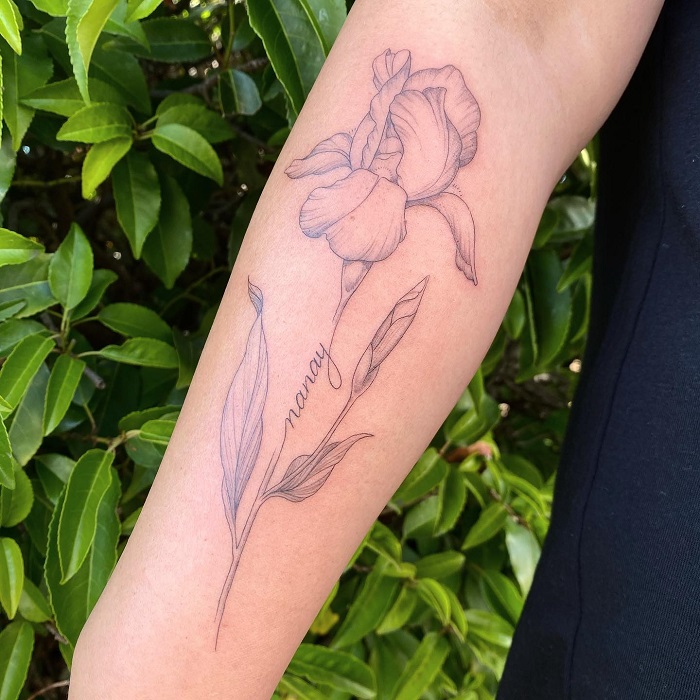
Fine botanical lines make this forearm iris feel graceful without relying on color or heavy shading. The handwritten word tucked alongside the stem adds a personal element while staying secondary to the flower itself. It’s a useful example of how short lettering can be integrated into a floral tattoo rather than positioned as a separate design.
22. Jewel-Toned Blue Iris Calf Tattoo

Deep teal-blue petals give this single iris a richer, moodier palette than the more familiar purple versions. Golden details near the center provide a small point of warmth, while the long green leaves naturally extend the tattoo down the calf. The straightforward botanical composition lets the unusual flower color remain the main attraction.
23. Painterly Blue Iris With Buds

Soft-edged color gives this iris an almost painted-on appearance, especially where blue and violet overlap across the petals. Two small buds and several long, grasslike leaves add height without making the composition busy. Keeping most of the saturated color near the top also creates a pleasing visual progression from the bloom to the narrow stems below.
24. Pink and Yellow Illustrative Iris

Pink isn’t the first color many people associate with iris tattoos, which is exactly what makes this version stand out. Fine red-pink lines emphasize every fold of the oversized petals, while touches of yellow introduce contrast near the center. A simple green stem grounds the elaborate bloom and prevents the colorful composition from becoming overly decorative.
25. Miniature Purple Iris at the Ankle

Positioned just above the ankle, this tiny iris uses surprisingly detailed purple shading within a very compact footprint. Two pointed green leaves create a clean V-shaped base beneath the flower, giving the miniature design a balanced silhouette. It demonstrates how careful contrast can preserve recognizable petal details even when an iris tattoo is scaled down considerably.
26. Iris and Bud Forearm Illustration

A fully opened iris paired with a rounded bud makes this forearm piece feel like a botanical study rather than an isolated flower. Fine black outlines define the layered petals, while selective darker shading adds depth around their folds. The stems converge toward the wrist, creating a tapered composition that makes particularly effective use of the forearm’s shape.
27. Ornamental Iris With Dotted Circle
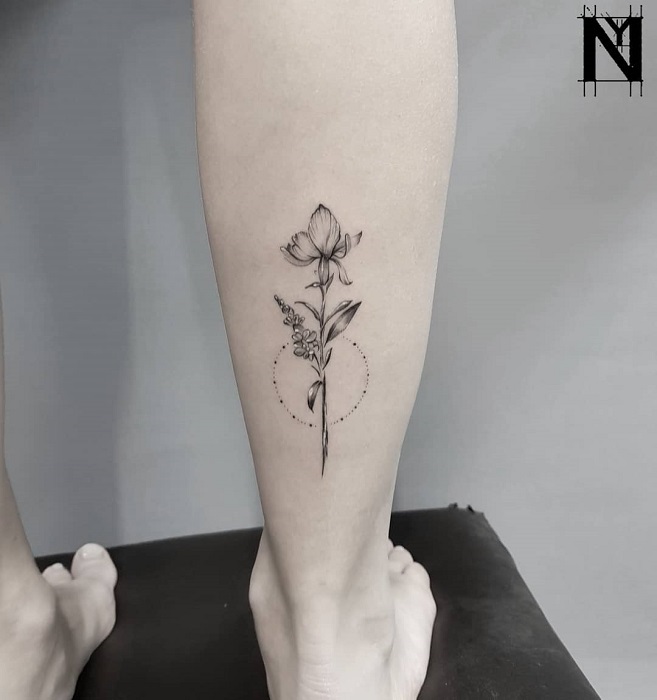
Botanical and geometric elements meet in this slender lower-leg tattoo. A small iris rises above additional foliage, while a dotted circle sits behind the central portion of the stem as a subtle ornamental accent. Because the geometry is so lightly rendered, it frames the plant without overpowering it—a useful approach for adding structure to delicate floral linework.
28. Detailed Black-and-Grey Iris Upper-Arm Tattoo

Close line shading brings out the ruffled texture that makes an iris so visually distinctive. This larger upper-arm version gives the bloom plenty of room, with a tall stem and sweeping leaves extending the composition downward. Choosing black and grey instead of botanical color puts more emphasis on petal structure, texture, and the flower’s dramatic silhouette.
29. Sketchy Long-Stem Iris Tattoo
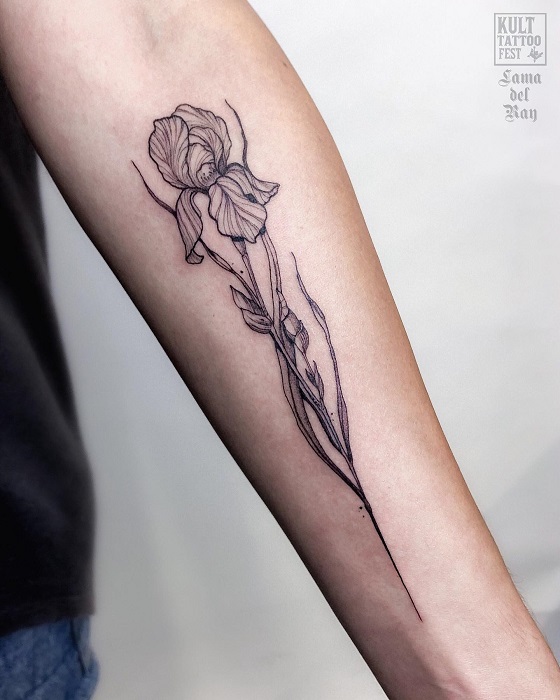
Loose overlapping strokes give this forearm iris the character of an artist’s botanical sketch. The flower itself contains closely spaced contour lines, while the narrow stem and leaves become progressively more abstract toward the wrist. Tiny dots and imperfect-looking marks reinforce the hand-drawn effect, offering an alternative to highly polished or strictly symmetrical floral tattoos.
30. Minimal Single Iris Forearm Tattoo

With one flower, one bud, and only a few leaves, this forearm piece shows the appeal of editing a botanical motif down to its essentials. Delicate shading adds definition inside the bloom without darkening the overall tattoo. Its centered, upright arrangement also makes the iris easy to appreciate from a distance while retaining enough detail for closer viewing.
31. Red-Line Iris With Dark Foliage

Color contrast drives this unconventional iris tattoo. The bloom and stem are drawn in vivid red, while surrounding leaves and rounded botanical forms use darker, muted shading. Separating the flower from its foliage through color creates an almost layered effect and shows that an iris can become the focal point without needing fully saturated, realistic coloring.
32. Wispy Purple Iris Botanical Tattoo
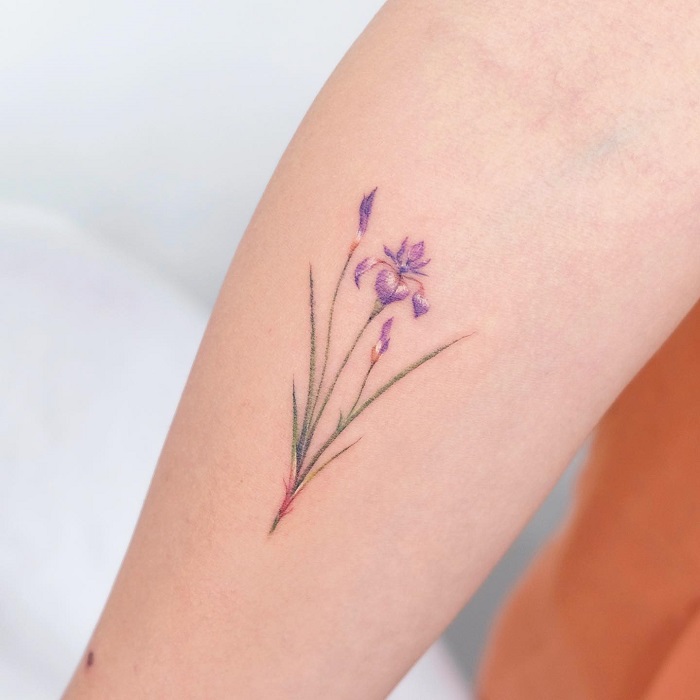
Thin green blades fan outward beneath a petite purple iris, giving this piece the delicacy of a pressed botanical specimen. Small buds extend the arrangement vertically but leave plenty of open skin between each element. The restrained scale and soft color application work particularly well for readers drawn to floral tattoos that look light, natural, and quietly detailed.
33. Watercolor Iris Across the Collarbone

Instead of following the vertical growth pattern used in many iris tattoos, this piece spreads horizontally across the collarbone and shoulder. Soft lavender petals create a watercolor-like focal point, while long violet strokes sweep outward with the body’s natural line. The unusual orientation turns the flower into a composition designed specifically around the placement rather than a freestanding botanical image.
34. Brushstroke-Style Iris Ankle Tattoo

Sharp, tapered strokes give this small ankle iris an expressive ink-painting quality. The petals carry fine dark detailing with a tiny warm accent at the center, while elongated leaves appear almost brushed onto the skin. This style is an interesting middle ground between realistic botanical work and minimalist line art, especially for a compact placement.
35. Petite Black-and-Grey Iris Above the Ankle

For a small tattoo, this ankle iris includes a notable amount of internal petal texture. Fine shading creates depth while the short stem and pointed leaves keep the silhouette neat and contained. The placement leaves enough open space around the flower for every line to remain visible, making the design feel intentional rather than squeezed into a small area.
36. Large Flowing Iris Thigh Tattoo

Scale gives this iris room to become more sculptural. The flower sits high on the thigh while exceptionally long stems and looping leaves travel toward the knee, emphasizing the leg’s length. Rather than filling the entire area with shading, the design relies on open space and sweeping curves, allowing a sizable tattoo to retain a refined, lightweight appearance.
37. Purple Iris Sprig on the Upper Arm

Several small purple blooms climb this slender green stem, producing a sprig-like interpretation of the iris theme. The flowers vary slightly in direction and height, which prevents the narrow arrangement from feeling rigid. Its modest width makes especially good use of the inner upper arm, where an elongated botanical piece can follow the limb without wrapping far around it.
38. Two-Iris Fine-Line Forearm Arrangement

Two blooms placed at different heights create depth in this softly shaded forearm composition. Long leaves weave between the flowers and continue beyond them, giving the tattoo a natural sense of upward growth. Subtle tonal work inside the petals adds dimension without strong black fills, making this a useful reference for larger fine-line florals that still feel restrained.
39. Shaded Twin Iris Botanical Tattoo
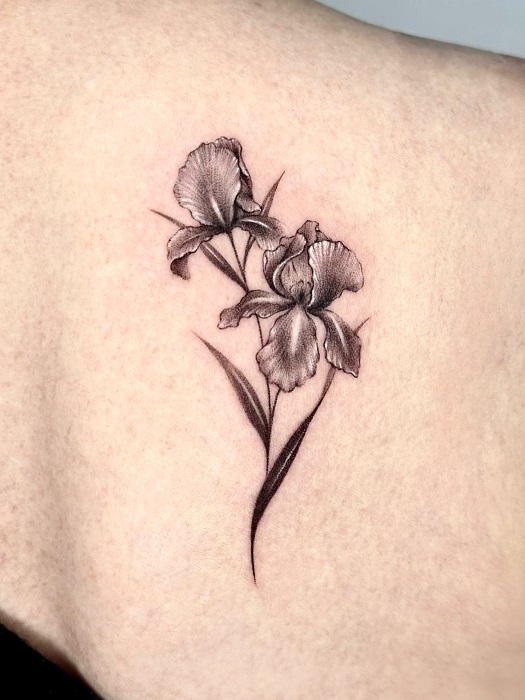
Rather than using color to distinguish the petals, this compact floral piece relies on fine stippling and graduated black-and-grey shading. Two irises overlap near the top while sharply tapered leaves form a simple base beneath them. Grouping the flowers closely produces a fuller focal point without requiring the sprawling stems of a larger botanical arrangement.
40. Decorative Iris With Curling Vine Lines
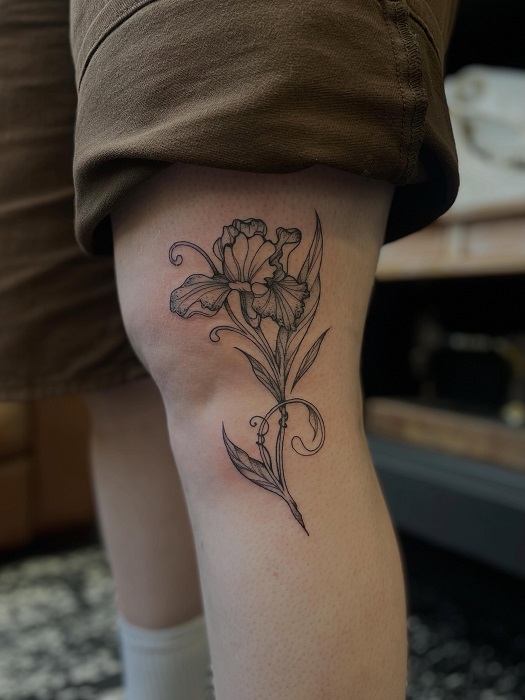
Curled lines introduce an ornamental twist to this otherwise botanical iris tattoo. They spiral around the flower and stem, echoing the curves of the petals while giving the composition a slightly decorative, illustrative character. The piece offers a useful reminder that supporting linework doesn’t have to imitate real foliage; abstract flourishes can reshape the mood of a familiar floral subject.
Other Blog Posts