
Did you know that hibiscus tattoos symbolize beauty and resilience across various cultures?
If you’re considering a floral ink design, hibiscus tattoos offer a vibrant choice that goes beyond aesthetics.
In this article, we’ll explore unique hibiscus tattoo ideas, helping you find the perfect design that resonates with your personal story.
Whether you’re a tattoo veteran or a first-timer, these stunning concepts will inspire your next ink adventure.
✅ The 40 Hibiscus Tattoo Ideas
1. Black-and-Grey Hibiscus Forearm Piece

Layered hibiscus blooms, leaves, and smaller botanical accents turn this forearm tattoo into a full floral composition rather than a single-flower motif. Fine dotwork and graduated black-and-grey shading give the petals softness while keeping the darker foliage distinct. The elongated arrangement also makes smart use of the forearm, naturally following its shape toward the wrist.
2. Watercolor Hibiscus Shoulder Tattoo
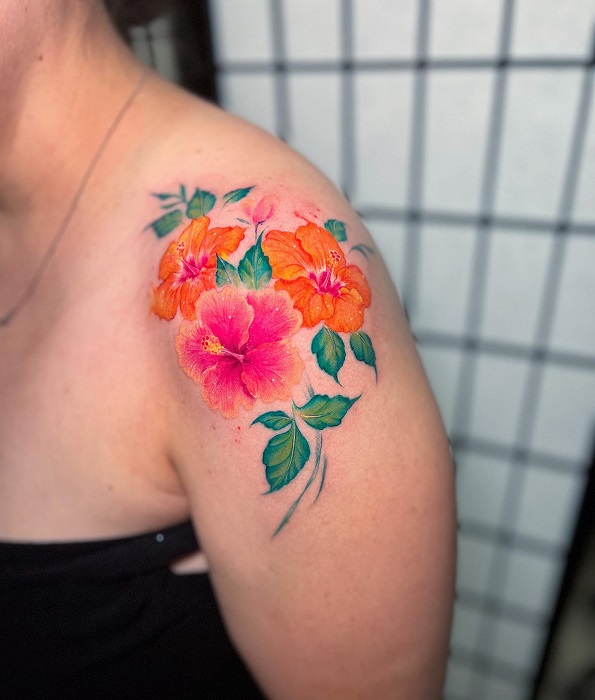
Bright pink and orange hibiscus flowers bring a painterly quality to this shoulder tattoo, with touches of green providing contrast among the warmer shades. The loosely defined color transitions create a watercolor-inspired effect that feels less rigid than heavily outlined floral work. Keeping the arrangement compact also allows the flowers to sit neatly within the rounded shoulder area.
3. Hibiscus and Foliage Ankle Design
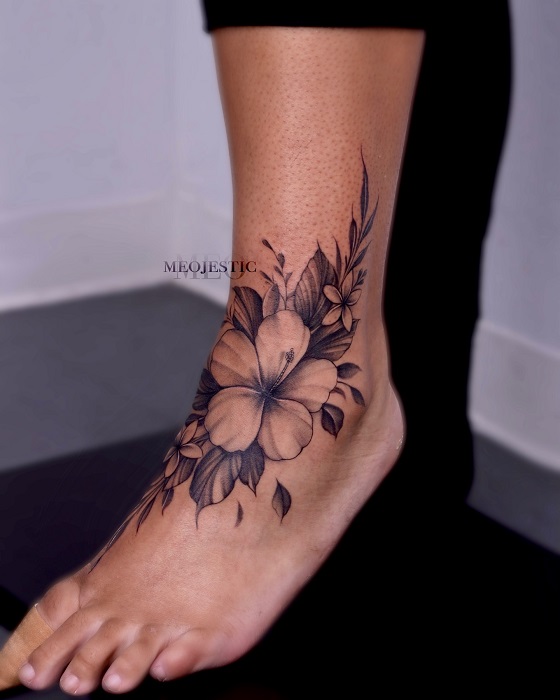
Placing a hibiscus arrangement across the ankle and upper foot gives the floral motif an interesting sense of movement. Instead of stopping at the ankle, the leaves and slender botanical details extend upward and outward, helping the composition flow with the leg. The muted black-and-grey treatment keeps this relatively detailed piece understated despite its generous coverage.
4. Delicate Pink Hibiscus Branch

Two pink hibiscus blooms arranged along a slender stem offer a lighter alternative to dense tropical bouquets. Soft color gradients add dimension to the petals, while the olive-green foliage keeps the palette warm and natural. This narrower composition is especially adaptable to areas such as the inner arm, where a vertical floral tattoo can follow the body’s existing lines without feeling crowded.
5. Tropical Hibiscus Shoulder Bouquet

Rather than treating the hibiscus as an isolated flower, this shoulder piece surrounds it with patterned leaves, smaller blossoms, and a bird-of-paradise-style floral accent. That variety creates the lush impression of a tropical garden. The broad, rounded composition works particularly well on the shoulder blade area, where there is enough space for multiple colors and leaf shapes to remain readable.
6. Hummingbird and Hibiscus Tattoo
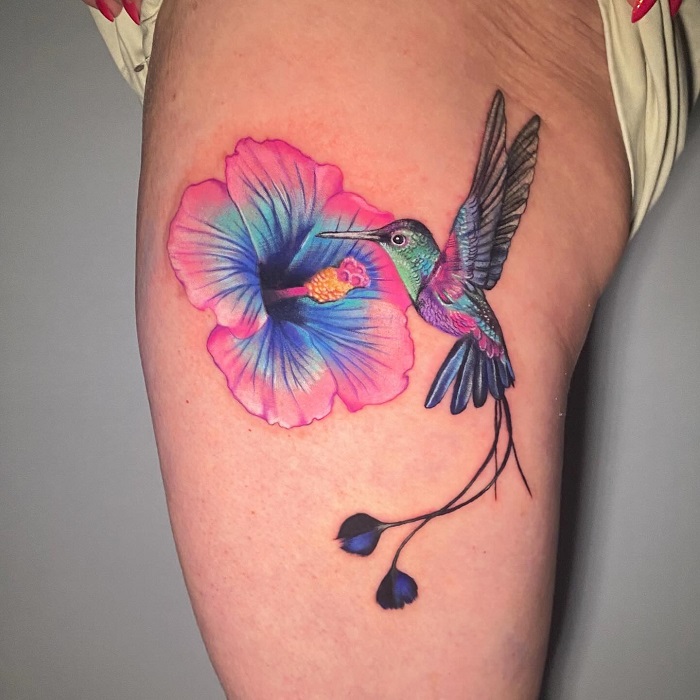
Pairing a hibiscus with a hummingbird adds both movement and narrative interest to a floral tattoo. Here, the bird’s extended wings and long tail feathers balance the oversized flower rather than competing with it. Saturated pinks, blues, and greens make this an especially expressive option for readers drawn to vivid nature-inspired tattoos with a more illustrative character.
7. Muted Hibiscus Upper-Arm Florals

Warm, slightly subdued reds and oranges give these hibiscus flowers a softer character than highly saturated tropical colorwork. The blooms are connected by dark leaves and winding stems, creating an organic arrangement that feels almost like a botanical illustration transferred onto the upper arm. This approach shows how hibiscus tattoos can feel earthy and vintage-inspired rather than overtly tropical.
8. Fine-Line Hibiscus Shoulder Arrangement

Fine lines do most of the visual work in this larger shoulder tattoo, defining overlapping petals, leaves, and smaller flowers without relying on heavy blocks of shading. The result feels airy even though the composition covers substantial space. Extending the botanical elements vertically down the upper arm also creates a graceful silhouette that could be expanded later without disrupting the original arrangement.
9. Minimal Hibiscus Linework Tattoo

A restrained palette and delicate outlines make this pair of hibiscus flowers an appealing reference for a quieter botanical tattoo. Subtle shading is concentrated in the leaves, allowing the petals to remain light and open. Because the composition is relatively simple and compact, the idea could translate easily to the forearm, calf, or another narrow placement without requiring extensive coverage.
10. Realistic Red Hibiscus Shoulder Tattoo

One oversized hibiscus can make as much impact as an entire floral arrangement when scale and detail become the focus. Rich red petals, darker folds, pale highlights, and a textured yellow-orange stamen give this shoulder tattoo a realistic, dimensional appearance. Choosing a broad placement provides enough room for those subtle petal variations to remain visible rather than being compressed into a smaller design.
11. Softly Shaded Hibiscus Forearm Cluster

Light shading gives this pair of hibiscus blooms plenty of definition without turning the forearm piece into a heavy blackwork design. The darker leaves provide just enough contrast to frame the paler petals and make their fine details noticeable. Its vertical composition is especially effective here, filling the available space while leaving areas of bare skin between the botanical elements.
12. Petite Pastel Hibiscus Bouquet

Small-scale floral tattoos can still carry impressive detail, as this delicate bouquet demonstrates. Pale pink hibiscus flowers are mixed with tiny coordinating blossoms and slender green stems, producing an almost pressed-flower effect. The restrained proportions leave plenty of negative space around the arrangement, making it a useful reference for anyone who prefers color tattoos that feel light and refined.
13. Bold Blackwork Hibiscus Pair
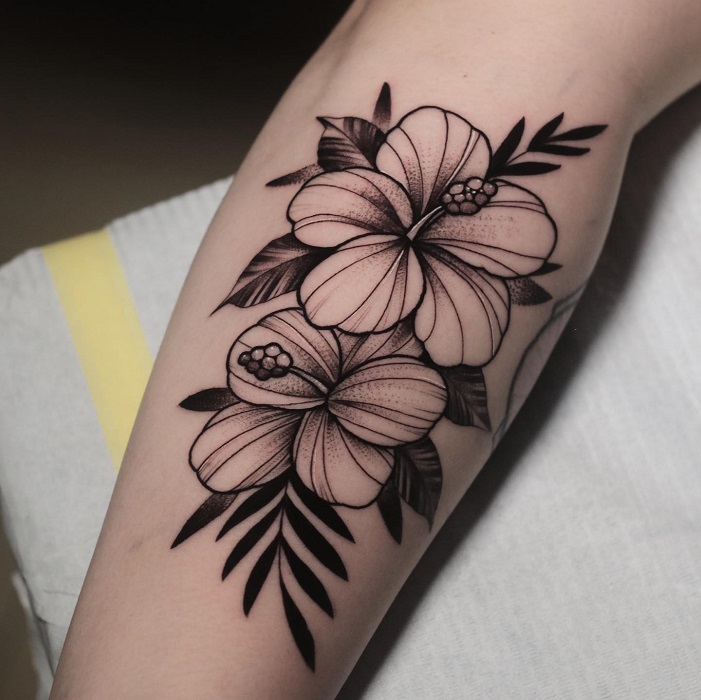
Strong outlines immediately set these two hibiscus flowers apart from the softer fine-line examples. Dark leaves and solid botanical sprigs create a graphic frame, while dot shading adds texture inside the otherwise open petals. Alternating dense black areas with untouched skin keeps the composition crisp and gives the flowers enough visual separation to remain recognizable from a distance.
14. Tiny Hibiscus and Vertical Script

A miniature pink flower provides a gentle focal point at the nape, while the vertical characters below extend the tattoo neatly down the center of the upper back. The generous amount of surrounding skin makes both elements feel especially delicate. For a similarly personalized concept, meaningful lettering can be paired with a small hibiscus without requiring a large or elaborate floral composition.
15. Vibrant Watercolor Hibiscus Forearm Tattoo

Loose splashes of blue and pink give this hibiscus tattoo the spontaneous character of watercolor artwork, but the dark outlines prevent the flower from losing its structure. Green leaves anchor the brighter palette, and the upward-reaching bud helps lengthen the overall silhouette. It is an effective example of combining expressive color with enough linework to maintain a clearly defined floral shape.
16. Gecko Among Hibiscus Flowers
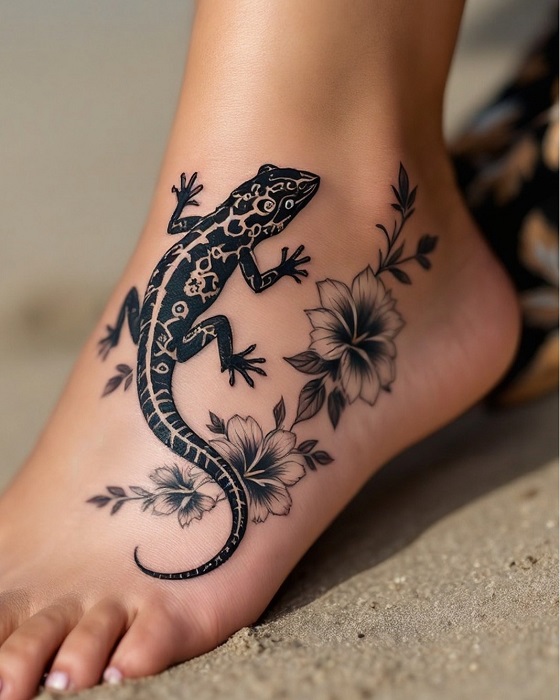
Introducing an animal changes the character of a hibiscus arrangement completely. A boldly patterned gecko curves across the foot and ankle here, weaving between softer black-and-grey flowers and leafy stems. The long tail follows the contours of the foot particularly well, while the contrast between the dark reptile and lighter botanicals establishes an immediate focal point within the composition.
17. Tropical Fine-Line Hibiscus Bouquet
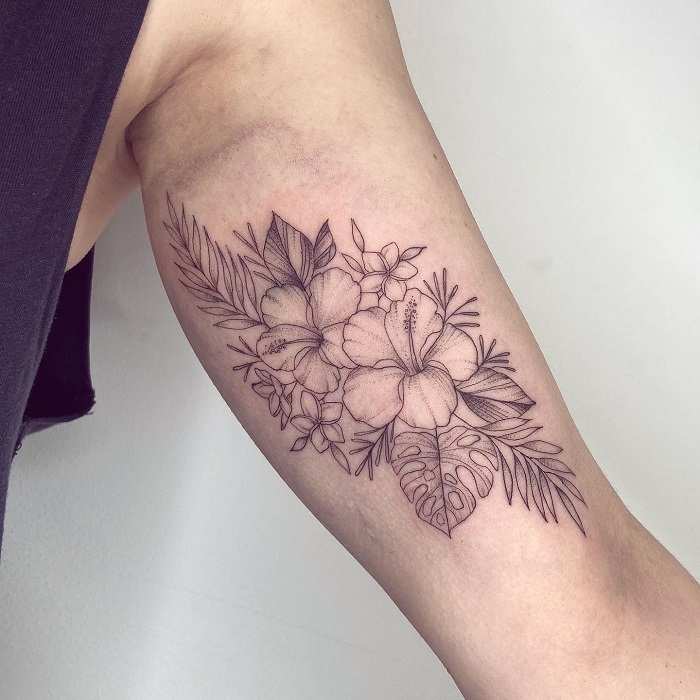
This botanical arrangement builds variety through leaf shapes rather than color. Hibiscus blooms sit among palm-like fronds, smaller flowers, and a distinctive split leaf, giving the piece a lush tropical feel while maintaining a delicate fine-line finish. Because the foliage spreads outward in several directions, the bouquet fills the inner arm efficiently without needing dense shading or a solid background.
18. Warm Red and Orange Hibiscus Pairing

Warm color connects two different tropical flowers in this compact forearm tattoo. The larger hibiscus uses coral-red petals with darker line details, while the smaller five-petal bloom shifts into sunny orange and yellow. Placing the flowers close together creates a simple stacked composition, demonstrating how a second bloom can introduce color variation without turning the tattoo into a full bouquet.
19. Compact Fine-Line Hibiscus on the Upper Arm
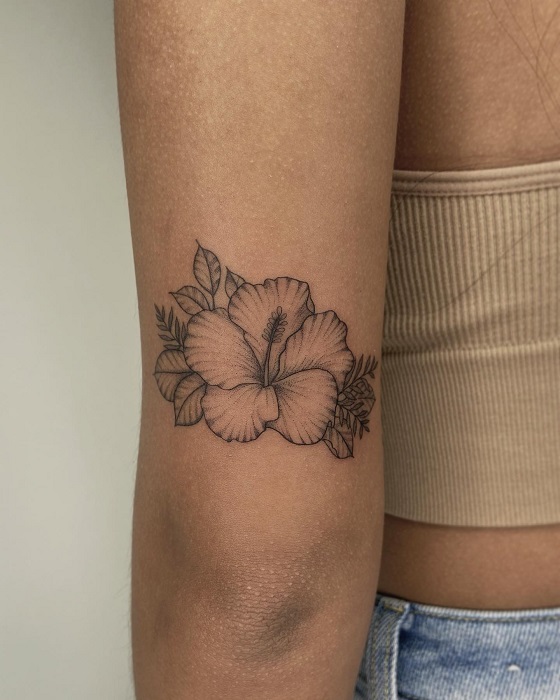
Keeping the foliage tucked closely around a single hibiscus creates a balanced motif that does not need extensive space to feel complete. Fine parallel lines emphasize the flower’s petal structure, while small leaves and botanical sprigs soften its outer edges. The moderate scale also makes this a useful middle ground between tiny floral tattoos and larger arrangements that dominate the arm.
20. Flowing Two-Hibiscus Forearm Tattoo

Two large hibiscus blooms form the center of this elongated forearm piece, with leafy branches extending beyond them to create a gentle sense of flow. Very fine lines preserve the texture of individual petals and veins, while soft grey accents add depth without overpowering the outlines. The staggered flowers prevent the vertical arrangement from feeling overly symmetrical or rigid.
21. Coral Hibiscus Stem Tattoo
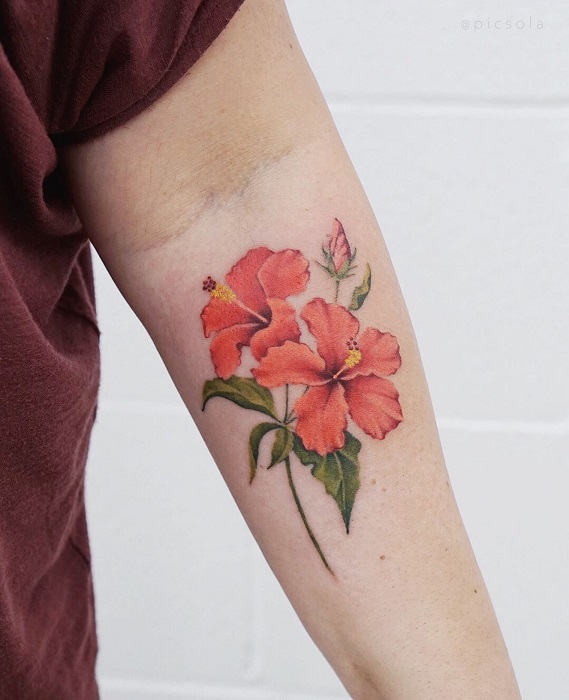
Warm coral tones give this hibiscus pairing a softer alternative to the bright pinks often associated with tropical floral tattoos. The two open blooms are balanced by a small bud, green leaves, and a slender descending stem, creating a naturally tapered silhouette. Subtle color variation across the petals adds dimension without relying on strong outlines.
22. Single Fine-Line Hibiscus with Leaves
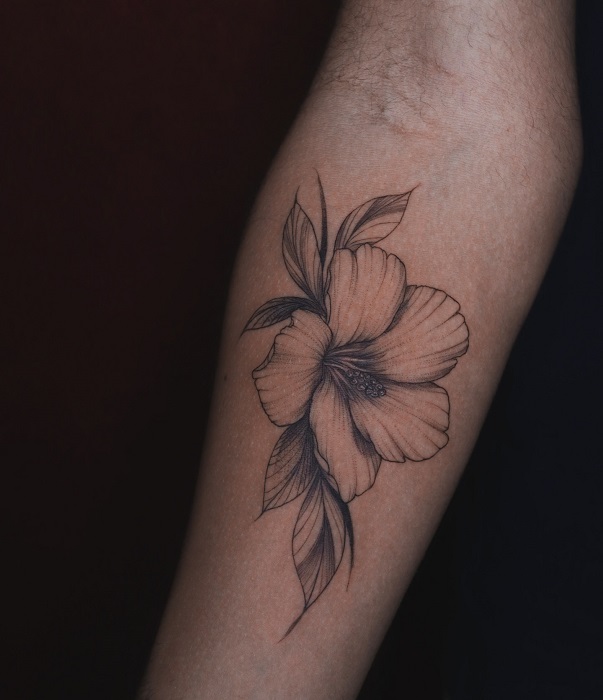
A single hibiscus becomes the clear focal point when the surrounding details are kept this restrained. Fine black lines trace the petal folds and veins, while darker leaves frame the bloom from above and below. The diagonal arrangement prevents the composition from feeling static and gives the flower a graceful shape that suits the length of the forearm.
23. Jewel-Toned Hibiscus Bouquet
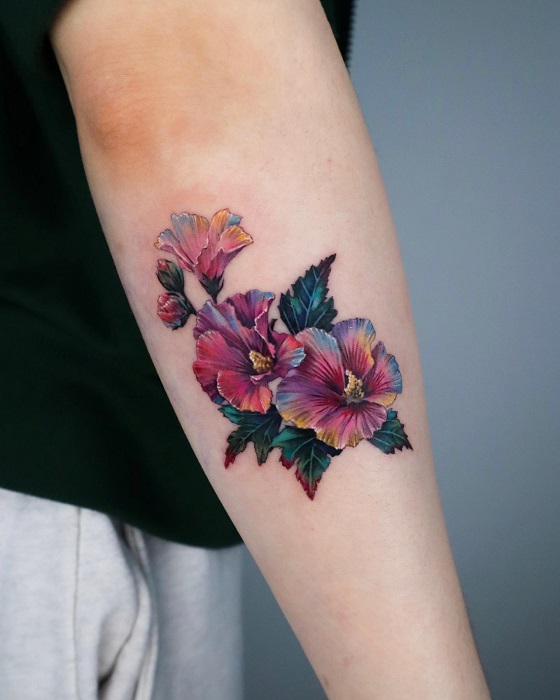
Unexpected color choices make this floral tattoo particularly memorable. Instead of a conventional red or pink palette, the petals blend burgundy, violet, blue, and touches of warm yellow, complemented by deep teal foliage. Including partially opened flowers above the main blooms also introduces different stages of growth, giving the compact bouquet more visual variety and depth.
24. Botanical Hibiscus Upper-Arm Branch

This upper-arm arrangement has the character of a botanical study, with open hibiscus flowers, buds, stems, and foliage presented together rather than as separate decorative elements. Natural-looking reds and greens reinforce that effect. The branch travels diagonally along the arm, allowing a relatively substantial floral piece to feel elongated instead of forming a heavy circular cluster.
25. Hummingbird and Hibiscus Back Piece

Generous back placement gives this hummingbird-and-hibiscus composition room for dramatic proportions. The bird’s outstretched wing extends in one direction while a cluster of pink flowers and leafy branches balances the opposite side. Fine feather details contrast nicely with the broad petals, making this a useful example of how wildlife and hibiscus tattoos can share one large composition without either element disappearing.
26. Hibiscus Hand Tattoo with Flowing Vines

Hand placement makes floral artwork highly visible, so the way a design follows the anatomy becomes especially important. Three hibiscus-style blooms occupy the center here, while curling ornamental lines travel toward the wrist and down a finger. Those extensions help connect the main flowers to the narrow contours of the hand rather than leaving them as an isolated cluster.
27. Colorful Hibiscus, Butterfly, and Garden Scene

There is far more happening here than a single floral focal point. A large multicolored hibiscus anchors a lively arrangement of smaller blossoms, leafy branches, a butterfly, a caterpillar, and tiny flying insects. Spacing the individual elements along the forearm keeps the scene readable, while the repeated jewel-like colors make the separate nature motifs feel visually connected.
28. Red and Lavender Hibiscus Duo

Using two different flower colors is a simple way to give a compact hibiscus tattoo more personality. One bloom is rendered in saturated red while the other shifts toward lavender and soft purple, with a few green leaves tying them together. The overlapping placement creates depth and keeps the small upper-arm arrangement cohesive without requiring extra background elements.
29. Delicate Floral Shoulder Accent

Although this piece uses small blossoms rather than the broad, trumpet-shaped form seen in the hibiscus examples above, its composition offers useful inspiration for a more delicate floral approach. Pink and violet petals sit among thin, sweeping blue lines, while a few loose petals extend beyond the central cluster. A hibiscus motif could borrow this airy, ornamental layout for a similarly understated shoulder piece.
30. Realistic Pink Floral Study
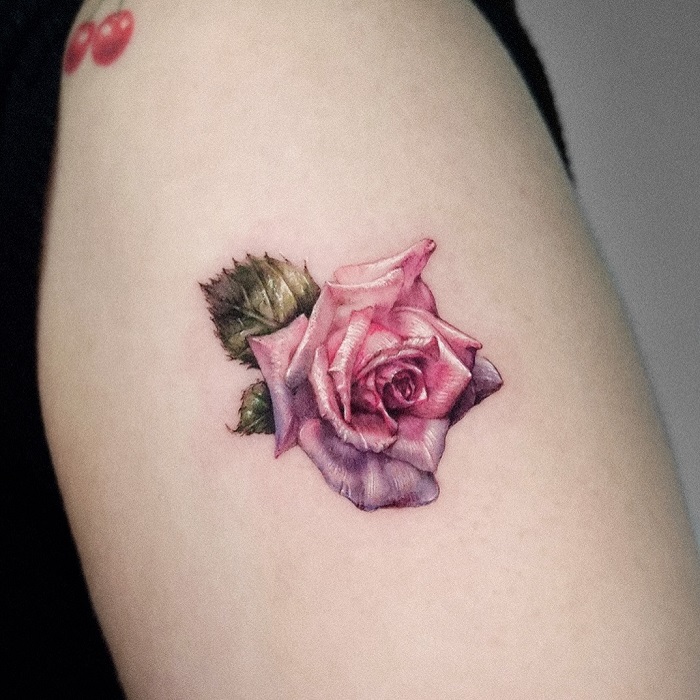
This image features a rose rather than a hibiscus, but its realistic color treatment offers an interesting reference for anyone considering a dimensional floral tattoo. Layered pink and mauve tones define the curled petals, with deeper shadows concentrated toward the center and green foliage tucked behind. The same light-and-shadow approach could give a hibiscus bloom a similarly lifelike finish.
31. Painterly Purple Hibiscus Stem
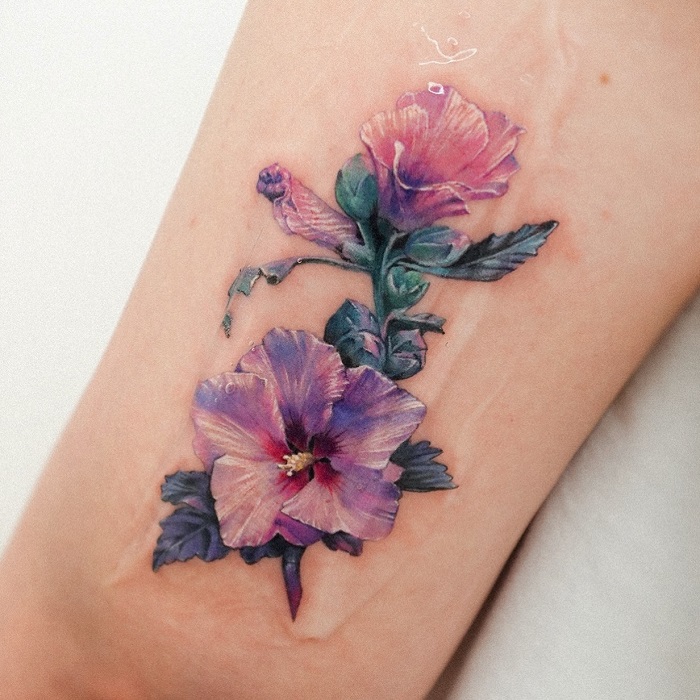
Layered lavender, pink, and plum tones give these flowers an almost painted appearance, with highlights and shadows creating noticeable depth across the petals. Dark blue-green foliage keeps the pastel blooms from blending together, while the bud and upper flower draw the eye along the stem. It is a useful color reference for hibiscus tattoos that move beyond traditional tropical reds.
32. Hibiscus in a Colorful Garden Sleeve

Rather than dominating the composition, a large golden hibiscus acts as the anchor within a diverse upper-arm garden. Blue, purple, orange, and green botanical details surround it at different heights, producing the impression of wildflowers growing together. This layered approach is worth considering when incorporating a hibiscus into a larger botanical sleeve instead of making it the only subject.
33. Petite Magenta Floral Collarbone Tattoo
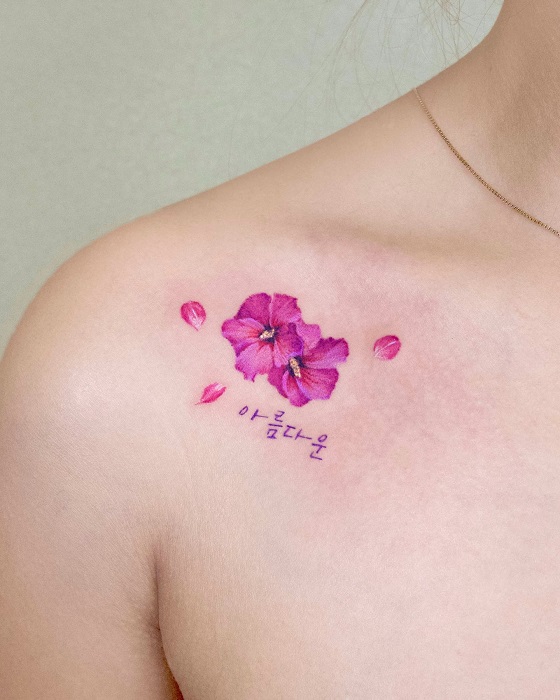
Compact placement near the collarbone gives this vivid magenta floral tattoo a jewelry-like quality. Two overlapping blossoms form the center, while scattered petals loosen the composition and small lettering adds a personal element without overwhelming the flowers. A similar layout could work well for a petite hibiscus tattoo, especially when a reader wants to combine floral imagery with meaningful text.
34. Tribal-Inspired Hibiscus Ankle and Foot Tattoo
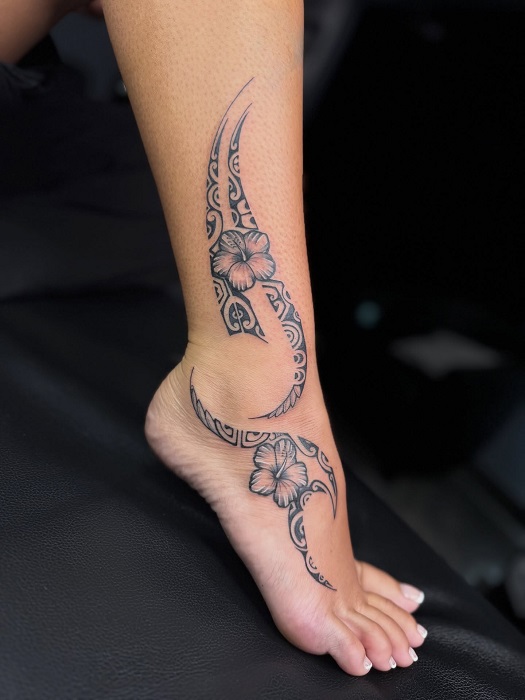
Curving ornamental patterns transform these hibiscus flowers into part of a much larger ankle-and-foot composition. The dark motifs sweep around the ankle and taper along the leg and foot, creating continuity across an area where disconnected elements can otherwise feel awkward. Keeping the flowers comparatively light also gives the eye a resting point among the denser patterned sections.
35. Rich Purple Single Hibiscus

Deep purple gives this solitary hibiscus a moodier character than the brighter tropical palettes elsewhere in the collection. Fine pale highlights radiate through each petal, emphasizing the flower’s natural folds, while the projecting stamen remains clearly visible against the darker center. With no leaves or secondary blooms competing for attention, color and petal texture become the entire focus.
36. Hibiscus and Butterfly Foot Tattoo

Two hibiscus blooms form a diagonal line across the top of the foot, with leafy branches extending toward both the toes and ankle. A small butterfly adds movement above the flowers without making the composition overly busy. Using fine black linework throughout keeps all of these elements visually connected and allows the arrangement to follow the foot’s long, narrow proportions naturally.
37. Classic Red Hibiscus Ankle Tattoo
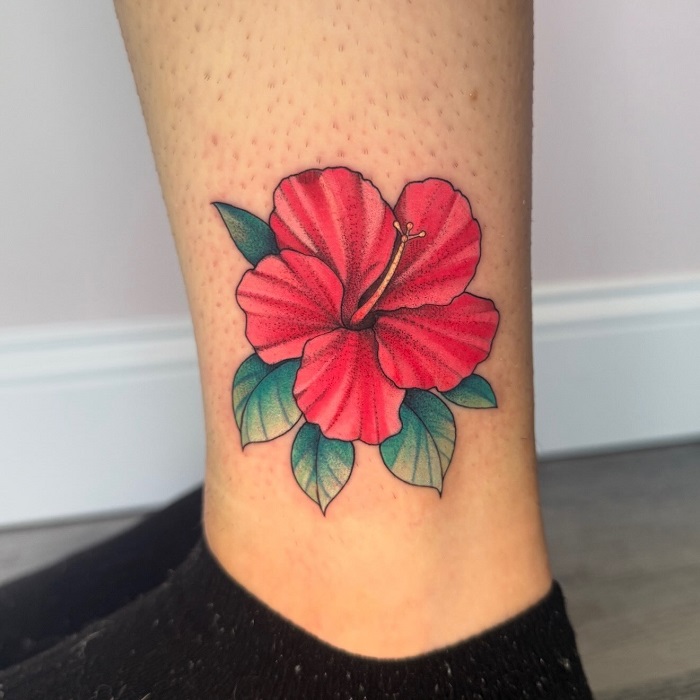
Bold red petals and cool green leaves give this hibiscus tattoo the clarity of a traditional floral emblem. Dark outlines establish a crisp silhouette, while subtle gradients inside the leaves and petals prevent the color from appearing completely flat. Its compact, nearly circular arrangement is also well suited to the ankle, where an elaborate vertical bouquet might require considerably more space.
38. Red Fine-Line Hibiscus Behind the Ear

Using red ink alone gives this behind-the-ear hibiscus an especially distinctive finish. Fine outlines define the petals and branching leaves without any heavy fill, so the relatively detailed motif still feels light against the neck. The placement also allows the foliage to follow the hairline, showing how a small floral tattoo can be shaped specifically around a less conventional location.
39. Hibiscus Garland Across the Foot

Three hibiscus blooms create a floral garland that stretches gracefully from the ankle toward the toes. Leaves fill the smaller gaps while a narrow frond extends the composition without adding another large flower. The result demonstrates an effective strategy for foot tattoos: concentrating detail through the center and allowing finer botanical elements to taper toward the edges.
40. Personalized Hibiscus and Butterfly Hand Tattoo

Floral imagery, a butterfly, and cursive lettering come together in this highly personalized hand piece. Pink shading links the different elements, while darker leaves add contrast around the central hibiscus-style bloom. The butterfly extends the design toward the wrist, and the name sits beneath the flowers, showing how several meaningful motifs can be arranged vertically without overcrowding the hand.
Other Blog Posts