
Think rose tattoos are just for romantics?
Think again!
These versatile designs can symbolize a range of concepts, making them relevant to anyone seeking body art infused with meaning.
In this article, we’ll showcase diverse rose tattoo ideas that will inspire your creativity and guide you toward the perfect design.
Whether you’re drawn to bold statements or subtle elegance, we’ve got you covered!
✅ The 61 Rose Tattoo Ideas
1. Delicate Ankle Rose
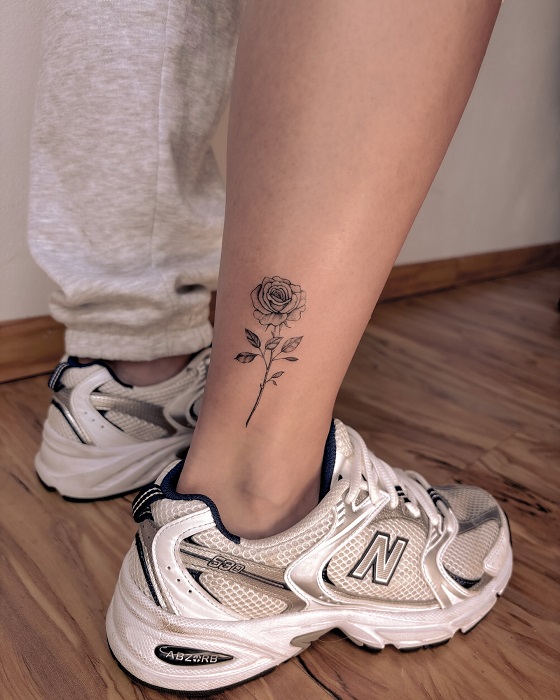
Placed just above the ankle, this small rose uses fine black linework to keep the flower detailed without making it feel heavy. The long, slender stem follows the natural vertical line of the lower leg, while scattered leaves add movement. It’s a useful reference for anyone considering a botanical tattoo that remains relatively discreet.
2. Rose Behind the Ear
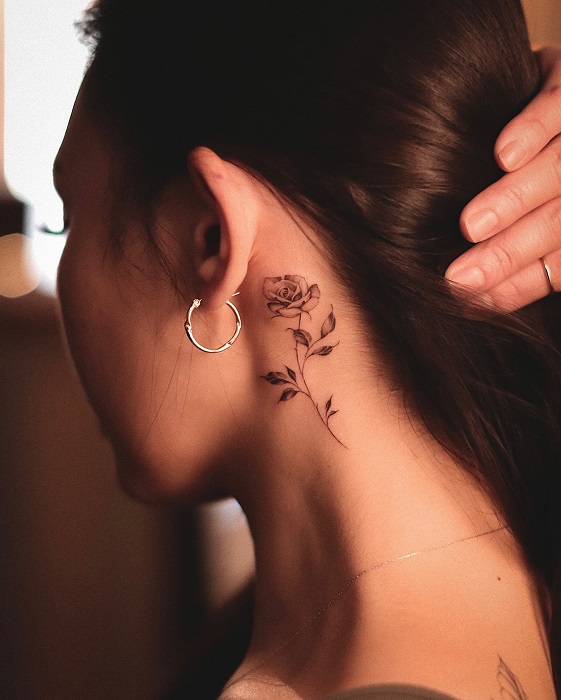
A narrow rose sprig fits neatly into the space behind the ear and along the upper neck. Soft shading gives the petals and leaves definition, while the curved stem follows the contours of the placement rather than fighting against them. Wearing the hair up reveals the artwork fully, while longer hair can easily make it less noticeable.
3. Red Rose With Script
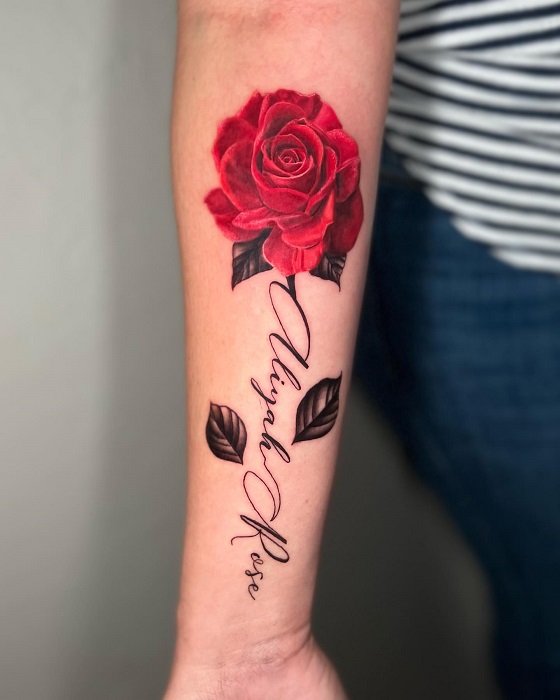
Rich red petals immediately make this forearm piece stand apart from more restrained black-and-grey rose tattoos. The realistic flower anchors the composition at the top, with dark leaves balancing the saturated color. Flowing script then extends the design toward the wrist, showing how meaningful lettering can become part of a rose tattoo’s overall shape rather than a separate element.
4. Tiny Black Rose on the Inner Arm
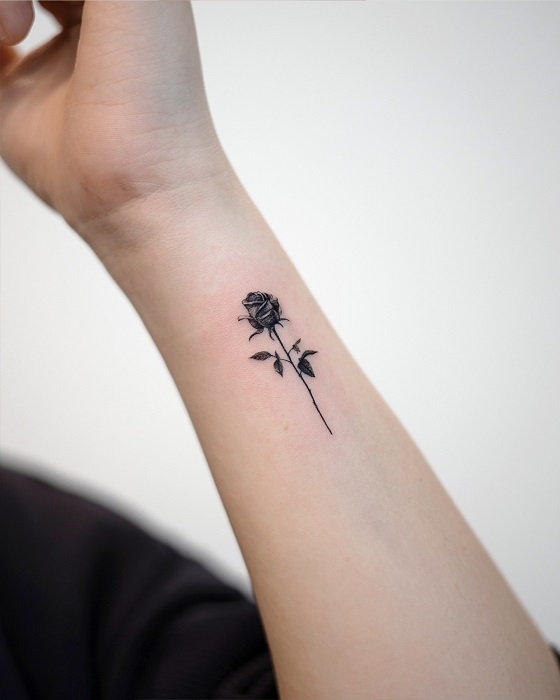
Reducing a rose to this scale creates a quiet, understated result without losing its recognizable form. Fine outlines define the petals, while darker shading around the bloom and leaves provides enough contrast to prevent the details from disappearing. The inner arm also offers a relatively clean backdrop for a small rose tattoo with plenty of negative space around it.
5. Shaded Rose on the Side of the Neck
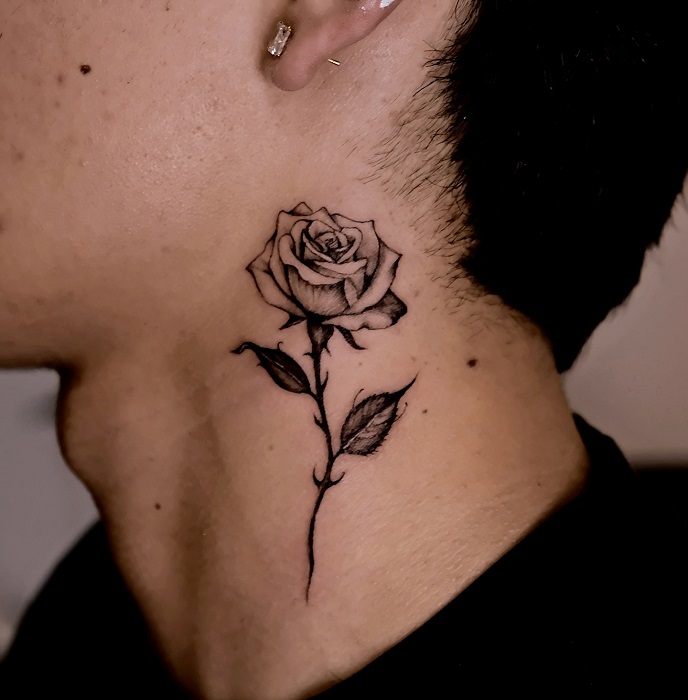
The side of the neck gives this single-stem rose a naturally elongated canvas. Instead of relying on color, the artwork builds depth through black-and-grey shading inside the petals and leaves, producing a more dimensional appearance. Positioning the bloom higher and letting the stem descend toward the collar also makes clever use of the neck’s vertical proportions.
6. Pink Rose and Bud With Lettering
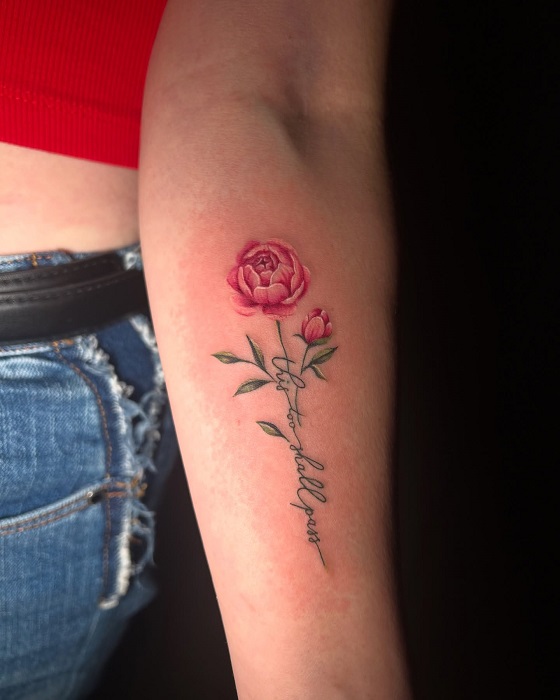
Pairing an open pink bloom with a smaller bud introduces a subtle sense of growth and progression into this floral composition. Green leaves provide a restrained color contrast, while delicate cursive lettering is woven through the stem area rather than placed separately. The result offers inspiration for combining botanical imagery and personal text without allowing either element to dominate completely.
7. Rose Tattoo Below the Ear
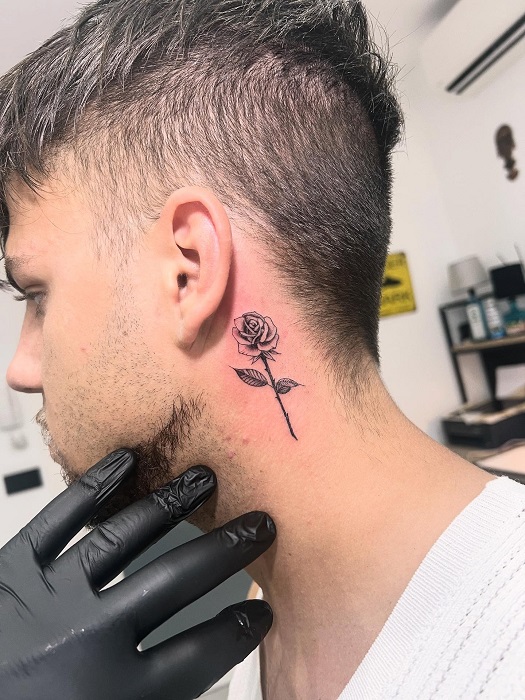
Sitting between the ear and jawline, this rose makes use of an area where even a fairly compact tattoo can have strong visual presence. Crisp black outlines keep the petals readable from a distance, and the thin stem directs the eye downward along the neck. It demonstrates how thoughtful orientation can make a simple single-flower motif feel especially intentional.
8. Memorial-Style Rose With Name and Heart
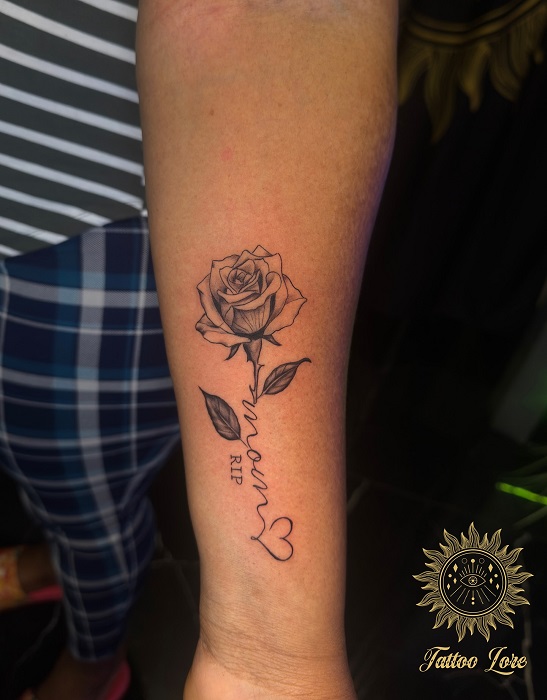
This forearm rose incorporates several personal-looking elements into one continuous vertical composition. The flower transitions into cursive lettering, a small outlined heart, and clearly visible “RIP” text, giving the piece the visual language commonly associated with memorial tattoos. For similar concepts, integrating words into the stem can keep multiple elements connected rather than making the design appear crowded.
9. Detailed Black-and-Grey Rose With Script
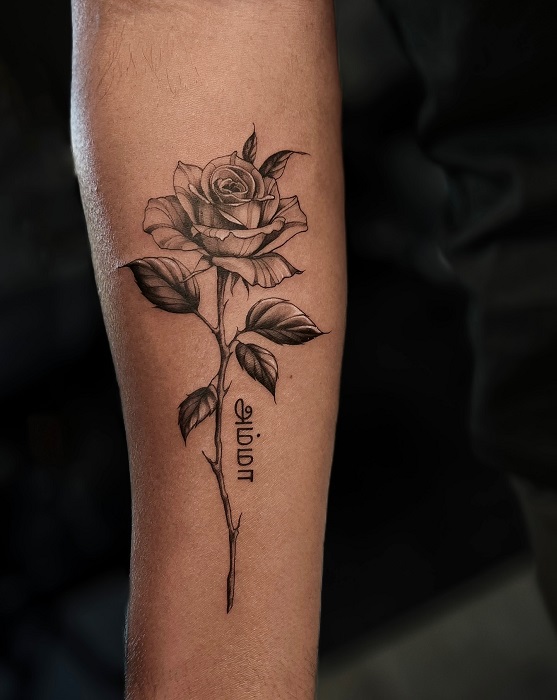
Larger leaves and a generously sized bloom give this rose more visual weight than the smaller fine-line examples. Careful shading creates folds throughout the petals and veins within the foliage, while a short vertical inscription sits alongside the stem. That asymmetrical placement of the lettering is worth noting—it personalizes the piece without interrupting the rose’s long botanical silhouette.
10. Colorful Red Rose Neck Tattoo

Strong red petals and blue-green leaves give this neck tattoo a vivid, graphic quality. Dark outlines separate the colors clearly and help the rose remain legible against the skin, even at a relatively compact size. Because the placement is highly visible, the saturated palette makes an already noticeable location even more prominent—a useful consideration when choosing between color and black ink.
11. Fine-Line Rose on the Forearm
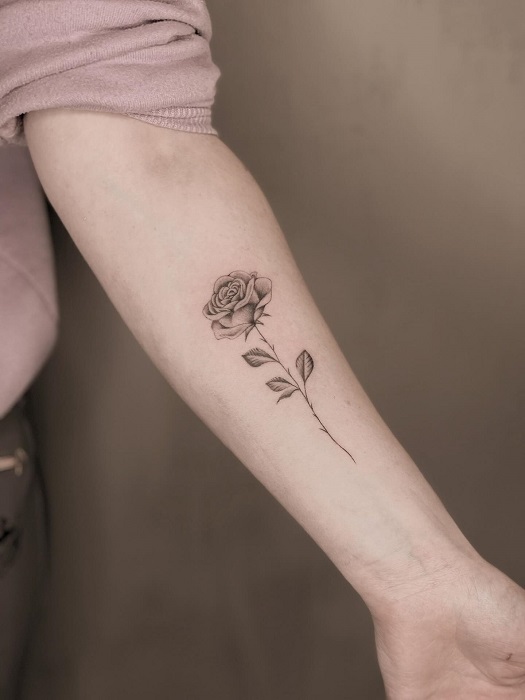
Soft shading gives this slender forearm rose more dimension than a purely outlined design while preserving its light, delicate character. The bloom carries most of the detail, then gradually tapers into a very fine stem toward the wrist. That change in visual weight keeps the composition graceful and makes particularly effective use of the forearm’s length.
12. Upright and Wilted Rose Composition
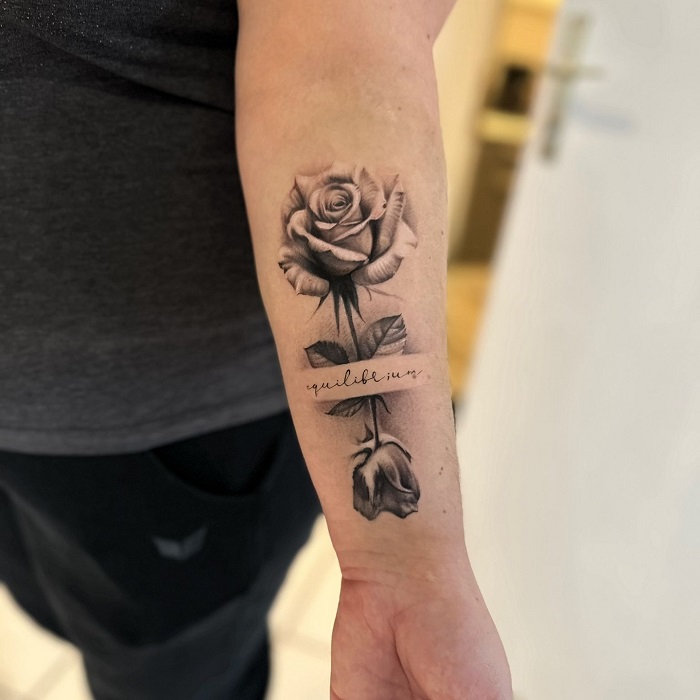
Two roses pointing in opposite directions create an intriguing sense of contrast in this black-and-grey piece. A full bloom sits prominently at the top while a downward-facing flower finishes the elongated composition near the wrist. The arrangement could lend itself to themes of change or duality, although its personal meaning ultimately depends on the wearer.
13. Realistic Red Rose on the Leg
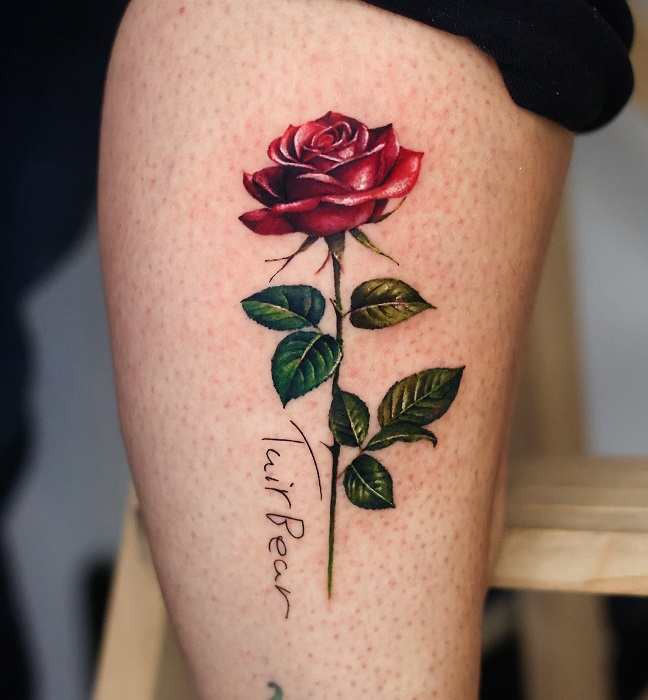
Deep reds, subtle highlights, and darker areas between the petals give this rose an almost three-dimensional appearance. The green foliage receives comparable attention, with visible veins and tonal variation making the leaves feel substantial rather than decorative. Its larger scale on the leg provides enough room for these realistic details to remain clear and visually convincing.
14. Large Black-and-Grey Rose With Date
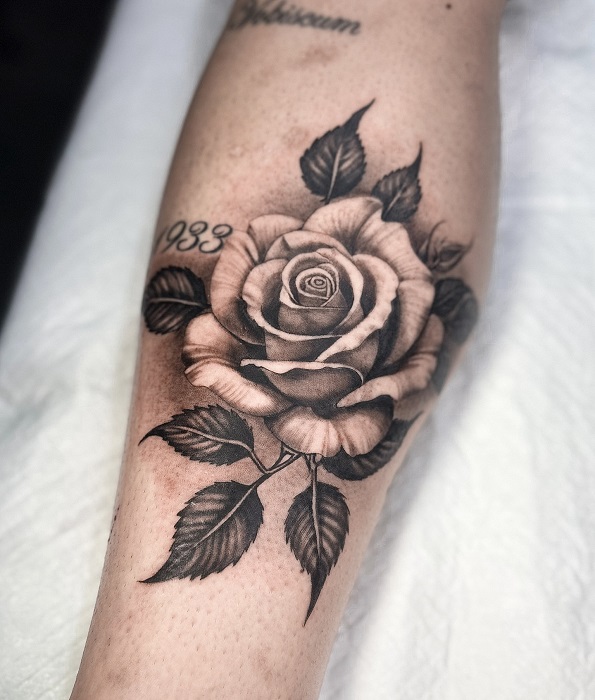
Rather than emphasizing a long stem, this piece lets an expansive rose bloom and surrounding leaves fill much of the available space. Smooth gradients and darker foliage create strong depth, while the visible “1933” adds a distinctly personal element without competing with the flower. A composition like this shows how dates can be incorporated subtly into larger floral tattoos.
15. Red and Black Outline Roses

Using two ink colors instead of conventional shading gives this ankle tattoo a distinctly illustrative character. One rose and sections of the foliage are drawn in red, while the second bloom and other lines remain black. Where the stems overlap, the contrasting colors create visual movement and make a relatively simple floral outline feel more inventive.
16. Upside-Down Rose on the Inner Forearm
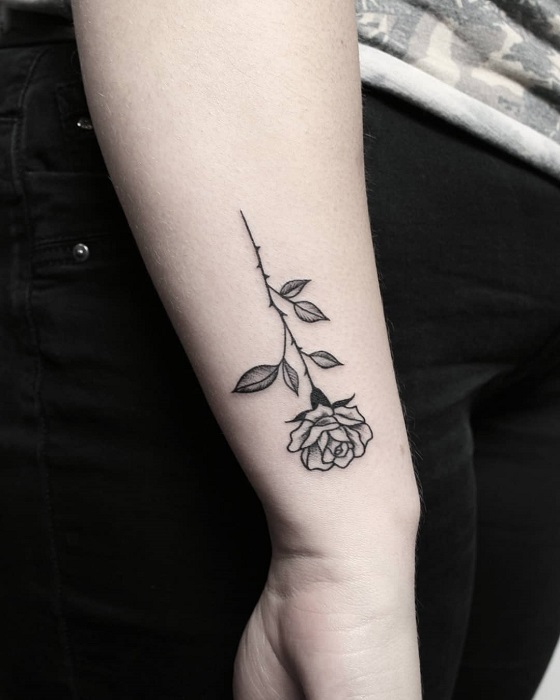
Changing the orientation can completely alter the character of a familiar rose motif. Here, the bloom hangs toward the wrist while the thorned stem extends upward, accompanied by several finely shaded leaves. The unusual direction draws attention to the flower’s silhouette and provides an alternative to the upright arrangements seen in many traditional botanical tattoos.
17. Black-and-Grey Roses Across the Hand
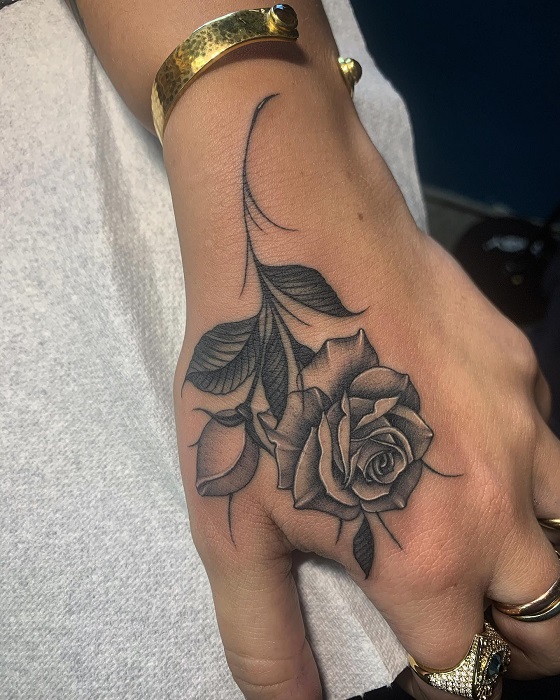
The hand offers an unconventional canvas for this pair of shaded roses, allowing the flowers and leaves to spread naturally across its surface. Fine parallel lines add texture inside the foliage, while soft grey shading gives the blooms depth. Because hand tattoos remain highly visible in everyday life, this placement makes even a monochrome floral composition feel especially prominent.
18. Rose and Sword Neck Tattoo

Combining a rose with a sword gives this neck piece a sharper, more symbolic visual language than a standalone flower. The blade creates a strong vertical axis, while leaves and the bloom soften its rigid shape. The clearly readable words “STILL I RISE” run alongside it, adding another layer of meaning without disrupting the narrow composition.
19. Simple Rose Near the Wrist

Clean outlines and restrained shading make this rose feel closer to a botanical sketch than a heavily rendered tattoo. The bloom is detailed enough to provide a focal point, but the slim stem and orderly leaves keep the overall footprint narrow. Positioned on the inner forearm near the wrist, it can be displayed easily without requiring a large area of skin.
20. Small Rose Hand Tattoo
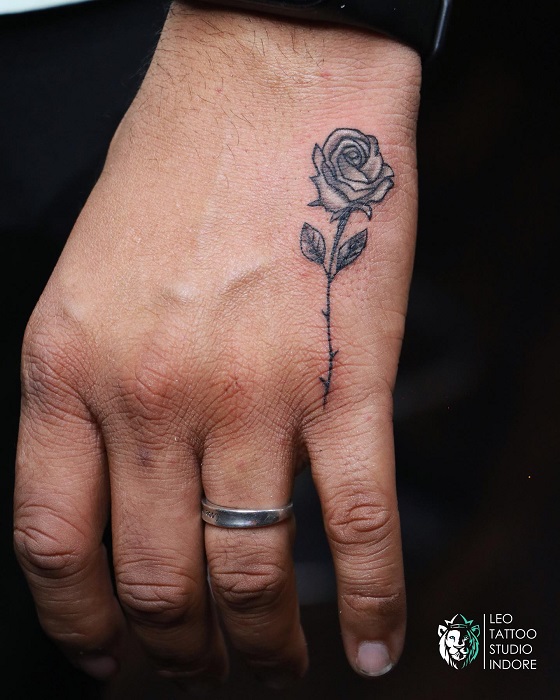
A single rose follows the length of the hand here, with the bloom positioned higher and a thin stem extending toward the finger. Subtle shading inside the petals and leaves adds texture while maintaining the compact scale. Compared with a larger hand piece, this approach leaves plenty of open skin around the flower, giving the tattoo a lighter visual presence.
21. Burgundy Rose With Flowing Script

A compact burgundy bloom provides a concentrated pop of color while the rest of this forearm tattoo stays exceptionally light. Instead of ending with a conventional stem, the composition transitions into long, sweeping cursive lettering. That contrast between a richly colored flower and airy script creates an elegant way to incorporate meaningful words without making the overall piece feel dense.
22. Classic Rose on the Inner Wrist
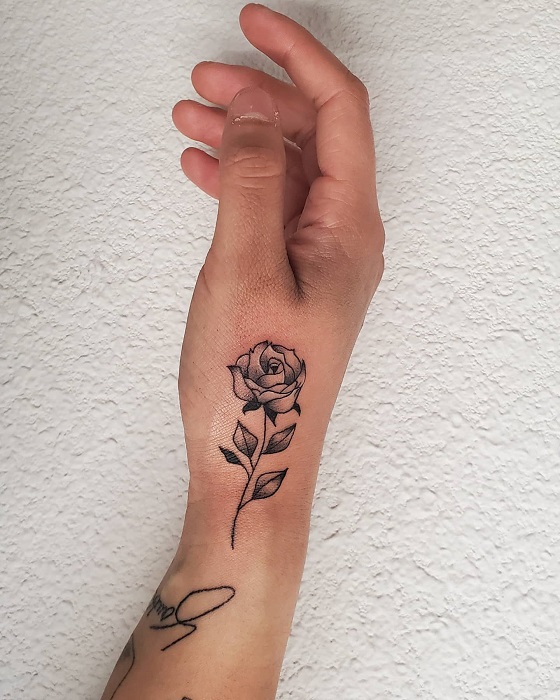
Bold outlines give this small rose more graphic definition than the finer botanical styles elsewhere in the collection. Light texture inside the petals and leaves prevents the black ink from becoming too flat, while the gently curving stem suits the narrow wrist area. Its straightforward composition is a useful reference for keeping a traditional rose recognizable at a modest scale.
23. Red Rose With Cross Pendant
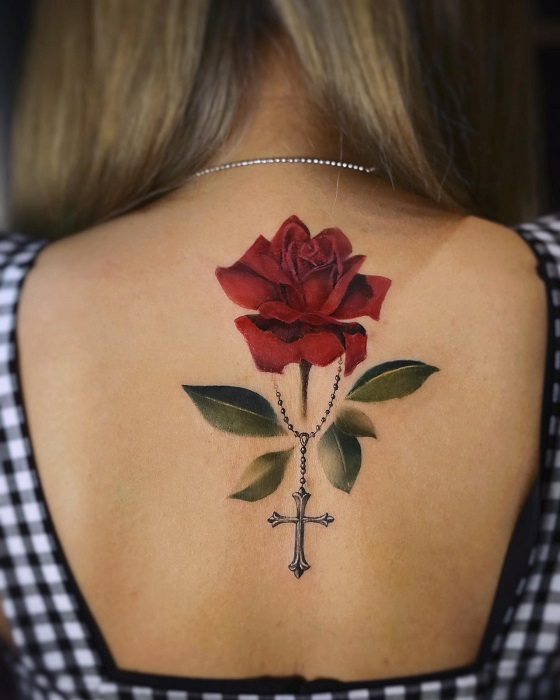
Centered high on the back, this large red rose combines floral imagery with a cross suspended beneath the bloom on a chain-like detail. The broad green leaves spread outward to balance the vertical pendant and create a symmetrical focal area. Roses can carry many associations, while the cross introduces an explicitly Christian symbol that may give a design like this devotional or personal significance.
24. Softly Shaded Rose With Cursive Lettering
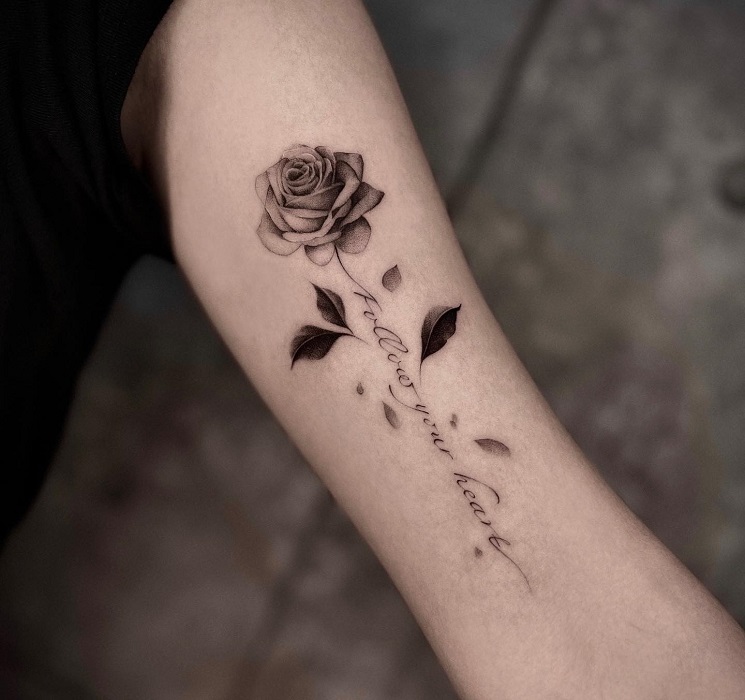
There is a particularly light, refined quality to the shading in this forearm piece. The rose fades from defined central petals into softer outer edges, while dark leaves provide strategic contrast. Fine cursive writing travels diagonally downward among small floating petal-like details, making the text feel integrated into the botanical arrangement rather than simply added beneath it.
25. Rose Added to a Larger Tattoo Collection
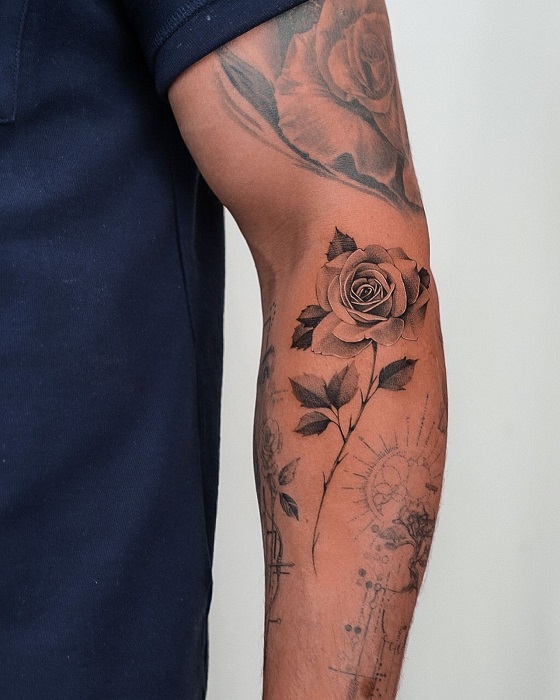
A rose does not have to function as an isolated piece. Here, a black-and-grey bloom and long stem occupy the outer arm alongside other existing tattoo imagery, filling the available space without visually overpowering its surroundings. The flower’s elongated silhouette is especially useful for this purpose, since stems and leaves can be positioned around neighboring artwork to create continuity.
26. Electric Guitar and Red Roses

For a less conventional take on rose tattoos, this piece pairs two saturated red blooms with a detailed electric guitar. Black ink throughout the instrument and surrounding foliage makes the red petals the strongest accents in the composition. Combining flowers with a recognizable object is also an effective way to build a tattoo around a specific interest while retaining the classic rose motif.
27. Red Rose Spanning the Hand and Wrist
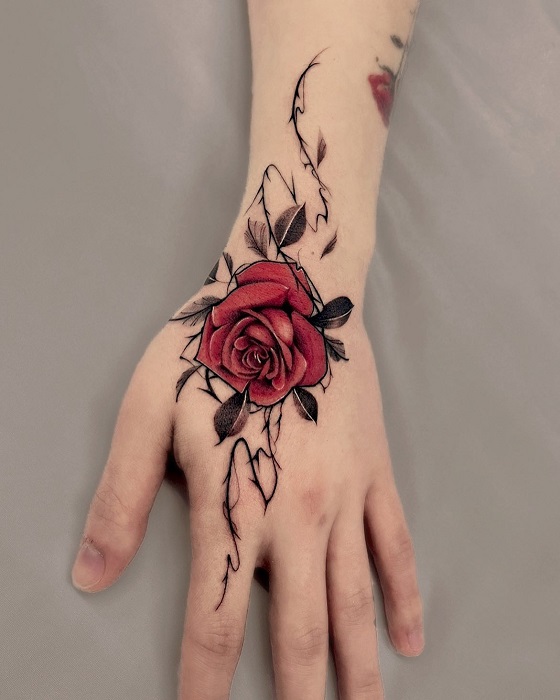
Rather than staying within the boundaries of the hand, this floral piece stretches upward onto the wrist and downward toward a finger. A large red rose anchors the center, surrounded by black leaves and loose, sketch-like lines. The irregular extensions give the composition an organic quality, almost as though the foliage is growing outward across the hand.
28. Minimal Outline Rose on the Forearm
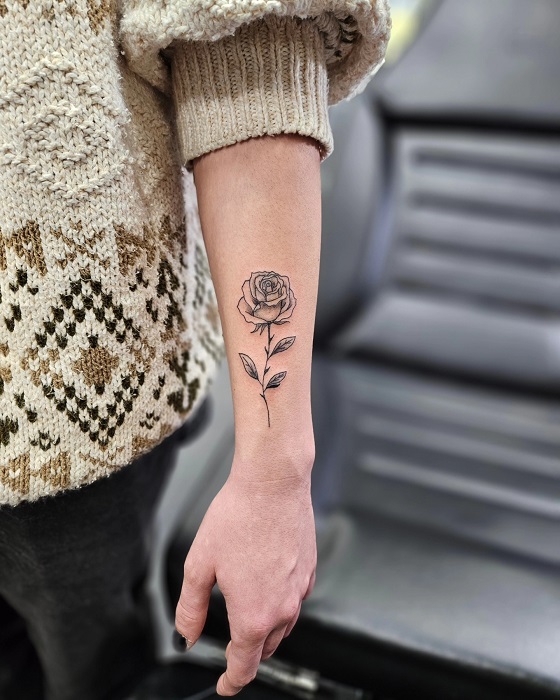
Generous negative space is what makes this straightforward rose tattoo work. The flower sits comfortably on the lower forearm with a thin stem and only a handful of leaves, leaving the surrounding skin largely untouched. With no heavy blocks of shading or additional imagery, attention stays on the recognizable shape of the bloom and the clean proportions of the botanical silhouette.
29. Tiny Rose With Roman Numerals
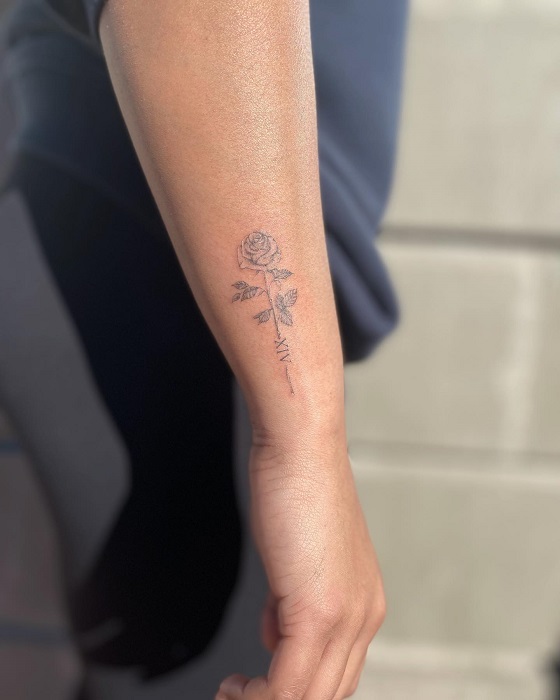
This miniature forearm rose demonstrates how a personal detail can be incorporated without substantially increasing a tattoo’s footprint. Fine grey linework keeps the flower and leaves subtle, while a short sequence of Roman numerals extends vertically near the stem. Dates are often converted into Roman numerals for tattoos, though the specific significance of the characters shown here cannot be determined from the image alone.
30. Two-Rose Forearm Arrangement
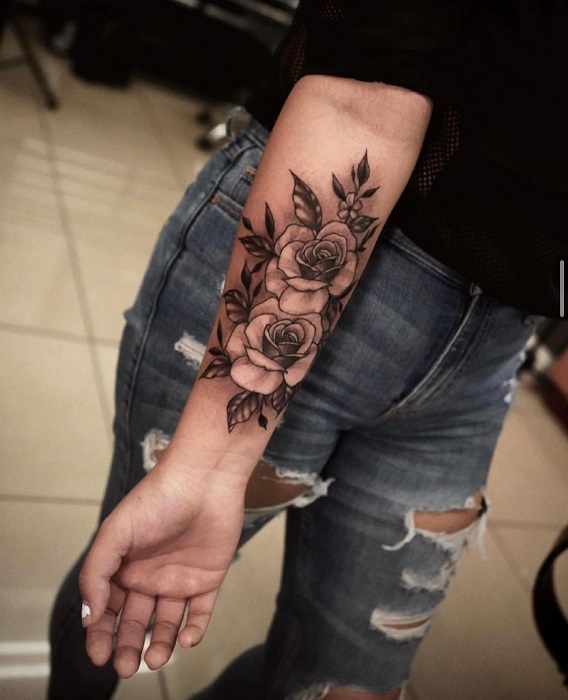
Two substantial blooms transform the forearm into a fuller floral composition rather than a single-stem tattoo. The roses overlap slightly and are framed by numerous pointed leaves, creating an arrangement reminiscent of a compact bouquet. Black-and-grey shading maintains cohesion across the piece, while the larger scale gives the artist room to distinguish individual petals and foliage textures.
31. Neck Rose With a Single Initial
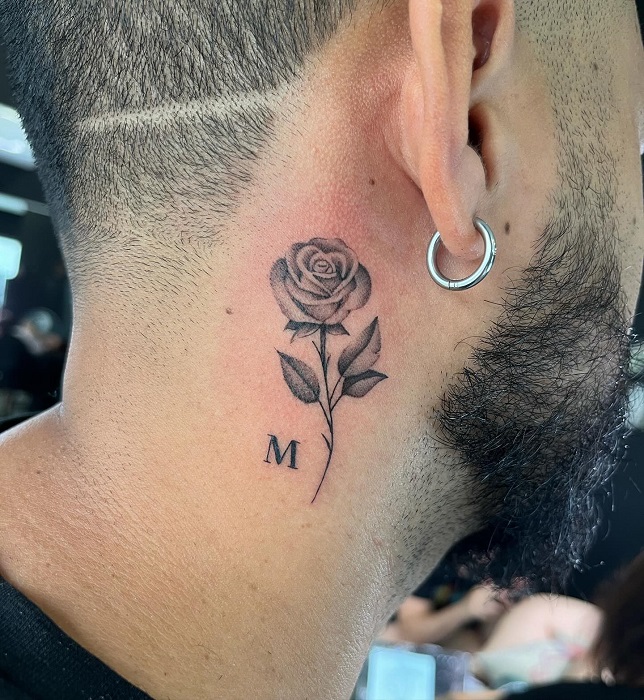
A shaded rose sits neatly beneath the ear, with a slim stem and pointed leaves following the side of the neck downward. The separate “M” adds a personalized detail without changing the flower’s clean silhouette. Keeping the initial small is particularly effective here, allowing it to carry significance while the rose remains the visual focal point.
32. Rose and Bud Across the Hand
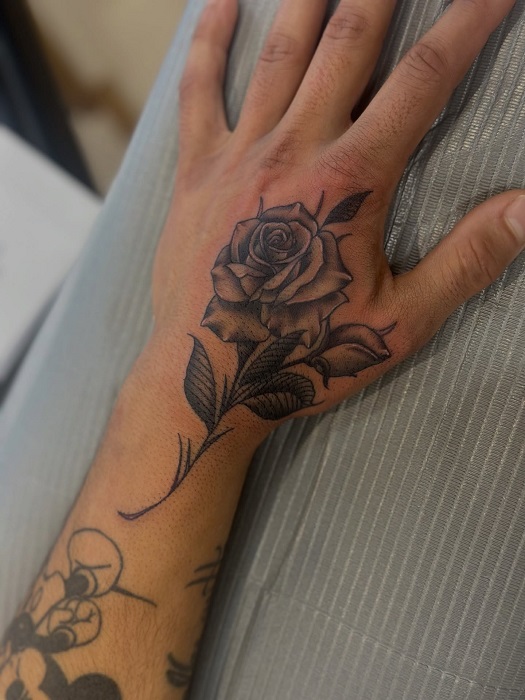
Instead of centering a single bloom on the hand, this composition pairs a large open rose with a smaller bud and layered foliage. The arrangement travels diagonally from the wrist toward the fingers, matching the hand’s natural proportions. Dense black-and-grey shading gives the piece substantial presence, while the bud adds variety to the otherwise mature floral forms.
33. Tiny Rose Finger Tattoo
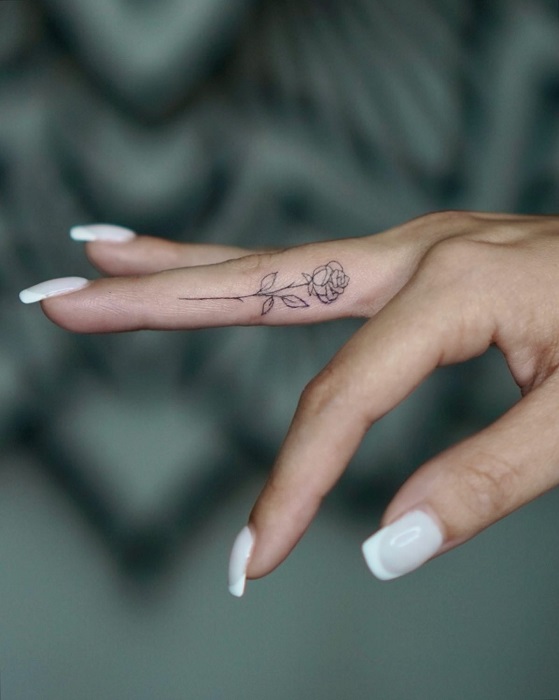
The side of a finger provides an unusually narrow canvas, and this miniature rose is shaped accordingly. Its stem runs almost parallel with the finger while tiny leaves and an outlined bloom supply just enough botanical detail. This placement is especially suited to elongated motifs, though anyone considering a finger tattoo may want to discuss how fine details can age in this high-contact area.
34. Dark Rose With Sparkle Accents
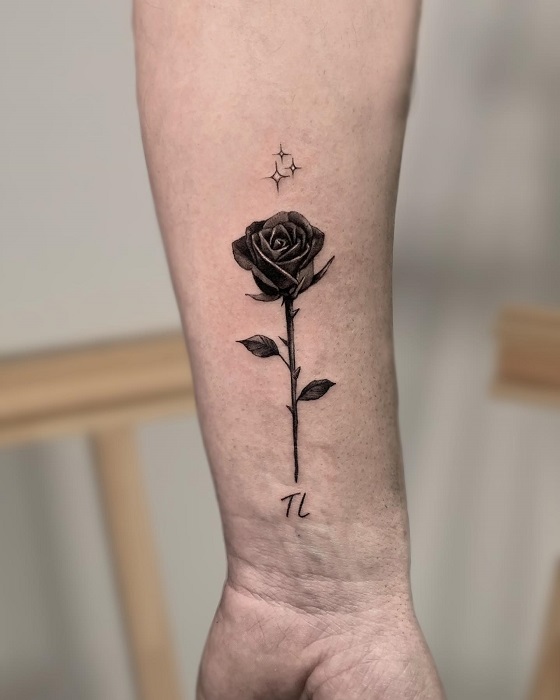
Deep shading makes the rose bloom the darkest point in this inner-arm tattoo, creating immediate contrast against the surrounding skin. Small star-like sparkle symbols above the flower introduce a playful detail that breaks from the otherwise classic botanical treatment. Initials beneath the stem add another compact element while preserving the design’s strong vertical alignment.
35. Tiny Rose Behind the Ear
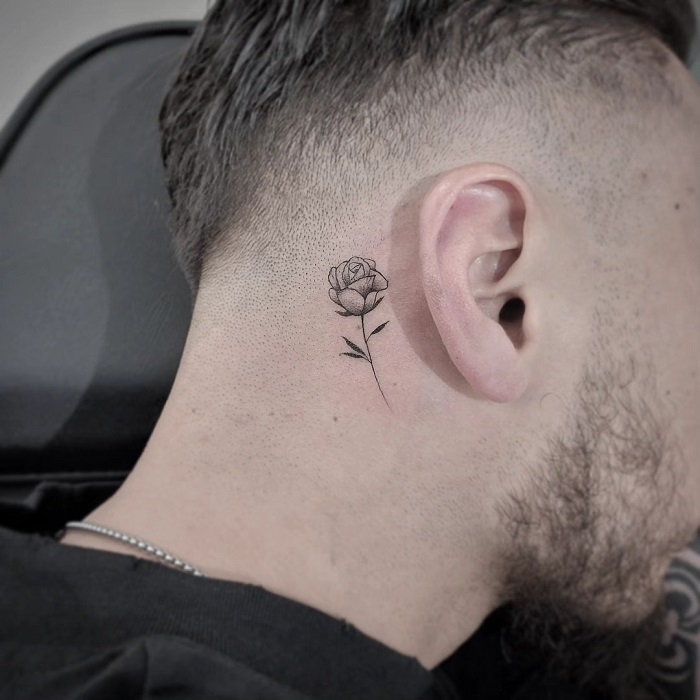
This behind-the-ear rose takes a notably restrained approach to neck placement. The flower is small, the stem tapers almost to a hairline, and just two leaves interrupt its simple vertical shape. Because the tattoo sits close to the hairline, it can feel surprisingly discreet despite occupying an area that becomes clearly visible with a short or swept-back hairstyle.
36. Four Red Roses Along the Forearm
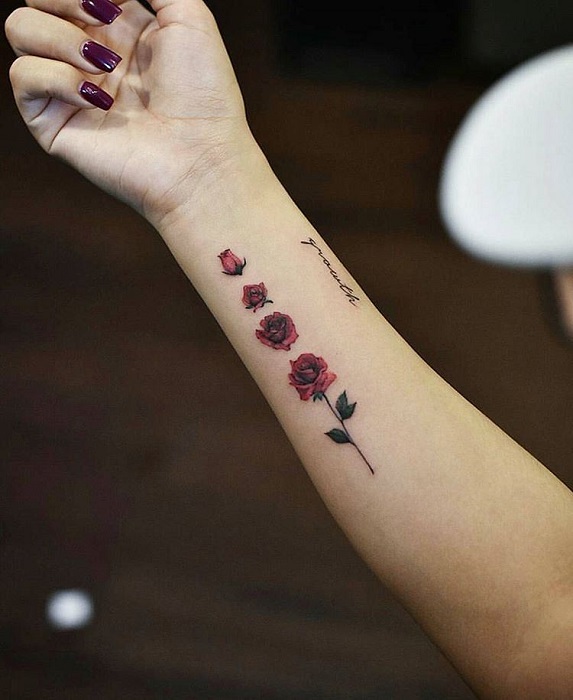
Rather than depicting one continuous stem, this tattoo uses four red blooms in progressively different stages and sizes to create a visual sequence along the forearm. The arrangement draws the eye lengthwise, with the largest flower and its leaves anchoring one end. A small separate line of script adds personalization while leaving the floral progression uncluttered.
37. Two Black-and-Grey Roses at the Wrist

Layering one rose above another gives this wrist and lower-forearm tattoo the fullness of a small floral cluster. Broad leaves radiate around the blooms, filling the space laterally as well as vertically. Textured shading inside the foliage contrasts with smoother petal gradients, helping individual elements remain distinguishable even where the composition becomes densely packed.
38. Horizontal Rose Across the Hand
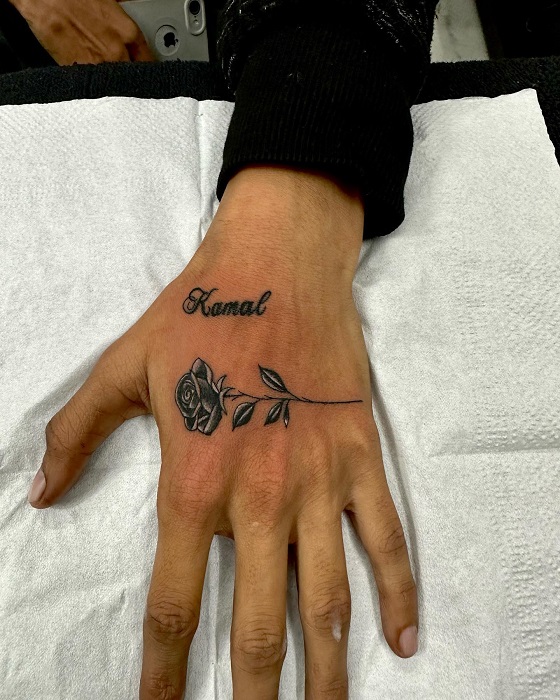
Rotating the usual long-stem rose sideways allows this piece to take advantage of the hand’s width. The bloom sits toward one side while its leafy stem stretches across the back of the hand, creating a low, horizontal composition. Clearly visible cursive lettering above the flower adds a second focal detail without being incorporated directly into the stem.
39. Tiny Red Outline Rose on the Shoulder

Red linework gives this miniature shoulder tattoo a softer visual presence than a comparable design outlined in black. The rose and loose botanical details occupy only a small section near the collarbone, leaving plenty of open skin around them. Its placement also works naturally with wide or off-the-shoulder necklines, which can reveal the artwork without requiring a large tattoo.
40. Textured Rose on the Side of the Neck
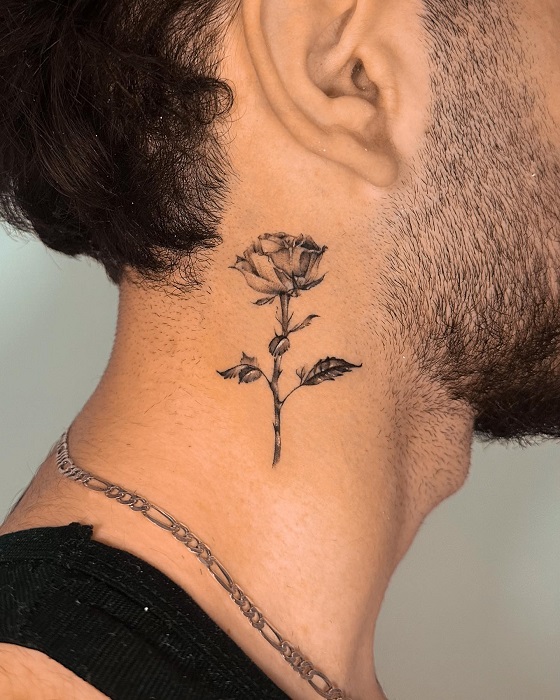
Fine black-and-grey shading brings extra texture to this single rose while retaining the rougher character of hand-drawn botanical illustration. The stem sits vertically along the side of the neck, with asymmetrical leaves preventing the composition from appearing overly rigid. It offers a middle ground between highly polished realism and the ultra-clean fine-line rose style.
41. Bold Black Rose Silhouette
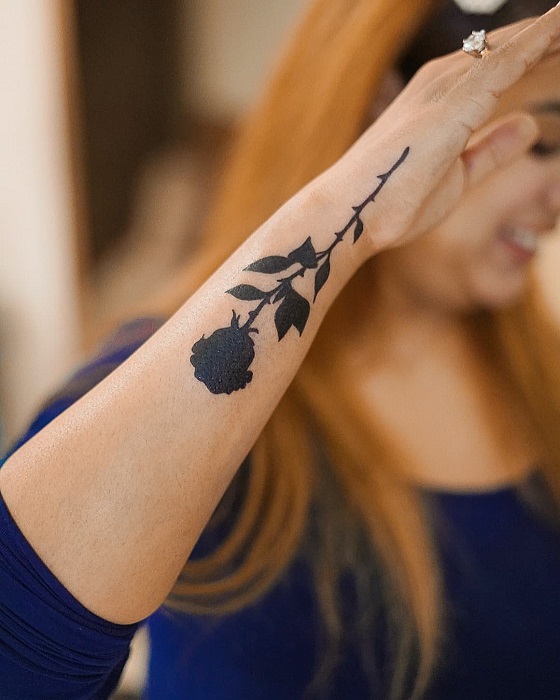
Solid black ink gives this forearm rose a dramatically different character from softly shaded botanical pieces. The bloom is rendered as a dense silhouette, while distinct leaves and a thorny stem extend toward the hand. Because the design relies heavily on shape rather than interior detail, its recognizable profile becomes the main attraction and creates strong contrast against the skin.
42. Rose With a Name-Shaped Stem
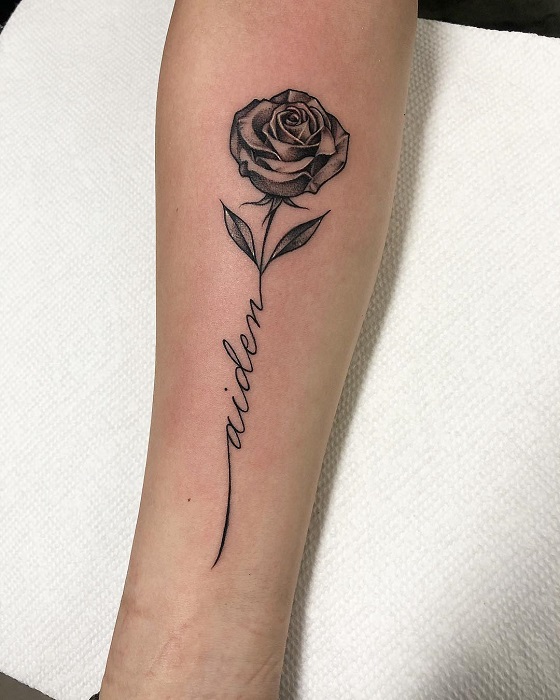
Lettering becomes part of the flower itself in this creative forearm composition. A realistically shaded rose and two pointed leaves transition into a long cursive word that visually doubles as the stem before tapering into a sweeping line. It’s a clever approach for combining a name or meaningful word with floral imagery while maintaining one uninterrupted, vertical silhouette.
43. Simple Thorned Rose
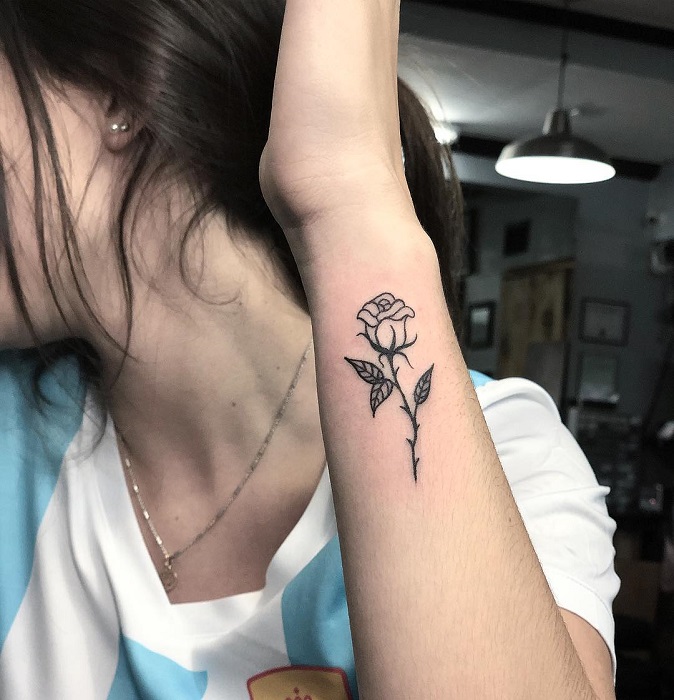
A few carefully chosen details give this small inner-arm rose plenty of character. The bloom remains mostly open and unshaded, while textured leaves and tiny thorns provide darker accents farther down the stem. That balance keeps the flower visually light without making the tattoo feel unfinished, offering a useful reference for anyone drawn to clean linework with a slightly traditional edge.
44. Crescent Moon and Rose Ankle Tattoo
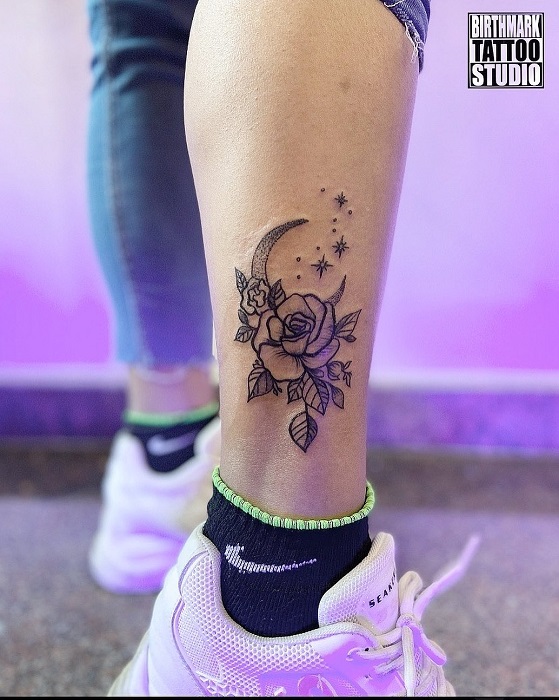
Botanical and celestial imagery come together naturally in this compact lower-leg piece. A crescent moon rises behind a cluster of roses and leaves, while tiny stars and dots scatter upward to extend the composition. The mixture works especially well near the ankle because the denser flowers provide a grounded base and the lighter celestial details create height without adding excessive visual weight.
45. Roses Framed Inside a Circle
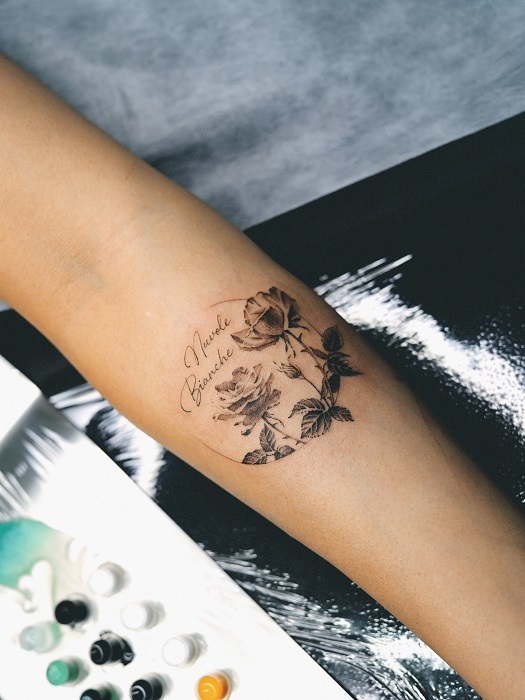
Rather than presenting the flowers as a conventional bouquet, this forearm tattoo contains its botanical imagery within a circular frame. Several softly rendered roses and leaves overlap the boundary, giving the composition a layered, collage-like appearance. Fine cursive lettering fills some of the open space, demonstrating how a geometric framework can organize flowers and text into one compact design.
46. Rose Vine Flowing Across the Hand
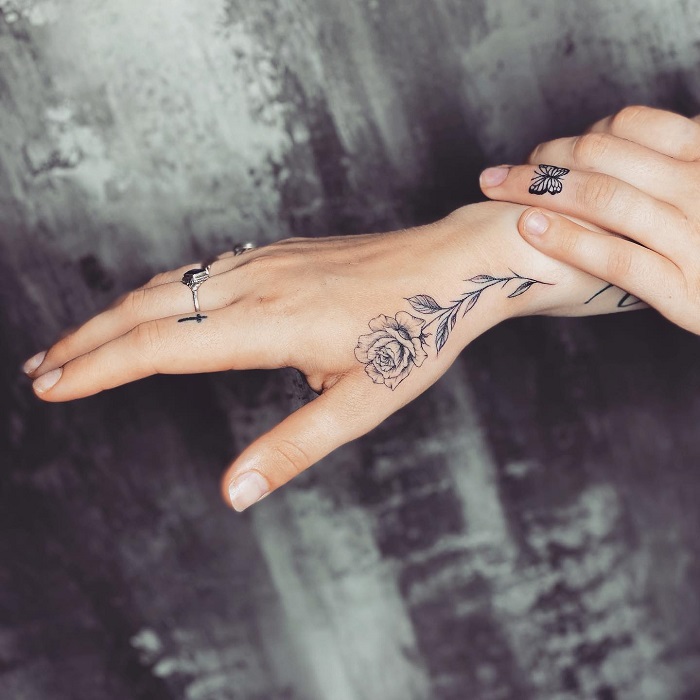
The most distinctive feature here is the way the stem travels from the wrist across the hand before ending in a rose near the base of the thumb. Slender leaves follow the curve, emphasizing movement instead of symmetry. Extending a botanical tattoo across two anatomical areas can create a more organic effect, particularly when the linework follows the hand’s natural contours.
47. Long-Stem Rose on the Inner Arm
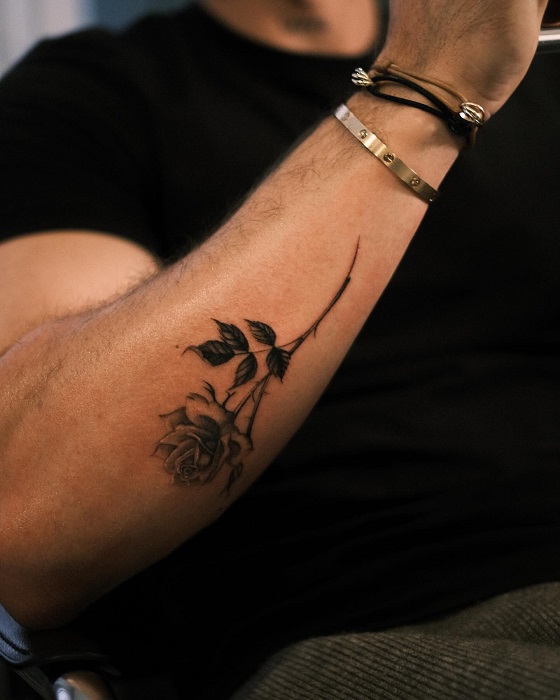
An unusually long, nearly bare stem changes the proportions of this rose tattoo and gives it an almost pressed-flower appearance. Dark leaves gather closer to the bloom, leaving the upper section of the stem uninterrupted as it reaches toward the wrist. The elongated format works particularly well on the inner arm, where there is enough length to preserve that dramatic sense of scale.
48. Pair of Red Roses With Fine Script
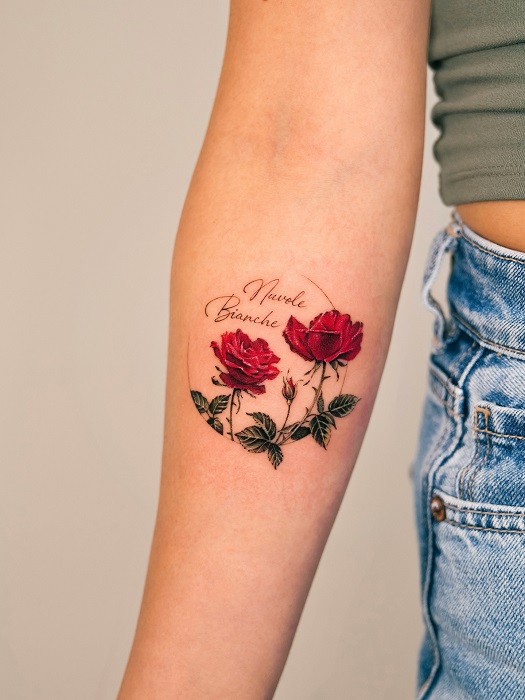
Two richly colored roses sit at slightly different heights, accompanied by a small bud and dark green foliage. Their realistic color treatment creates a strong focal point, while delicate cursive lettering above provides a much lighter counterbalance. Using blooms at different stages also makes the arrangement feel more naturally varied than two identical flowers placed side by side.
49. Petite Rose Near the Wrist
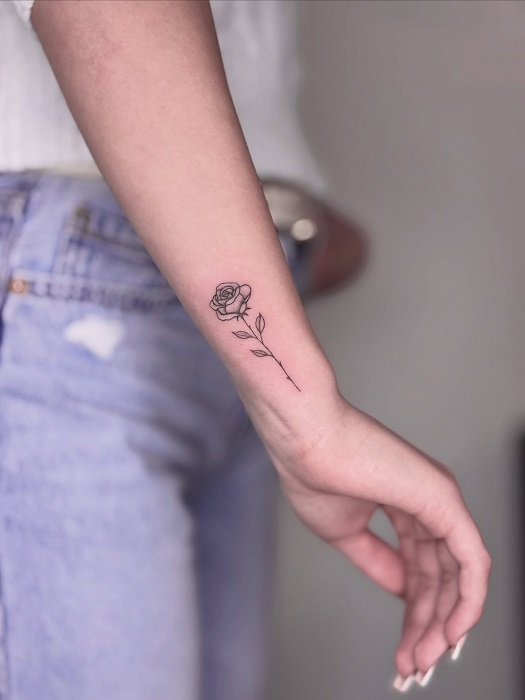
This small rose keeps nearly everything pared back: thin outlines, a narrow stem, two understated leaves, and only enough internal linework to define the petals. Its position just above the wrist suits the scale particularly well, creating a visible accent without filling the forearm. The simplicity also leaves room for additional small tattoos later without making the area immediately feel crowded.
50. Miniature Red Rose Ankle Tattoo

Realistic color can still work at a surprisingly small scale, as this ankle rose demonstrates. Muted green leaves support a tiny red bloom whose highlights and darker petal folds create noticeable depth. The thin stem keeps the composition narrow, while placement just above the ankle bone makes the flower easy to reveal with cropped trousers, skirts, or lower-cut footwear.
51. Rose With Lettering Along the Neck
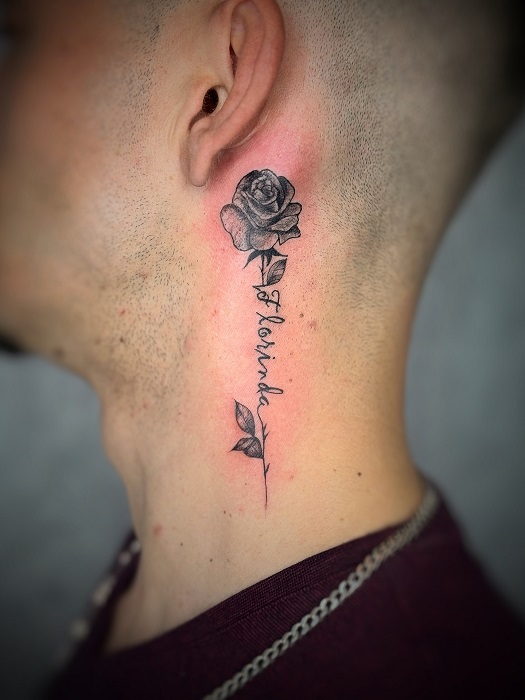
This neck tattoo uses the rose as the starting point for a longer, personalized composition. Soft black-and-grey shading gives the bloom depth, while cursive lettering occupies the central section before the line finishes with additional leaves. Running everything vertically beneath the ear takes advantage of the neck’s length and keeps several elements visually connected rather than scattered.
52. Rose With Scripted Stem
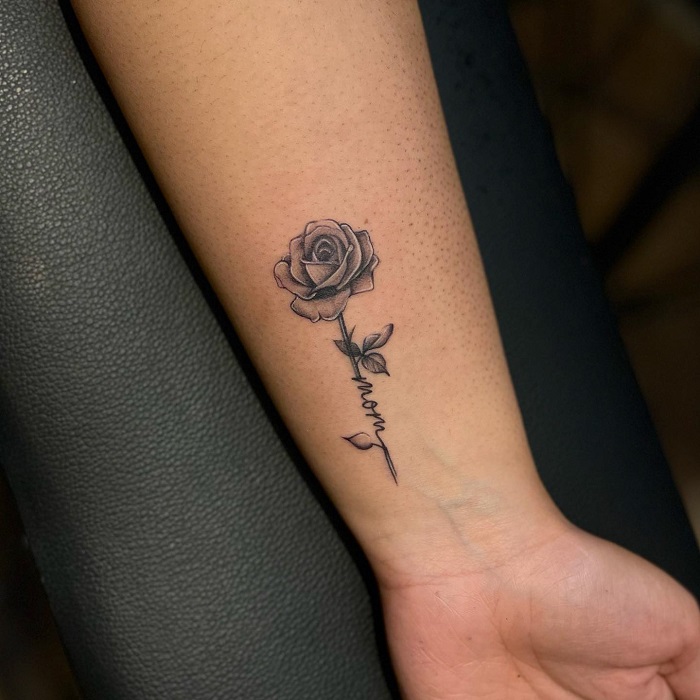
The transition from flower to lettering is especially seamless in this inner-forearm piece. A softly shaded rose provides the visual weight at the top, while a small cluster of leaves leads directly into cursive script and a long finishing stroke. It’s an effective layout when the words matter just as much as the floral imagery but a compact silhouette is preferred.
53. Rose Memorial Tattoo With Date
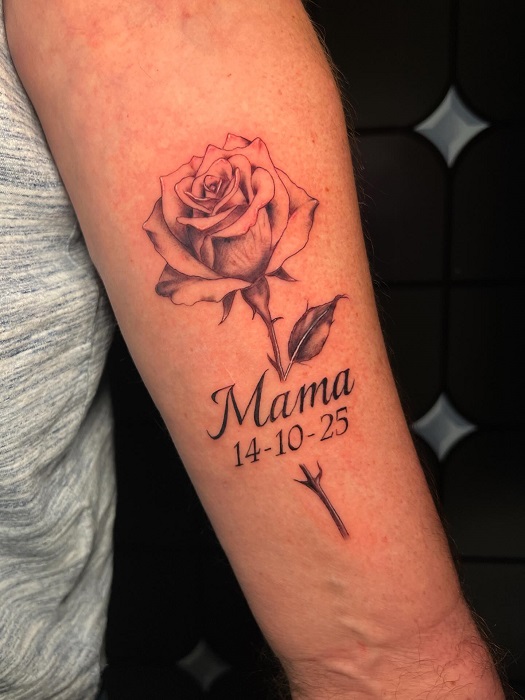
A large rose, the word “Mama,” and the clearly visible date “14-10-25” form a prominent memorial-style arrangement on the arm. Instead of squeezing the text into the flower, the layout gives each element its own space beneath the bloom. This approach keeps important lettering easy to read while allowing the rose to remain detailed and substantial.
54. Petite Red Rose With Falling Petals

Small detached petals introduce movement into this delicate red rose tattoo. The bloom hangs toward the wrist while several red shapes appear farther up the stem, creating the impression of petals drifting away from the flower. Muted foliage prevents the greenery from competing with those red accents, resulting in a tiny composition that still contains a surprising amount of visual storytelling.
55. Minimalist Single-Line Rose

With little more than crisp outlines, this small rose shows how recognizable the flower can remain without shading or color. The lightly curved stem and sparse pointed leaves preserve the botanical character while keeping the overall design exceptionally uncluttered. Its modest scale also means the idea could translate easily to many placements where a larger, more detailed rose would feel overwhelming.
56. Large Rose Covering the Hand

Scale completely changes the impact of a hand tattoo. Here, one oversized rose fills most of the available surface, with layered petals spreading toward the knuckles and dark leaves occupying the edges near the wrist. Dense stippling and shading add depth throughout the flower, creating a bold alternative to the slender long-stem designs that typically leave more skin exposed.
57. Micro Red Rose With Loose Botanical Details
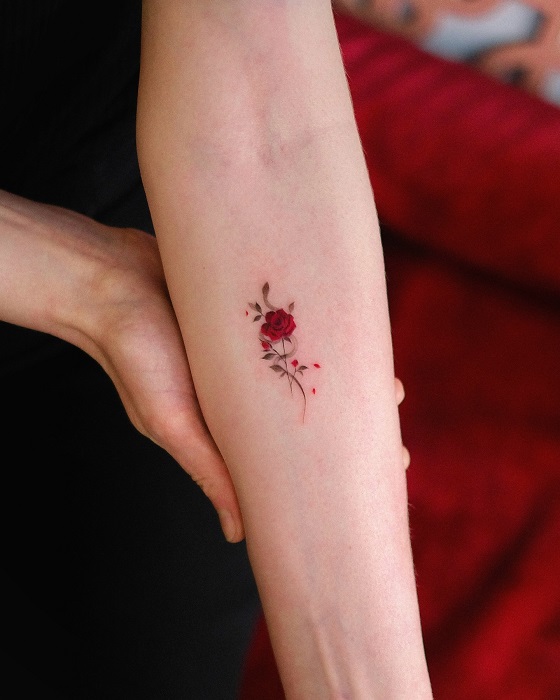
A concentrated red bloom sits at the center of this tiny floral piece, surrounded by softly rendered brownish leaves, fine stems, and scattered red marks. Those intentionally loose details give the tattoo a delicate, almost watercolor-like character. Keeping the brightest color confined mainly to the rose is a smart way to create emphasis without increasing the overall size.
58. Dark Rose With Thorny Stem
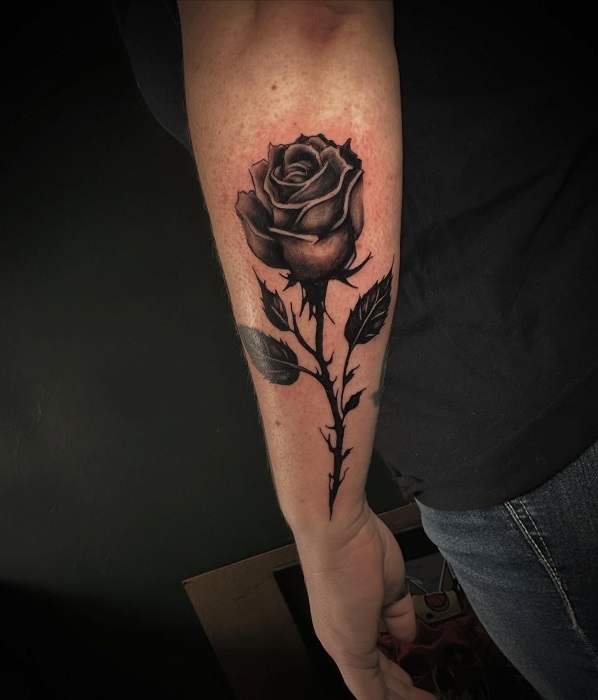
Thorns become a major design feature in this black-and-grey forearm rose rather than a minor botanical detail. They punctuate the heavy stem all the way toward the wrist, reinforcing the darker treatment of the bloom and leaves. Roses are traditionally associated with ideas such as love and beauty, while visible thorns can introduce contrasting associations with protection, pain, or resilience.
59. Rose Extending Down the Hand
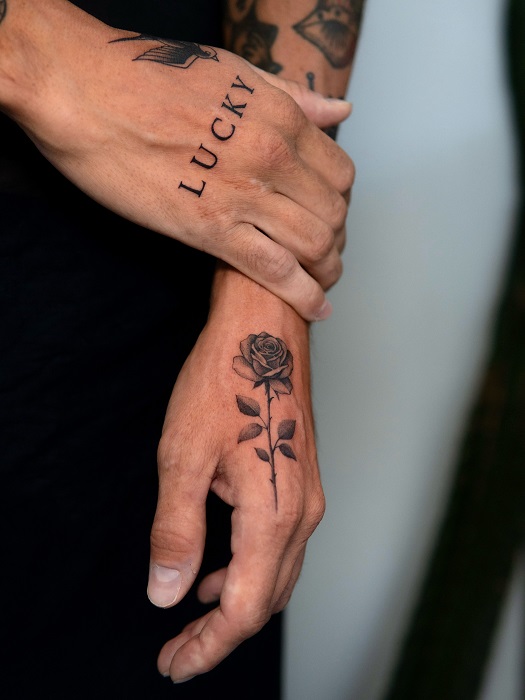
This single rose is positioned lengthwise from the wrist toward the fingers, creating a clean botanical accent without covering the entire hand. Moderate shading gives the petals definition, while four leaves balance the narrow stem. The placement makes clever use of the space between the wrist and knuckles, letting the flower remain prominent without requiring an oversized bloom.
60. Fine-Line Rose Across the Hand and Wrist
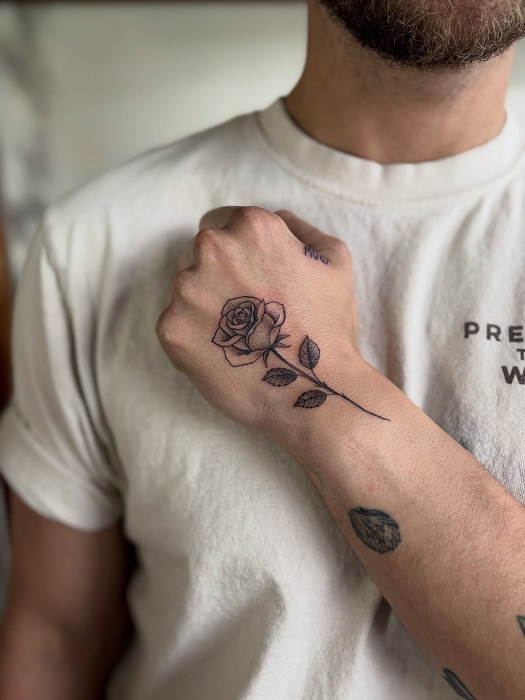
A thin stem travels diagonally from the wrist onto the hand before opening into a generously outlined rose. Unlike heavier hand tattoos, the emphasis here is on clean contours and restrained shading, so plenty of skin remains visible around the flower. Extending the stem onto the wrist also lengthens the composition and helps the bloom feel proportionate to its placement.
61. Tiny Realistic Red Rose
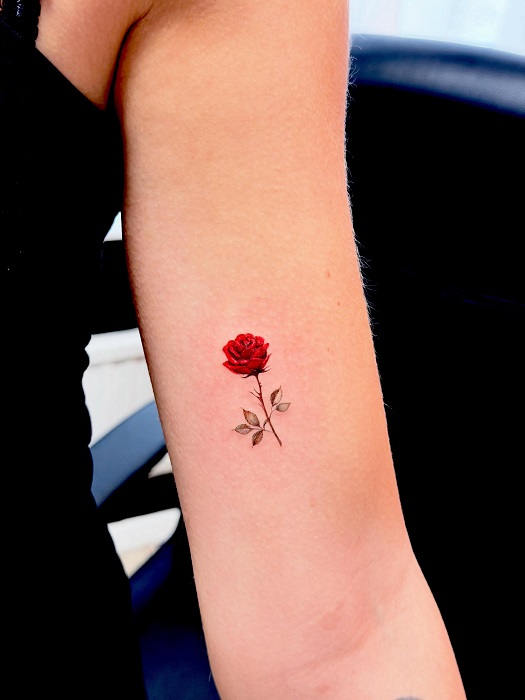
Ending the collection on a compact note, this tiny red rose proves that color does not require a large canvas. Saturated petals make the miniature bloom immediately noticeable, while a slender dark stem and muted leaves keep the supporting details subdued. The result offers inspiration for anyone who likes realistic rose tattoos but prefers a small, uncomplicated piece rather than an elaborate floral arrangement.
Other Blog Posts